SettleADebt — S_AR PASS-10
Arkansas official-source, identity, notice, and electronic-writing integration
Access date: October 27, 2026. Exact source-opening times were not logged and are unknown.
Authorized foundation: The supplied SAME-coordinator PASS-07 review completed 2026-10-27T12:59:34.561795Z. That is a review timestamp, not an independent review, source-opening time, or current-law certificate. Earlier raw answers and provenance remain unchanged. PASS-06, PASS-08, and PASS-09 were not used as legal premises.
Scope: Only the eight specified PASS-07 remaining rows: K09, K16, K22, K28, Q01, Q02, Q03, and Q07.
Findings that materially advance the remaining rows
The workplace renumbering is now supported by the actual 2019 enactment. Act 990 § 25 repealed former § 17-24-307(3), the criminal-conviction ground. It did not rewrite the workplace-contact language. The retained workplace provision appears as paragraph (11) in the 2025 reproduction, rather than the (12) shown in Act 1455. This closes the identified amendment-body gap, but not the complete current-code or commencement chain. C001–C004. Arkansas Legislature+1
The 2021 rule was not merely a proposal. The November 19, 2021 legislative report records subcommittee approval of the revised Board rules. The official December 2021 Arkansas Register lists the rule under adopted rules, docket 235.15.21-001F, with an effective date of December 9, 2021. The Board’s signed adoption instrument, exact filing timestamp, and a complete later-amendment comparison remain unavailable. C007–C011. Arkansas Legislature+2
A material statutory interpretive instruction was also verified. Section 17-24-203 directs the Board to use federal debt-collection interpretations to the greatest extent possible, while limiting its rules to those consistent with the chapter. That instruction is broader than § 512(e)’s specified FTC advisory-opinion defense, but neither provision expressly imports every Regulation F alternative into Arkansas law. C005–C006. Arkansas Legislature+1
Electronic “writing” and an electronic substitute for a specified mailing method are different questions. Arkansas UETA supports electronic records, but contains agreement, retention, attribution, receipt, and specified-method conditions. E-SIGN § 7002(c), in turn, prevents using UETA’s specified-method provision to circumvent federal electronic-record protections. Therefore, neither “Arkansas always requires paper” nor “federal electronic compliance automatically satisfies Arkansas” is established. C025–C044, C049–C050. Justia Law+1
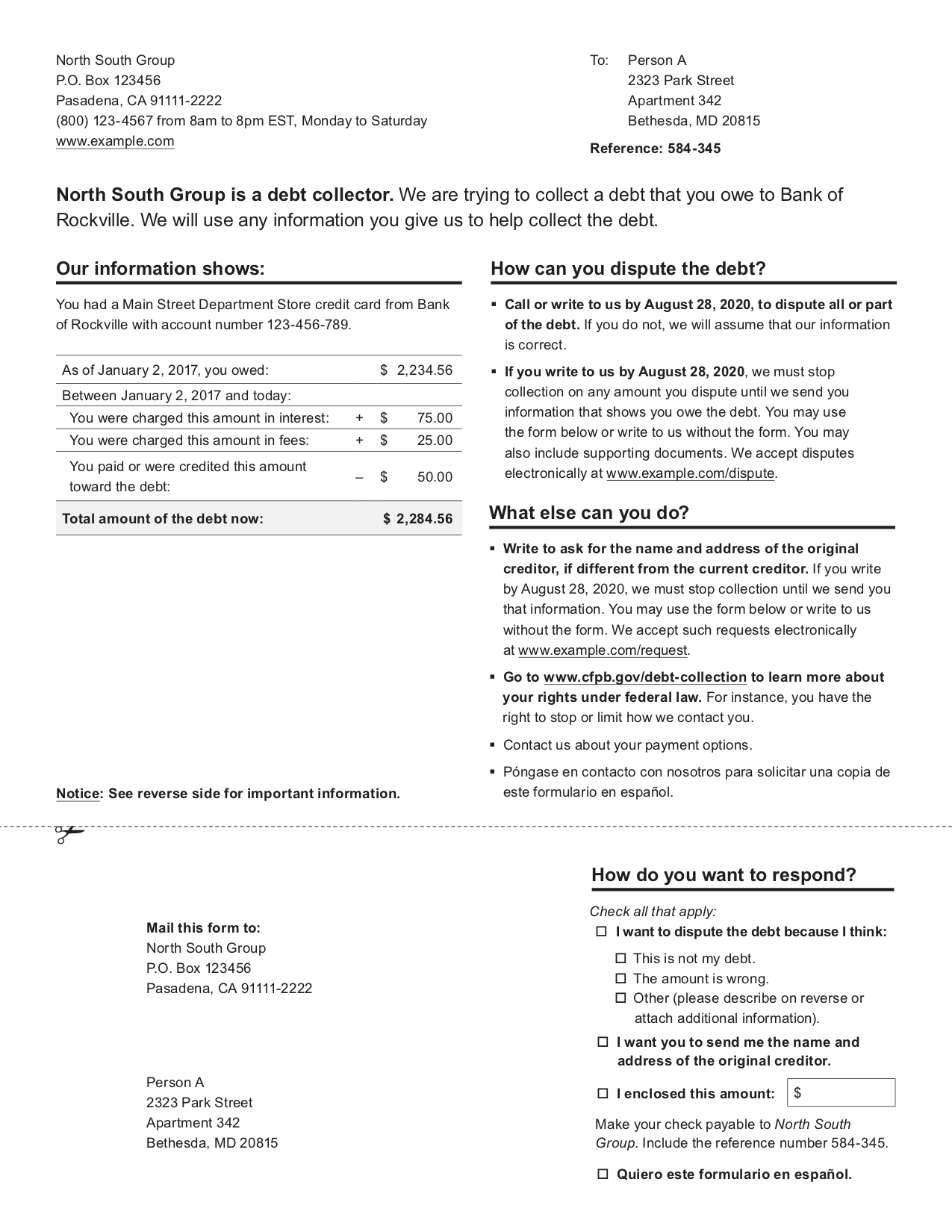
The federal model notice is usable as a comparison source, not a state-compliance certificate. Its identity fields, initial collection disclosure, state-addition options, and permitted generated-date addition provide possible points of compatibility. Its safe harbor does not establish actual licensed-name accuracy, an Arkansas workplace predicate, lawful electronic delivery, or every state content requirement. C061–C071. Consumer Financial Protection Bureau+1
In the tables below, S001 means S_AR-P10-S001, and C001 means S_AR-P10-C001. Full literal HTTPS URLs appear in the source register.
A. Enactment, adoption, and currentness reconstruction
A1. Amendment and adoption matrix
| Authority/event |
What the actual source establishes |
What it does not establish |
Claims |
| Act 1455 of 2009, § 1 |
Enacted the material consumer-conduct definitions and §§ 503–508, 511, and 512 language examined here. Relevant pages were freshly read and visually inspected. |
Complete October 2026 nonsupersession; exact commencement from approval alone. |
C001–C002 |
| Act 1455 § 10 |
Workplace language appeared as former § 307(12): good-faith home-letter conditions precede the addressed workplace letter/call. |
That satisfying this condition overrides an employer prohibition or another contact restriction. |
C001, C012–C013 |
| Act 990 of 2019, § 25 |
Repealed former § 307(3), concerning conviction of a crime involving moral turpitude. Approval appears as April 15, 2019. |
A rewrite or repeal of the workplace language; exact commencement or every transition consequence. |
C003 |
| Current displayed § 307 |
The retained workplace language is numbered (11); its history cites Act 990 § 25. |
Official integrated October 2026 authentication. The page is a 2025 secondary reproduction. |
C004 |
| Act 288 of 1995, § 1 |
Enacted the federal-interpretation instruction and statutory-consistency limitation in the predecessor § 17-21-203. Approved February 13, 1995. |
Complete recodification/terminology chain to present § 17-24-203. |
C005 |
| November 17, 2021 summary agenda |
Reports an August 18 hearing, September 7 comment deadline, no comments, and proposed effectiveness pending legislative review and approval. |
It is not itself the Board’s final adoption vote or filing certificate. |
C007 |
| November 19, 2021 subcommittee report |
States the subcommittee met November 17 and reviewed and approved the listed rules, including the Board’s revised 2021 rules. |
A separately verified full-Council vote, Board adoption date, or Secretary of State filing timestamp. |
C008 |
| December 2021 Arkansas Register |
Under adopted rules, identifies docket 235.15.21-001F and December 9, 2021 effectiveness. |
The complete signed final filing packet or proof that every later amendment is absent. |
C009–C010 |
| Current official CAR Part 280 |
The posted operative compilation contains §§ 280-302(a)–(d) and the relevant alias-record provision. |
Its March 22, 2026 PDF-generation timestamp is not an adoption or amendment date. |
C011 |
| 2025 Code reproductions |
The material text and history notes can be compared with the selected enactments. |
A publisher’s “2025” label and a history note are not complete current primary authentication. |
C002, C072 |
The actual final rule file linked from the agency remained inaccessible. Consequently, the official Register establishes adopted status and the stated effective date, while the exact comparison between the signed 2021 final attachment and every line of the current CAR compilation remains a distinct hold.
A2. Current state bodies: what was authenticated and what remains partial
The following material bodies were freshly examined:
| Provision |
Material function in this pass |
Primary support and remaining limit |
| § 17-24-502 |
Communication, consumer, debt, and collector predicates needed to distinguish attempted contact from communication. |
Act 1455 § 1 plus 2025 reproduction. Actual coverage facts and later-law chain remain open. |
| § 503 |
Location-information exception relevant to identity provisions. |
Enacted body and reproduction read; no broader location-contact report repeated. |
| § 504 |
Employer prohibition and the consent/court-permission framework. |
Enacted body and reproduction read. Actual employer knowledge and exceptions not established. |
| § 505(b)(6) |
Meaningful caller identification, subject to its location-information exception. |
Same source limits; no LCM-specific Arkansas construction found. |
| § 506 |
True business name, collector disclosures, false legal/government appearance. |
Material clauses (9), (11), and (14), together with the general prohibition, read. |
| § 507(b)(8) |
Envelope-name limitation. |
Read only to distinguish envelope treatment from required identity inside a communication. |
| § 508(a)–(c) |
Written validation notice, receipt-based period, written dispute/request, mailed response, nonadmission. |
Enacted text and 2025 reproduction match in the material clauses. Electronic and shortcut integration remains unresolved. |
| § 511 |
Knowing creation/furnishing of deceptive forms implying false third-party collection participation. |
Enacted text and reproduction read. It is not a model-form exemption. |
| § 512(e) |
Specified FTC advisory-opinion good-faith defense. |
Read; no subsection (f) or universal federal-incorporation rule invented. |
Hierarchy conclusion: Section 203(b) is a material instruction to the Board to consult federal interpretation. It supports examining Regulation F carefully. It does not, by its words alone, replace § 508’s response language, establish an adjudicated state LCM exemption, or resolve E-SIGN preemption. Section 203(a) also limits rulemaking to provisions consistent with the chapter. C005–C006.
B. Workplace, business identity, individual aliases, and limited-content voicemail
B1. Clause-by-clause state/federal compatibility matrix
| Issue |
Arkansas text |
Federal text |
Result and unresolved construction |
| Workplace prerequisite |
§ 307(11) and CAR 280-302(b) require the stated good-faith letter to the usual abode, mail not returned, and no answer before the addressed workplace contact. |
§ 1692c(a)(3) separately addresses known or reasonably known employer prohibition, within subsection (a)’s exception structure. |
The state home-letter condition does not itself defeat the federal restriction. No waiting period beyond the text is invented. C012–C013. |
| Business name on an attempt |
CAR 280-302(a) requires the name or trade style exactly as on the license when attempting collection. |
§ 1006.2(j) requires a business name that does not indicate debt collection for an LCM. |
A neutral name must independently satisfy the state identity requirement; federal neutrality does not authorize an unlicensed or false business identity. C014, C019–C020. |
| Contents of a communication |
CAR 280-302(c) specifies collection reason, creditor name, licensed agency name, written-communication date, and oral individual identity. |
A qualifying LCM contains only required and permitted optional content and is not a federal communication. |
Whether Arkansas’s rule uses “communication” in a way excluding an LCM remains unresolved. Its separate “attempt” provision still matters. C015, C023. |
| Meaningful caller identity |
§ 505(b)(6) requires meaningful identity, subject to the specified exception. |
Federal LCM and employee-name rules address different elements. |
No controlling Arkansas holding was found declaring every federally qualifying LCM sufficient under this clause. C016. |
| True business name |
§ 506(b)(14) prohibits another business/company/organization name than the true name. |
§ 1006.18(c)(4) has a corresponding true-name restriction. |
A qualifying trade style and the actual legal/operational identity must be established. A hypothetical label proves neither. C017. |
| Employee assumed name |
CAR 280-201(e)(2) requires the stated office/employee alias records and retention. |
§ 1006.18(f) permits a consistently used employee assumed name when the collector can readily identify the employee. |
This concerns a person’s alias, not permission to invent an alternate collection-company name. C018. |
| Extra voicemail content |
State content and deception rules still apply. |
Debt information beyond permitted LCM content may make the voicemail a communication requiring disclosures. |
Adding creditor or collection-purpose information can destroy the relied-on federal LCM classification. C022–C024. |
| Known third-party destination |
Third-party and identity restrictions remain applicable. |
A message knowingly directed to a third party is not a qualifying consumer LCM merely because it is short. |
No contact permission is inferred. C021. |
| Callback |
Actual oral-communication duties must be considered. |
A consumer’s callback can become the initial communication requiring the collection disclosure. |
The voicemail classification does not exempt the subsequent conversation. C022. |
| Deceptive document or form |
§§ 506 and 511 address false source, legal status, business identity, and fictitious collection participation. |
Federal model-form use does not validate false factual content. |
Neither a model layout nor an alias policy cures deception. C017, C070. |
The current official CAR body was read directly, including its written-date and alias requirements. These are not inferred from a license-category description. Arkansas General Assembly+2
B2. The two unresolved LCM constructions
The conflict cannot be resolved by saying only “an LCM is not a communication.”
Possible narrower construction: Arkansas’s debt-information definition of communication informs CAR 280-302(c). A message conveying no debt information might therefore fall outside that subsection, while still being an attempt governed by subsection (a) and other identity provisions. Section 203(b)’s interpretive instruction is relevant to this argument.
Possible broader construction: CAR 280-302’s telephone/oral-communication language reaches the attempted callback message itself. Its creditor/reason requirements would then be difficult to satisfy while preserving the federal LCM’s restricted content.
These are identified interpretive alternatives, not holdings. No responsive published Arkansas majority or final Board construction resolving this exact intersection was obtained. A neutral business name, a traceable employee alias, and a federal LCM checklist do not close that state-law gap. C023, C073.
C. Electronic writing: separate each legal step
C1. Arkansas UETA and E-SIGN matrix
| Step or concept |
Arkansas UETA provision read |
Necessary federal provision |
Supported conclusion |
| Scope |
§§ 25-32-102–103 define transaction, record, signature, and covered electronic activity. |
§ 7001(a) concerns transactions in or affecting interstate or foreign commerce. |
Do not assume every message automatically satisfies every transaction predicate. C025, C039. |
| Agreement to use electronic means |
§ 105 looks to agreement, context, and conduct; it does not force electronic use or waive refusal for future transactions. |
§ 7001(b)(2) likewise does not generally force acceptance. |
Consent to one use is not unlimited consent to every later disclosure or channel. C027, C041. |
| Writing |
§ 107(c) allows an electronic record to satisfy a writing requirement. |
§ 7001(a) prevents denial solely because of electronic form. |
A record can be “in writing” without resolving whether it was sent by the required method. C028, C039. |
| Signature |
§§ 102 and 107(d) require the relevant intent/association for an electronic signature. |
§ 7006 separately defines electronic signature. |
A writing requirement is not automatically a signature requirement. C028. |
| Attribution |
§ 109 asks whether the record/signature was the person’s act, with context and security procedures relevant. |
Electronic form does not remove authenticity questions. |
A displayed name or account login is not conclusive attribution. C029. |
| Recipient retention |
§ 108(a), (c) addresses ability to retain, print, and store at receipt. |
§ 7001(d) and § 1006.42(a)(1) require applicable accessibility/retention. |
A transient or disabled-download display can fail a separate requirement even if it is electronically visible. C030, C036. |
| Specified delivery method |
§ 108(b)(2) preserves another law’s specified method, subject to subsection (d)(2). |
§ 7002(c) prohibits circumvention through UETA § 8(b)(2). |
Neither provision can be ignored. A specific state-mailing/preemption analysis remains necessary. C031–C032, C043. |
| Limited variation of ordinary mail |
§ 108(d)(2) allows agreement to vary specified ordinary-mail methods only to the extent other law permits. |
E-SIGN separately governs qualifying consumer electronic disclosures. |
A general online-account agreement is not automatically a valid waiver of every mailing requirement. C032, C040. |
| Sending |
§ 115(a) requires proper direction to an appropriate processable/retrievable system and departure from sender control or entry into the specified recipient-controlled area. |
Regulation F has its own delivery requirements. |
Pressing “send” alone does not establish all predicates. C033. |
| Receipt |
§ 115(b), (e) permits qualifying system receipt without individual awareness. |
A collection pause’s trigger must still be applied to the legally relevant receipt. |
“Not opened by an employee” is not necessarily “not received.” C034. |
| Automatic acknowledgment |
§ 115(f) proves a record was received, not necessarily that received contents match sent contents. |
Required substantive content still matters. |
A delivery receipt is not a content or legal-sufficiency certificate. C034. |
| Known failure |
§ 115(g) sends the effect of known nonreceipt/nonsending to other applicable law. |
§ 1006.42 does not permit known failed delivery to be treated as adequate notice. |
A contrary presumption or routine system entry does not erase known failure. C035, C058. |
| Retention |
§ 112 requires accurate, accessible preservation and retains specified exceptions. |
§ 7001(d) has parallel retention requirements. |
Storage of a link alone may not establish preservation of the actual required record. C036. |
The UETA bodies were read from dated reproductions. The official Act 905 body could not be obtained through the attempted routes. Section 104’s displayed March 19, 2001 application date is therefore reported as a codified reproduction, not freshly authenticated enactment commencement. C026. Justia Law+1
C2. Controlling Arkansas construction actually read
Barwick v. Government Employee Insurance Co., 2011 Ark. 128, March 31, 2011 concerned an undisputed online insurance rejection and an admitted electronic signature. The Arkansas Supreme Court affirmed summary judgment and applied § 25-32-107(c) to satisfy the other statute’s writing requirement.
The holding supports a genuine distinction between “electronic” and “not written.” It does not decide:
- § 17-24-508’s mailing language;
- accepted collection-dispute channels;
- consumer E-SIGN disclosure consent;
- UETA § 108’s specified-method provision;
- a bounced or inaccessible response; or
- same-creditor or duplicate-dispute alternatives.
The official opinion-navigation route failed; the actual majority body was read in a disclosed reproduction and the final page was visually inspected. No separate writing was shown. Full later-treatment review was not obtained. C037–C038. Justia Law+1
C3. E-SIGN prevents both shortcuts
Shortcut rejected: “State law says mailed, so electronics can never qualify”
Section 7002(c) directly limits a state’s ability to use UETA’s nonelectronic-delivery provision to circumvent E-SIGN. Arkansas § 25-32-103(e) also expressly identifies its adoption of the 1999 UETA and the federal preemption framework. These provisions must be considered, not omitted. C043.
Shortcut rejected: “The consumer emailed us, so we can email every required response”
A consumer’s accepted electronic dispute is not affirmative consent to receive the collector’s specified electronic disclosures. For disclosures within § 1006.42(b), the collector must independently satisfy E-SIGN § 7001(c), including applicable consent, access-demonstration, scope, withdrawal, and changed-access conditions. C040–C041, C048, C059.
Section 7001(c)(2) preserves content and timing. Its special protection for a specified delivery method requiring verification or acknowledgment has its own pre-enactment and receipt-verification predicates; those cannot simply be assumed for Arkansas’s 2009 statute. Section 7003’s exceptions likewise require their actual category. An ordinary collection notice does not become a court document or primary-residence foreclosure notice merely because it mentions default. C042, C044. US Code+1
Remaining legal step: Determine, on the particular state duty and facts, whether UETA and E-SIGN permit the electronic record and delivery method to satisfy § 508. This report does not choose a production implementation in the absence of that construction.
D. State § 508 versus the federal response alternatives
D1. Clause-by-clause integration
| Event |
Arkansas text |
Federal text/interpretation |
Result |
| Initial notice |
§ 508(a) requires written notice initially or within five days unless paid. |
Federal initial/follow-up routes are not identical in every respect. |
No wholesale federal substitute is assumed. C045. |
| Consumer’s period |
State text refers to thirty days after receipt. |
Regulation F has its defined validation period and permitted receipt assumption. |
The federal assumption is not silently inserted into state text. C046. |
| Consumer electronic dispute/request |
State text says “in writing.” |
Official § 1006.38 interpretation accepts an electronic medium through which the collector accepts consumer communications. |
Federal writing can be satisfied; state UETA application is a strong but conditional route, not an automatic all-facts conclusion. C047–C049. |
| Consumer signature |
§ 508’s dispute/request language does not itself impose a signed-original requirement. |
Accepted electronic writing is not conditioned on an invented notarized or ink-signed original. |
Attribution and actual contents remain relevant. C028–C029, C047. |
| Pause |
Timely written dispute/request triggers the stated cessation rule. |
Receipt of the qualifying timely submission triggers the corresponding federal pause. |
A dispute and a separate original-creditor request require separate response analysis. C051. |
| Internal verification |
State requires obtaining and mailing the relevant response. |
Federal rule requires sending the applicable response through § 1006.42. |
Internal confirmation alone does not end the pause. C052–C053. |
| Collector electronic verification |
State says the response is mailed. |
§ 1006.38(d)(2)(i), read with § 42(b), provides the qualified electronic route. |
Federal compliance does not by itself settle the state mailing issue. C050, C059. |
| Original creditor equals current creditor |
State notice clause (a)(5) uses “if different”; subsection (b) has its own mailing language. |
§ 38(c)(2) permits reasonable same-creditor determination, notification, and reference to prior validation information. |
The state “if different” clause is relevant, but no controlling state adoption of the federal shortcut was found. C054, C057. |
| Repeat dispute |
State § 508 has no express duplicative-dispute procedure matching the federal rule. |
§ 38(a)(1), (d)(2)(ii) permits the stated route only after qualifying earlier verification and no new material information. |
Do not call every repeated communication duplicative. State shortcut compatibility remains held. C055–C057. |
| Duplicate-dispute notice electronically |
No express state counterpart verified. |
§ 38(d)(2)(ii)(A) specifically invokes § 42(a)(1); § 42(b)’s listed E-SIGN disclosures do not expressly include that paragraph. |
Do not inaccurately say § 42(b) names every electronic required notice. Other applicable law still matters. C056. |
| Nondelivery or opt-out |
State receipt/mailing questions remain factual and legal. |
Known bounce, inaccessible record, or use of an opted-out destination can defeat the relied-on federal response path. |
No pause-ending conclusion from “sent” status alone. C035, C058–C059. |
The distinction between a consumer’s electronic writing and the collector’s electronic disclosure is explicit in the federal materials. The former is not deemed consent for the latter. Consumer Financial Protection Bureau+1
D2. The unresolved state response questions
The following findings are supported, but deliberately bounded:
- Arkansas’s writing requirement can plausibly be satisfied through its UETA where the transaction, agreement, attribution, and record conditions are established; Barwick supports electronic-writing recognition.
- The collector’s mailing requirement adds a method question. UETA § 108 and E-SIGN §§ 7001–7002 must be reconciled for that specific duty.
- Section 203(b) favors serious consideration of federal interpretations, but is not itself a published resolution of § 508.
- Section 512(e) is a specified advisory-opinion defense, not an incorporation clause.
- Section 1692n and § 1006.104 preserve compatible state protection; they do not decide every UETA/E-SIGN conflict or approve the two federal shortcuts under state law.
C005–C006, C049–C050, C057, C060. Justia Law+2
E. Model notice, state additions, placement, and language
The actual Model Form B-1 image was inspected, not merely its title or a textual summary.
E1. Actual model-to-state comparison
| Model feature actually observed |
Arkansas requirement or issue |
Comparison result |
| Collector name and address |
CAR 280-302 licensed/trade-style name; § 506 true-business-name requirement. |
A compatible field exists. Actual identity accuracy remains unverified. |
| Collection-purpose/use-of-information statement |
§ 506(b)(11) and CAR 280-302(c)’s reason requirement. |
The model provides relevant content; that does not validate the actual transaction or every state interpretation. |
| Current creditor and account information |
§ 508(a)(2) and CAR 280-302(c). |
A compatible place exists. Creditor identity and the underlying facts still require proof. |
| Itemization date and response deadline |
State rule requires the date of a written communication. |
Neither date necessarily is the communication date. The model image did not display a separate generated/communication date. |
| Permitted generated-date addition |
Official interpretation to § 34(d)(2)(iii) expressly permits adding the date generated. |
This is a potential compatibility tool, but generation and communication dates must not be falsely equated. |
| Original-creditor request prompt |
§ 508(a)(5) and (b). |
Prompt compatibility does not resolve same-creditor response sufficiency. |
| Reference to reverse-side information above the response area |
§ 34(d)(3)(iv)(A). |
Applicable state additions may use that route if all placement and prominence requirements are met. |
| Consumer-response coupon |
Federal response information and reverse-side restriction. |
State additions must not be placed directly behind that response information under the safe-harbor option. |
| Optional Spanish-request language |
Federal § 34(d)(3)(vi), (e). |
Optional offer is not a universal state translation mandate; making the offer creates the stated response obligation. |
No actual Arkansas collector’s notice was supplied or compared. The generic federal-model comparison is complete; actual-template eligibility remains held. C061–C071. Consumer Financial Protection Bureau+1
E2. Safe-harbor and layout matrix
| Proposed approach |
Federal scope actually established |
State/remaining limitation |
| Use Model B-1 as prescribed |
Safe harbor for specified § 34 information/form requirements and the related § 38(b) provision. |
Not a shield for false identity, inaccurate facts, unauthorized collection, state workplace contact, or failed delivery. |
| Substantially similar form |
Substance, clarity, and meaningful sequence must remain substantially similar. |
“Looks generally similar” is not a legal determination. |
| Add specifically required state text |
Reverse-side option, front reference, no placement directly behind response information, and applicable prominence conditions. |
Do not use this to remove federally required core information from its required presentation. |
| Put itemization or qualifying mortgage information on separate page |
Expressly addressed exceptions; reference required. |
Safe harbor does not extend to the separate-page disclosures themselves. Full mortgage application is deferred. |
| Put arbitrary additional state text on a separate insert |
No general express separate-page safe harbor merely because the insert is labeled state-required. |
A substantially-similar analysis may still be relevant. Loss of safe harbor is not automatically a violation. |
| Put notice in email body |
Applicable-law additions may appear below the notice in the same communication with an appropriate reference. |
It is not permission to use an inaccessible attachment or ignore electronic-delivery requirements. |
| Add hyperlinks or electronic response functions |
The rule permits specified electronic adaptations. |
Layout permission is not E-SIGN consent or actual delivery. |
| Translate validation information |
Apply § 34(e)’s complete/accurate translation and English-version conditions. |
Initial/subsequent collection disclosures independently must match the language or languages used under § 18(e)(4). |
Required statutory content and optional illustrative phrasing are not interchangeable. The CFPB’s example references are examples, not a requirement to reproduce one exact additional-state-text sentence. C062–C069. Consumer Financial Protection Bureau+1
F. Four worked operational models
Every event is fictional. Coverage, authority, and factual predicates are assumptions for analysis—not findings about an actual consumer or provider. No debt, fee, payment, or call-count ledger is created.
The dates are intentionally away from disputed endpoints. “Elapsed calendar days” below is arithmetic describing the example, not a new state time-computation rule. No holiday-extension or last-day rule is applied.
Model A — Paper notice, dispute, separate creditor request, and incomplete responses
Assumptions: Proper paper notice sent October 5, 2026 and received October 7; covered debt and actor; original creditor differs from current creditor; valid addresses; no independent contact prohibition is adjudicated.
| Date/event |
Evidence stipulated |
Trigger and clock |
Pause/result/remaining hold |
| Oct. 7: notice received |
Actual paper receipt |
State receipt-based period; federal actual-receipt path assumed. |
No endpoint calculation needed. |
| Oct. 12: consumer mails written dispute |
Copy and mailing evidence |
Five elapsed calendar days after receipt. |
Submission is comfortably nonboundary; receipt follows. |
| Oct. 14: collector receives dispute |
Delivery and contents established |
Seven elapsed days after notice receipt. |
Applicable dispute pause begins. C051. |
| Oct. 15: consumer separately mails original-creditor request |
Separate written request |
Eight elapsed days after notice receipt. |
Distinct requested response. |
| Oct. 16: collector receives request |
Delivery and contents established |
Nine elapsed days after notice receipt. |
Original-creditor pause also applies. C051. |
| Oct. 19: sufficient verification mailed, but no original-creditor information |
Proper paper dispatch and assumed sufficient verification |
Verification branch potentially satisfied. |
Original-creditor request remains unresolved; no overall resumption conclusion. |
| Oct. 20: collector learns original name/address internally |
Internal record only |
No external response event |
Internal knowledge does not complete the response. C052. |
| Oct. 22: correct original name/address properly mailed |
Actual contents and dispatch assumed |
Applicable paper response event |
Both illustrated response requirements are potentially satisfied; other restrictions and actual adequacy remain separate. |
| Oct. 26: consumer receives the second response |
Actual receipt |
Not substituted for the statutory mailing/sending trigger |
No blanket permission to contact follows. C053, C074. |
Adverse branch: A response addressing only the amount cannot be assumed to answer the separate original-creditor request. A wrong address, missing content, or a known delivery problem changes the result. No fixed thirty-day collector response deadline is invented.
Model B — Consumer electronic writing versus collector electronic response
Assumptions: Proper paper notice was already received. The consumer submits a dispute on October 9 through a portal the collector accepts for disputes. The record is attributable, processable, and retained. No last-day issue exists.
| Variant/event |
Independent facts |
Federal consequence |
State integration/hold |
| Portal receives dispute; employee does not read it until Oct. 12 |
System receipt and contents are provable |
Accepted electronic writing can trigger the federal pause upon receipt. |
UETA system-receipt provisions are relevant; agreement, transaction and other-law predicates must still be established. |
| Collector replies by email on Oct. 14; consumer never gave required disclosure consent |
Incoming portal use only |
Incoming writing does not supply § 42(b)/E-SIGN consent. |
No state-mailing equivalence is established either. |
| Consumer gave valid relevant consent; response cannot be printed, stored, or later accessed |
Consent exists; retention fails |
Consent alone does not cure delivery/retention defect. |
UETA § 108 supplies an additional relevant retention issue. |
| Consent and file access exist, but consumer opted out of that address |
Opt-out known before response |
Do not treat delivery to that address as automatically compliant. |
State consequences also remain factual and legal. |
| Consent and file access exist, but message bounces |
Known nondelivery |
A routine “sent” status does not complete the required response. |
UETA § 115(g) directs attention to actual failure and other law. |
| All federal consent, access, address and sending predicates are met |
No bounce; appropriate format |
Federal electronic response can satisfy its specified route. |
§ 508’s state mailing/UETA/E-SIGN integration remains unresolved; no automatic state conclusion. |
| Proper paper response is later mailed on Oct. 20 |
Adequate content, proper address and dispatch stipulated |
May satisfy the paper response route. |
Textual state mailing route is addressed, but actual adequacy and other restrictions remain held. |
Operational result: Record four different questions: consumer’s writing, collector’s disclosure consent, delivery/retention, and state-method equivalence. A single “electronic consent” checkbox cannot answer all four. C027–C050, C058–C059.
Model C — Neutral-name LCM, individual alias, and workplace predicate
No actual name or script is proposed. The variables below are assumed facts only.
| Step |
Fictional predicate |
Federal branch |
Arkansas branch/hold |
| Business identity |
“Name A” is neutral and is stipulated to be the exact licensed trade style and true business identity. |
Potentially satisfies the LCM neutral-business-name element. |
Addresses the assumed identity fact; no actual license/name checked. |
| Individual identity |
Employee uses “Alias B” consistently; agency can readily trace it and keeps the required alias records. |
Potentially satisfies § 18(f). |
Alias record duty addressed on assumptions; does not authorize a different business name. |
| Message content |
Only required/permitted LCM categories are used. |
Potential LCM, not a federal communication. |
CAR § 302(a)’s attempt rule still applies; § 302(c)/§ 505 integration remains held. |
| Alternative: actual licensed name indicates debt collection |
Neutral-name element fails if that name is used. |
Cannot simply label the message an LCM. |
Substituting an unapproved neutral identity is not presumed lawful. |
| Alternative: creditor/collection-purpose content added |
Message conveys debt information. |
Reassess as a communication, including required disclosures. |
May address state content, but no third-party/contact permission is established. |
| Home-letter prerequisite |
Proper usual-abode letter sent; not returned; no answer, all stipulated. |
Does not decide employer prohibition. |
Addresses only the stated prerequisite; no unexpressed waiting period or overall permission inferred. |
| Adverse home-letter branch |
Letter returned, or consumer answered it |
Different predicate set |
Do not treat the listed no-return/no-answer condition as established. |
| Employer prohibition known |
No direct consent or court authorization is assumed |
Independent workplace restriction remains. |
Home-letter facts do not overcome it. |
A later consumer callback is a new communication event with its own disclosure analysis. C012–C024.
Model D — Repeated dispute, new material information, same creditor, and notice layout
D1. Response sequence
Assume a valid paper notice actually received October 1, 2026.
| Date/event |
Stipulated evidence |
Federal result |
State hold |
| Oct. 5–6: written dispute sent/received |
Timely writing |
Pause triggered. |
State writing/receipt satisfied on paper assumptions. |
| Oct. 9: sufficient verification properly mailed |
Required prior response completed |
Establishes a necessary predicate for any later duplicate analysis. |
Actual adequacy remains an assumption. |
| Oct. 12–13: substantially same dispute sent/received, no new material information |
Exact comparison documented |
Collector may reasonably consider the duplicative route, but must take the required response step. |
No express matching state shortcut was established. |
| Oct. 14: reasoned duplicate notice sent with prior-response reference |
Content and delivery stipulated |
Potential federal § 38(d)(2)(ii)(A) satisfaction. Its cross-reference is § 42(a)(1). |
Do not declare the state pause ended solely because federal duplicate procedure was used. |
| Oct. 16: consumer supplies new, material identity evidence |
Evidence could change verification |
Not a duplicate on the stated facts; reassess and pause/respond accordingly. |
State response analysis remains independent. |
| Oct. 19: original-creditor request received |
Timely writing; original actually equals current |
Federal § 38(c)(2) requires reasonable determination, notice, and reference to prior validation. |
State (a)(5)’s “if different” and (b)’s mailing text require harmonization; no silent import. |
D2. Model-notice alternatives
| Proposed modification |
What can be established |
What remains unapproved |
| Add a truthful generated date |
Expressly identified federal permissible change |
Whether it accurately serves as the state communication date. |
| Add required state text on reverse, with front reference, away from response-coupon reverse |
Expressly addressed federal placement option |
Actual prominence, substance and state sufficiency. |
| Put all extra state text on an arbitrary separate sheet |
Not automatically within an express general separate-page exception |
Substantial similarity and independent compliance must be evaluated. |
| Use an email-body notice with state material below it |
Federal interpretation permits this described layout |
E-SIGN, actual delivery, access and state-method equivalence. |
| Provide translated validation text |
Must satisfy the applicable English-version and complete/accurate translation conditions |
Actual translation quality and same-language collection disclosures. |
No specimen is approved and no actual recipient receives anything. C054–C071.
G. Eight additional concise fictional postures
| Posture |
Fictional facts |
Result and outstanding issue |
| P01 — Unaccepted inbox |
Consumer writes to an address the collector does not accept for consumer communications. |
Do not automatically apply the accepted-channel federal interpretation; actual acceptance and receipt remain necessary. |
| P02 — Record without signature |
An attributable typed dispute contains no signature image. |
A writing requirement is not automatically an ink-signature requirement; attribution and actual content remain material. |
| P03 — Shared alias |
Several employees rotate the same alias and the collector cannot identify who used it. |
Federal traceability predicate is not established; state alias records do not cure an untraceable operation merely by listing the name. |
| P04 — Known third-party voicemail |
Message is intentionally left for a coworker rather than the consumer. |
The LCM label does not supply the consumer-directed predicate or third-party permission. |
| P05 — Date mismatch |
Form generated Monday, communicated Thursday, and only Monday’s date appears. |
Permitted generated-date addition does not prove the state communication-date requirement is accurately met. |
| P06 — Inaccessible attachment |
Email reaches the right address, but its required attachment cannot be opened or retained. |
Delivery of the envelope is not necessarily delivery of an accessible required record. |
| P07 — Spanish-request offer |
Collector includes the optional Spanish-request offer and the consumer invokes it. |
The resulting federal obligation must be performed; no assumption that an English-only response satisfies the offered route. |
| P08 — Cross-border recipient |
Consumer is outside Arkansas and outside the United States when messages are sent. |
Country, state, territorial, consent and delivery law require separate analysis; this pass does not globalize Arkansas or federal conclusions. |
H. Source and access register
Register conventions
Except S031’s expressly identified historical record, entries below concern fresh October 27, 2026 access or attempts. Exact opening times are unknown.
- P: official primary body.
- R: primary text/opinion reproduced by a nonofficial host.
- M: secondary codification.
- G: official index, agenda, or model.
- F: failed or incomplete access.
- H: supplied prior-review/access history, not a new legal reading.
Grouped URLs do not count as independent corroborating primary sources.
H1. Arkansas enactments, rules, and adoption history
| Source ID |
Issuer/title/direct HTTPS URL |
Actual scope, dates, support, and limits |
| S_AR-P10-S001 |
Arkansas General Assembly, Act 1455 of 2009. https://arkleg.state.ar.us/Acts/FTPDocument?ddBienniumSession=2009%2FR&file=1455.pdf&path=%2FACTS%2F2009%2FPublic%2F |
P: material § 1 definitions/conduct/§§508,511,512 and §10 workplace text. Printed1–12/PDF0–11 and16–17/PDF15–16 materially read; relevant images inspected. Approved April 10, 2009. Exact commencement and full later chain held. |
| S_AR-P10-S002 |
Act 990 of 2019. https://arkleg.state.ar.us/Acts/FTPDocument?ddBienniumSession=2019%2F2019R&file=990.pdf&path=%2FACTS%2F2019R%2FPublic%2F |
P: §25, printed14/PDF13; approval printed66/PDF65, images read. Approved April 15, 2019. Selected other end provisions only; entire66-page act not claimed read. First route failed: https://arkleg.state.ar.us/Home/FTPDocument?path=%2FACTS%2F2019R%2FPublic%2FACT990.pdf . Alternate succeeded. |
| S_AR-P10-S003 |
2025 reproductions, §§17-24-502–507: https://law.justia.com/codes/arkansas/title-17/subtitle-2/chapter-24/subchapter-5/section-17-24-502/ ; https://law.justia.com/codes/arkansas/title-17/subtitle-2/chapter-24/subchapter-5/section-17-24-503/ ; https://law.justia.com/codes/arkansas/title-17/subtitle-2/chapter-24/subchapter-5/section-17-24-504/ ; https://law.justia.com/codes/arkansas/title-17/subtitle-2/chapter-24/subchapter-5/section-17-24-505/ ; https://law.justia.com/codes/arkansas/title-17/subtitle-2/chapter-24/subchapter-5/section-17-24-506/ ; https://law.justia.com/codes/arkansas/title-17/subtitle-2/chapter-24/subchapter-5/section-17-24-507/ |
M: material definitions, location exception, workplace/third-party predicates, meaningful identification, true name, disclosures and envelope rule. Compared with S001. Not official current codification. |
| S_AR-P10-S004 |
§17-24-508. https://law.justia.com/codes/arkansas/title-17/subtitle-2/chapter-24/subchapter-5/section-17-24-508/ |
M,2025: complete (a)–(c), history note. S001 provides selected enacted text. |
| S_AR-P10-S005 |
§§17-24-511,512. https://law.justia.com/codes/arkansas/title-17/subtitle-2/chapter-24/subchapter-5/section-17-24-511/ ; https://law.justia.com/codes/arkansas/title-17/subtitle-2/chapter-24/subchapter-5/section-17-24-512/ |
M,2025: §511 operative body and §512(e) advisory-opinion clause. Remedy amounts and limitation periods not reanalyzed. |
| S_AR-P10-S006 |
§17-24-307. https://law.justia.com/codes/arkansas/title-17/subtitle-2/chapter-24/subchapter-3/section-17-24-307/ |
M,2025: material (7), (11), structure and history. Current workplace numbering compared with S001/S002. |
| S_AR-P10-S007 |
§17-24-203. https://law.justia.com/codes/arkansas/title-17/subtitle-2/chapter-24/subchapter-2/section-17-24-203/ |
M,2025: complete (a)–(b). History includes Act288/1995 and Act315/2019§1376; latter body not reconstructed. |
| S_AR-P10-S008 |
Act 288 of 1995. https://arkleg.state.ar.us/Acts/FTPDocument?ddBienniumSession=1995%2FR&file=288.pdf&path=%2FACTS%2F1995%2FPublic%2F |
P: §1 printed1/PDF0; approval printed2/PDF1 text read. Approved February13,1995. Screenshot requests timed out; no successful image read claimed for this act. Exact commencement/recodification chain held. |
| S_AR-P10-S009 |
Official 17 CAR Part280. https://webftp.blr.arkansas.gov/Home/FTPDocument?path=CAR%2FParts%2F17CARpt280.pdf |
P: §280-302(a)–(d), printed10–11/PDF9–10, and §201(e)(2), printed6/PDF5, text/images. PDF generated March22,2026, not adopted then. Official part index also read: https://codeofarrules.arkansas.gov/Rules/Rule?chapterID=178&levelType=part&partID=776§ionID=&subChapterID=221&subPartID=&titleID=17 . |
| S_AR-P10-S010 |
ALC Rules Subcommittee November17,2021 summary agenda. https://arkleg.state.ar.us/Home/FTPDocument?path=%2FAssembly%2FMeeting+Attachments%2F040%2F4862%2FA.+Summary+Agenda.pdf |
P/G: Board item printed53–54/PDF52–53, text/images. Reports hearing/comment history and proposed status. Not final filing certificate. |
| S_AR-P10-S011 |
ALC Rules Subcommittee November19,2021 report. https://arkleg.state.ar.us/Home/FTPDocument?path=%2FAssembly%2FMeeting+Attachments%2F000%2F4868%2FExhibit+F.01+-+ALC+Rules+Subcommmittee+Report+Nov+2021.pdf |
P: printed1 and4/PDF0 and3, images; item3 approval category and Board rule entry. Reports November17 subcommittee action. Not Board adoption minutes or separately verified Council vote. |
| S_AR-P10-S012 |
Arkansas Secretary of State, December2021 Arkansas Register. https://www.sos.arkansas.gov/uploads/December_Monthly.pdf ; archive https://www.sos.arkansas.gov/rules-regulations/arkansas-register |
P/G: printed4/PDF3, image under adopted rules: docket235.15.21-001F, effective December9,2021. Archive page establishes official publication context. Signed filing packet not obtained. |
| S_AR-P10-S013 |
Adoption/access failures: https://www.labor.arkansas.gov/wp-content/uploads/ASBCA_Rule_rev.2021-FINAL.pdf ; https://arkleg.state.ar.us/Home/FTPDocument?path=%2FAssembly%2FMeeting+Attachments%2F040%2F4862%2FD.11.a+DLL+SBCA+State+Board+of+Collection+Agencies+Rules+%28Rev+2021%29.pdf ; https://www.sos.arkansas.gov/rules-regulations/administrative-rules-search/ |
F: agency final PDF returned403; legislative attachment timed out; official generic search redirected to https://www.ark.org/rules_and_regs/index.php/rules/search/new and presented a validation request. No bypass or submission. S010–S012 are bounded successful alternatives, not the missing signed packet. |
H2. UETA and published construction
| Source ID |
Issuer/title/direct HTTPS URL |
Actual scope and limits |
| S_AR-P10-S014 |
Arkansas UETA reproductions: https://law.justia.com/codes/arkansas/title-25/chapter-32/section-25-32-102/ ; https://law.justia.com/codes/arkansas/title-25/chapter-32/section-25-32-103/ ; https://law.justia.com/codes/arkansas/title-25/chapter-32/section-25-32-104/ ; https://law.justia.com/codes/arkansas/title-25/chapter-32/section-25-32-105/ ; https://law.justia.com/codes/arkansas/title-25/chapter-32/section-25-32-106/ ; https://law.justia.com/codes/arkansas/title-25/chapter-32/section-25-32-107/ |
M: relevant complete definitions/scope/agreement/recognition bodies. Displayed2025 except §106 route displayed2024. §104 states application to records from March19,2001; original act not obtained. |
| S_AR-P10-S015 |
§§25-32-108,109. https://law.justia.com/codes/arkansas/title-25/chapter-32/section-25-32-108/ ; https://law.justia.com/codes/arkansas/title-25/chapter-32/section-25-32-109/ |
M,2025: complete writing/retention/method/format/variation and attribution provisions. |
| S_AR-P10-S016 |
§§25-32-112,115. https://law.justia.com/codes/arkansas/title-25/chapter-32/section-25-32-112/ ; https://law.justia.com/codes/arkansas/title-25/chapter-32/section-25-32-115/ |
M,2025: material retention and complete sending/receipt provisions, including known failure and acknowledgment limits. |
| S_AR-P10-S017 |
Act905/2001 attempts: https://arkleg.state.ar.us/Acts/FTPDocument?ddBienniumSession=2001%2FR&file=905.pdf&path=%2FACTS%2F2001%2FPublic%2F ; https://arkleg.state.ar.us/Home/FTPDocument?path=%2FACTS%2F2001%2FPublic%2F905.pdf ; official index https://arkleg.state.ar.us/Acts/SearchByRange?ddBienniumSession=2001%2FR&start=900 |
F/index: official index identifies UETA Act905; the body routes and index-linked attempt did not yield the act. No original-act or complete current-chain read claimed. |
| S_AR-P10-S018 |
Arkansas Supreme Court, Barwick, 2011 Ark.128. https://law.justia.com/cases/arkansas/supreme-court/2011/58424.html ; PDF https://cases.justia.com/arkansas/supreme-court/58424.pdf?ts=1462300074 |
R: complete material majority, seven pages; holding printed6–7/PDF5–6, final-page image read. March31,2011; affirmed summary judgment. Official navigation failed: https://opinions.arcourts.gov/ark/supremecourt/en/nav_date.do . No full citator. |
H3. Necessary federal bodies and actual model
| Source ID |
Issuer/title/direct HTTPS URL |
Actual scope, currency, and limits |
| S_AR-P10-S019 |
OLRC, 15USC7001. https://uscode.house.gov/us/usc/119-124/t15/s7001/ |
P: material (a), (b), (c)(1)–(6), (d), and related retention/form provisions. Display through PL119-124, October15,2026. General effective-date note October1,2000 with stated exceptions; no special old transaction applied. |
| S_AR-P10-S020 |
15USC7002. https://uscode.house.gov/us/usc/119-124/t15/s7002/ |
P: complete (a)–(c), especially anti-circumvention. Same displayed currency. |
| S_AR-P10-S021 |
15USC7003,7006. https://uscode.house.gov/us/usc/119-124/t15/s7003/ ; https://uscode.house.gov/us/usc/119-124/t15/s7006/ |
P: exceptions and relevant record/signature/consumer/transaction definitions. Not a full secured-debt or court-process dossier. |
| S_AR-P10-S022 |
15USC1692c. https://uscode.house.gov/us/usc/119-120/t15/s1692c/ |
P: (a)–(d) freshly read, principally workplace and exception framework. Display through PL119-120, October7,2026. New successful read does not erase P07’s earlier failures. |
| S_AR-P10-S023 |
15USC1692g,1692n. https://uscode.house.gov/us/usc/119-124/t15/s1692g/ ; https://uscode.house.gov/us/usc/119-124/t15/s1692n/ |
P: material writing, pause, response and state-law-preservation provisions. Display through October15,2026. |
| S_AR-P10-S024 |
CFPB, 12CFR1006.2. https://www.consumerfinance.gov/rules-policy/regulations/1006/2/ |
Official current posted rule and interpretations: material communication/attempt/LCM definitions only. |
| S_AR-P10-S025 |
§1006.18. https://www.consumerfinance.gov/rules-policy/regulations/1006/18/ |
Material true business name, disclosures, translations, assumed employee name, and LCM/callback interpretations. |
| S_AR-P10-S026 |
§1006.34. https://www.consumerfinance.gov/rules-policy/regulations/1006/34/ ; eCFR https://www.ecfr.gov/current/title-12/chapter-X/part-1006/subpart-B/section-1006.34 |
Material (d)–(e), relevant (a)–(c), and official interpretations. eCFR displayed Title12 through October23,2026. Title-wide amendment date is not asserted as a §34 amendment. |
| S_AR-P10-S027 |
CFPB, Appendix B / Model B-1. https://www.consumerfinance.gov/rules-policy/regulations/1006/b/ ; image https://files.consumerfinance.gov/f/images/cfpb_regulations_1006-B-1.original.png |
Official generic model image actually inspected. No named-provider specimen, translation, or completed template supplied or approved. |
| S_AR-P10-S028 |
§1006.38. https://www.consumerfinance.gov/rules-policy/regulations/1006/38/ ; eCFR https://www.ecfr.gov/current/title-12/chapter-X/part-1006/subpart-B/section-1006.38 |
Material consumer-writing interpretations, original-creditor, duplicate, pause and safe-harbor provisions. eCFR through October23,2026. |
| S_AR-P10-S029 |
§1006.42. https://www.consumerfinance.gov/rules-policy/regulations/1006/42/ ; eCFR https://www.ecfr.gov/current/title-12/chapter-X/part-1006/subpart-B/section-1006.42 |
Complete operative sending provisions and relevant failed-delivery/opt-out interpretations. eCFR through October23,2026. |
| S_AR-P10-S030 |
§1006.104. https://www.consumerfinance.gov/rules-policy/regulations/1006/104/ |
Current posted state-law relationship and interpretation; not a specific Arkansas determination. |
H4. Preserved prior-access history—not new authority
I. Atomic claim register
Types: T direct text; H published holding; I reasoned inference; G unresolved gap or factual hold. A verified body is not a complete current-law certificate.
I1. Source chain, workplace, and identity
| Claim ID |
Actor/predicate and trigger |
Consequence |
Authority / type / limit |
| S_AR-P10-C001 |
Researcher applies 2009 provisions |
Act1455 supplies material enacted conduct and old workplace text. |
S001 §1/§10; T. Approval not commencement. |
| C002 |
Currentness asserted |
Selected acts and2025 mirrors do not prove complete2026 chain. |
S001–S006; G. |
| C003 |
Workplace amendment analyzed |
Act990§25 repealed old paragraph3, not workplace language. |
S002 printed14/PDF13; T. |
| C004 |
Renumbered clause used |
Current mirror’s(11) corresponds to retained old(12) after repeal. |
S001/S002/S006; T/I; full codification chain partial. |
| C005 |
Board interprets chapter/rules |
Use federal interpretation to greatest extent possible; rules must be statutorily consistent. |
S007(a)–(b),S008§1; T. |
| C006 |
Federal incorporation claimed |
§512(e) is specified FTC-opinion defense, not wholesale incorporation. |
S005(e),S001 pp.11–12; T/I. |
| C007 |
Hearing/comment dates reported |
Agenda reports Aug18 hearing and Sept7 comment end; proposed status then. |
S010 pp.53–54; T as report, not transcript. |
| C008 |
Approval stage assessed |
Subcommittee report records November17 approval. |
S011 item3 pp.1,4; T; not separate Board/Council vote. |
| C009 |
Final rule status assessed |
Register lists adopted rule and Dec9,2021 effectiveness. |
S012 p.4; T. |
| C010 |
Filing/current rule certificate claimed |
Signed filing, exact stamp and full later amendment comparison remain missing. |
S013; G. |
| C011 |
CAR timestamp relied on |
Generation date does not establish adoption. |
S009; T/G. |
| C012 |
Agency contemplates workplace contact |
Establish home-letter/no-return/no-answer conditions. |
§307(11); CAR302(b); T, actual facts held. |
| C013 |
Employer prohibition known |
Home-letter condition does not itself defeat independent restriction. |
S003§504(a)(3); S022(a)(3); T/I; exceptions separate. |
| C014 |
Agency attempts collection |
Use exact licensed name/trade style under rule. |
S009§302(a); T. |
| C015 |
Written/telephone/oral communication |
Apply reason, creditor, agency, date and individual identity fields. |
S009§302(c)(1)–(2); T; LCM applicability held. |
| C016 |
Collector calls |
Meaningful caller identity has independent state text. |
S003§505(b)(6); T. |
| C017 |
Business/form identity represented |
True-name and false-source/participation provisions remain applicable. |
S003§506(a),(b)(9),(14); S005§511; T. |
| C018 |
Employee uses alias |
Federal consistency/traceability and state alias records are distinct predicates. |
S025(f); S009§201(e)(2); T. |
| C019 |
Voicemail called LCM |
Meet required/permitted contents and neutral business name. |
S024(j); T. |
| C020 |
LCM satisfies federal definition |
Federal noncommunication status does not erase state attempt duties. |
S024/S025(e); S009§302(a); T/I. |
| C021 |
Known third-party message |
Do not assume consumer-LCM predicate. |
S024(j) interpretations; T. |
| C022 |
Extra content/callback occurs |
Reassess communication and initial disclosures. |
S025(e), comments18(e)/18(e)(1); T. |
| C023 |
State LCM compatibility claimed |
Narrow/broad communication constructions remain unresolved. |
S003§502; S009§302; S007; I/G. |
| C024 |
Collection disclosure translated |
Apply same-language/complete-accurate disclosure rules. |
S025(e)(4); state content separate; T. |
I2. Electronic writing and response integration
| Claim ID |
Actor/predicate and trigger |
Consequence |
Authority / type / limit |
| C025 |
UETA invoked |
Establish covered transaction/record and scope. |
S014§§102–103; T, primary chain held. |
| C026 |
UETA commencement/version asserted |
March19,2001 is displayed codified date; original act unavailable. |
S014§104/S017; T/G. |
| C027 |
Electronic dealing alleged |
Agreement/context required; no universal forced use. |
S014§105; T. |
| C028 |
Writing or signature required |
Electronic recognition applies separately to record and signature. |
S014§107; S021§7006; T. |
| C029 |
Electronic authorship disputed |
Establish act/attribution; identifier alone not conclusive. |
S015§109; T/I. |
| C030 |
Recipient must retain record |
Sender inhibition of print/store is material. |
S015§108(a),(c); T. |
| C031 |
Other law specifies delivery/format |
UETA preserves specified requirements subject to its limits. |
S015§108(b); T; E-SIGN also applies. |
| C032 |
Parties vary ordinary-mail method |
Variation only to extent other law permits. |
S015§108(d)(2); T. |
| C033 |
Electronic record sent |
Establish proper system, processability and control transition. |
S016§115(a); T. |
| C034 |
Electronic receipt/acknowledgment |
Human awareness unnecessary on stated predicates; acknowledgment not content identity. |
S016§115(b),(e)–(f); T. |
| C035 |
Known nondelivery |
Other applicable law governs effect; presumption not conclusive cure. |
S016§115(g); S029 interpretations; T. |
| C036 |
Record retained |
Preserve accurate accessible record, not merely assumed access. |
S016§112; S019(d); T. |
| C037 |
Electronic writing challenged |
Barwick recognizes UETA writing on its undisputed record. |
S018 pp.6–7; H. |
| C038 |
Barwick extended to mailing |
Opinion does not decide debt-validation postal method or federal consent. |
S018; G. |
| C039 |
E-SIGN invoked |
Interstate/foreign transaction and record predicates apply. |
S019(a); T. |
| C040 |
Collector uses qualifying e-disclosure |
Establish §7001(c)(1) consent/access/scope/withdrawal conditions. |
S019(c)(1); T. |
| C041 |
Consumer used an electronic channel |
That alone does not force electronic acceptance or establish all response consent. |
S019(b),(c); S014§105; T/I. |
| C042 |
Timing/content/receipt method altered |
§7001(c)(2) preserves content/timing; special acknowledgment rule has its own predicates. |
S019(c)(2); T. |
| C043 |
State nonelectronic method asserted |
§7002(c) bars circumvention through UETA8(b)(2). |
S020(a),(c); T; particular preemption held. |
| C044 |
E-SIGN exception alleged |
Establish actual §7003 category; ordinary notice not automatically excluded. |
S021§7003; T/I. |
| C045 |
Covered state initial contact |
Written §508 notice route applies. |
S001/S004(a); T. |
| C046 |
State period measured |
Receipt-based text; federal assumed-receipt option not silently imported. |
S004(a); S026(b)(5); T/I. |
| C047 |
Consumer uses accepted electronic channel |
Federal writing requirement can be satisfied. |
S028 comments38-1/2; T official interpretation. |
| C048 |
Consumer electronic writing received |
Do not equate it with §7001(c) consent for collector response. |
S028/S019/S029; T/I. |
| C049 |
State writing via UETA asserted |
Plausible conditional route, not all-facts adjudication. |
S014–S018; I/G. |
| C050 |
State mailing replaced electronically |
Specific UETA/E-SIGN/state construction still required. |
S004(b),S015,S019–S020; G. |
| C051 |
Timely dispute and separate creditor request received |
Track both response obligations. |
S004(b); S023§1692g(b); S028(c),(d); T. |
| C052 |
Verification exists internally |
Internal confirmation alone does not end response duty; no universal response deadline invented. |
S004(b),S028; T/I. |
| C053 |
Response properly mailed/sent |
Apply actual statutory/rule event, not an invented universal receipt-wait. |
S004(b),S028–S029; T, delivery facts held. |
| C054 |
Original=current |
Federal same-creditor determination/notice/reference route exists. |
S028(c)(2); T; state integration held. |
| C055 |
Repeat dispute submitted |
Require qualifying earlier response, substantial sameness and no new material information. |
S028(a)(1),(d)(2)(ii); T. |
| C056 |
Duplicate notice electronic |
Specific cross-reference is42(a)(1), not an express listing in42(b). |
S028(d)(2)(ii)(A),S029(b); T. |
| C057 |
Federal shortcut asserted under state law |
No express matching state shortcut or controlling incorporation obtained. |
S004,S007,S020,S030; G. |
| C058 |
Address opted out or delivery fails |
Do not treat that send as automatically compliant. |
S029(a)(1), relevant interpretations; T. |
| C059 |
Collector sends specified e-response |
Apply42(b)’s actual listed disclosures and E-SIGN. |
S029(b); T. |
| C060 |
State/federal protection compared |
Greater-protection and E-SIGN questions need specific analysis. |
S023§1692n,S030,S020; T/G. |
I3. Model notice and remaining limits
| Claim ID |
Actor/predicate and trigger |
Consequence |
Authority / type / limit |
| C061 |
Model B-1 compared |
Actual generic fields/image read; no actual specimen approved. |
S027; T/G. |
| C062 |
Safe harbor claimed |
Limited information/form and related overshadowing scope. |
S026(d)(2); S028(b)(2); T. |
| C063 |
Date added |
Generated-date addition permitted; not necessarily communication date. |
S026 comment34(d)(2)(iii)-1.iv; S009; T/I. |
| C064 |
Identity fields populated |
Correct field placement does not establish true/licensed identity. |
S027,S003,S009; I/G. |
| C065 |
Required state text added |
Apply reverse-side/reference/prominence/no-coupon-reverse conditions. |
S026(d)(2)–(3)(iv)(A); T. |
| C066 |
Separate insert used |
Express exceptions are limited; separate-page disclosures lack that safe harbor. |
S026(d)(2)(ii); T. No per se violation inferred. |
| C067 |
Email-body layout used |
Applicable-law text may appear below with the required reference arrangement. |
S026 comment34(d)(3)(iv)(A)-1; T. |
| C068 |
Electronic enhancements/examples used |
Permitted layout or example phrasing is not consent or mandatory exact script. |
S026(d)(2)–(4); S029; T/I. |
| C069 |
Translated notice/Spanish offer used |
Apply complete/accurate, English-version and request conditions independently of §18 language duty. |
S026(e); S025(e)(4); T. |
| C070 |
Deceptive form cloaked in model layout |
State false-identity/source/participation restrictions remain. |
S003§506,S005§511; T/I. |
| C071 |
Actual form eligibility asserted |
No actual notice, script or translation supplied/approved. |
S027 and scope; G. |
| C072 |
Source currency asserted |
Displayed releases and selected acts are not all-later-law proof. |
Register; G. |
| C073 |
Controlling construction claimed |
No direct Arkansas LCM/mail/shortcut holding obtained; no complete citator. |
Bounded search/S018; G. |
| C074 |
Example outcome generalized |
Actual actor, employer, debt, consent, identity and receipt facts remain unknown. |
Scope; G. |
| C075 |
Example dates used |
Nonboundary fictional chronology, not live deadline calculation. |
Models A–D; I/G. |
| C076 |
Report used beyond scope |
No ledger, payment, permission, or deferred-family acceptance follows. |
Scope restriction; G. |
J. Coverage, holds, and exact old-to-new crosswalk
J1. The eight authorized remaining rows
These are the coverage rows. The separate crosswalk below is not additional accepted coverage.
| Old P07 row |
Portion advanced or resolved |
Remaining status and exact next evidence |
P10 claims |
| K09 — Workplace |
Act990 repeal/renumbering body obtained; current statutory/rule wording compared with federal employer restriction. |
Partial. Actual home-letter, return, answer, employer knowledge, consent/court-order facts absent; complete current amendment/commencement chain held. |
C003–C004, C012–C013 |
| K16 — Limited-content voicemail |
State attempt/communication, true-name, alias and federal LCM clauses mapped. |
Construction held. Obtain responsive published Arkansas majority or final Board interpretation of CAR302/§505 with LCM; actual name/script facts absent. |
C014–C024, C073 |
| K22 — Model-form safe harbor |
Actual B-1 image and operative safe-harbor/layout/translation provisions compared. |
Generic comparison completed; actual form held. Need actual specimen, facts, delivery method and state interpretation. |
C061–C069, C071 |
| K28 — Deceptive forms/disclosures |
Relevant state false-source, true-name, third-party-participation and federal language clauses read. |
Partial. Actual document, representations, language, employee identity and legal sufficiency absent. |
C016–C018, C024, C070 |
| Q01 — Arkansas consumer-conduct Code |
Official Act1455 material bodies freshly read and compared with2025 §§502–508/511/512. |
Currentness held. Readable official integrated current sections or complete later enactment/codification chain; exact commencement. |
C001–C002, C005–C006, C072 |
| Q02 — Workplace amendment |
Official Act990§25 obtained; current(11)/old(12) explanation supported. |
Body gap closed; currency/application partial. Exact effective/transition record and later-law chain remain. |
C003–C004 |
| Q03 — Rule adoption/filing |
Agenda, subcommittee approval and official adopted-rule/effective-date Register entry obtained. |
Final-status/effective-listing gap closed. Signed Board adoption, filing timestamp, complete final attachment and later comparison still needed. |
C007–C011 |
| Q07 — Electronic state integration |
Material UETA, E-SIGN, current federal response rules and Barwick examined. |
Partial. Original Act905/current chain and direct §508 postal/shortcut construction remain held. |
C025–C060 |
J2. Additional issue-specific holds — 10 rows
| Hold ID |
Issue |
Exact missing fact or authority |
| H01 |
Actual statutory actors |
Consumer/debt/collector/agency coverage, transaction purpose and territorial facts. |
| H02 |
Business and individual identity |
Actual licensed trade style, true business name, alias consistency and traceability—no status query performed. |
| H03 |
Workplace predicate |
Actual home-letter delivery/return/answer and employer prohibition/knowledge/exception facts. |
| H04 |
UETA agreement and attribution |
Actual agreement/context, accepted channel, authorship and transaction applicability. |
| H05 |
E-SIGN disclosure consent |
Scope, nonwithdrawal, access demonstration, hardware/software change and record availability. |
| H06 |
Sending, receipt and content |
Correct system/address, processability, actual contents, acknowledgments, bounce and retention evidence. |
| H07 |
State postal-method integration |
Direct construction reconciling §508, UETA108, E-SIGN7001–7002 and §203(b). |
| H08 |
Same-creditor/duplicate alternatives |
Controlling state application; actual prior verification, new material information and creditor identities. |
| H09 |
Final rule and later-law history |
Signed adoption/filing record, final attachment comparison, later amendments and complete citator. |
| H10 |
Local/tribal/interstate/foreign-country law |
Particular jurisdiction and source; no statewide local-practice or international permission inferred. |
J3. Operational-model coverage — 4 rows
| Model |
Completed analytical work |
Remaining evidence |
| A |
Separate dispute/request, internal knowledge, mailing and later receipt tracked. |
Actual timeliness, contents, proper address and response adequacy. |
| B |
Consumer writing, collector consent, retention, opt-out, failure and state mailing independently varied. |
Actual records and state integration authority. |
| C |
Business neutrality, licensed identity, employee alias, LCM content and workplace conditions separated. |
Actual identity/script and controlling Arkansas compatibility ruling. |
| D |
Duplicate/new-material/same-creditor branches and layout alternatives distinguished. |
Actual prior response, new evidence, creditor identity and final specimen comparison. |
J4. Deferred families — 7 rows
| Deferred ID |
Family |
Remaining scope |
| D01 |
Credentials, fees and security |
No P06 licensing or bond findings adopted. |
| D02 |
CSO/CROA/provider contracts |
No P08 findings adopted. |
| D03 |
Court entry, service, default and relief |
No P09 clocks or holdings imported. |
| D04 |
Limitations, renewal and enforcement |
No underlying or judgment-clock determination. |
| D05 |
Bank, earnings and property |
No garnishment, tracing or exemption report repeated. |
| D06 |
Full communications, reporting and remedies |
P07 broad report not rerun; full TCPA/FCRA/privacy/damages work remains separate. |
| D07 |
Full Arkansas/parent acceptance |
Local, tribal, country, sector and all broader dimensions remain open. |
J5. Separate old-to-new crosswalk — 8 rows
| Old row and old P07 claim references |
New P10 work |
No implied expansion |
| K09; C020–C021 |
Amendment/workplace matrix; C003–C004, C012–C013 |
Not the full workplace-contact report or actual permission. |
| K16; C038–C039 |
Identity/LCM matrix; C014–C024 |
Not a state-approved LCM name or script. |
| K22; C058 |
Actual model comparison; C061–C069, C071 |
Not approval of an actual template. |
| K28; C088–C089 |
Deceptive-form and language comparison; C016–C018, C024, C070 |
No actual document or translation adjudicated. |
| Q01 |
Act1455 and material code comparison; C001–C002, C005–C006 |
No complete current-code certificate. |
| Q02 |
Act990§25 and numbering; C003–C004 |
No fabricated commencement or full later-law proof. |
| Q03 |
Approval/Register reconstruction; C007–C011 |
No claim that the signed final filing was obtained. |
| Q07 |
UETA/E-SIGN/Barwick/response analysis; C025–C060 |
No universal electronic substitution or federal incorporation. |
K. Researcher self-check
Body-access gaps closed or materially advanced: Act990§25; official subcommittee approval report; official adopted-rule/effective-date Register entry; fresh official §1692c access through the October7 release; UETA provision bodies; Barwick; and actual Model B-1 visual comparison.
Still open: complete current official Arkansas Code authentication; Act905’s primary body; exact commencement/transition for the selected older enactments; signed rule filing/adoption packet; complete later-law and citator history; direct Arkansas LCM/§508 electronic-mail/shortcut construction; and every actual identity, employer, consent, record, receipt, contract and jurisdictional fact.
The source hierarchy remains explicit: a final Register entry is stronger than a proposal agenda; an official posted compilation is not its adoption record; a 2025 mirror is not official October2026 authentication; and a federal option is not automatically an Arkansas implementation decision.
Counts: 31 source/access/provenance groups; 76 atomic claims; 1 newly examined published Arkansas majority; 4 operational models; 8 additional fictional postures; 8 authorized-row coverage entries; 10 additional holds; 4 model-coverage rows; 7 deferred-family rows; and 8 separate crosswalk rows. Matrix and crosswalk rows are not additional independently accepted coverage.
No independent review, local write, unseen model setting, actual consumer/provider permission, approved form/script, filing, publication, or state/parent/A066/A097/A098 acceptance is claimed.
END S_AR PASS-10