SettleADebt.

FIND THE EXPLANATION

What kind of debt is this? Build a complete description

Classify one obligation along several independent dimensions instead of forcing it into a single debt category.

Read the complete guide →

This address preserves a dated source document behind the guide. The complete explanation covers the questions, comparisons and next steps for this subject.

If you came here to check a specific citation, open the original archive below. It includes its source dates and recorded qualifications.

Original source archive (optional)Original working documents, complete tables and revision history
About this archive

The explanation above is written for readers. These original working documents preserve the evidence trail, including technical language, dated passages and known corrections. They have not all received independent professional review. Use the marked limits before relying on a particular rule or figure.

DETAILED RESEARCH · EVIDENCE & LIMITS INCLUDED

First focused A002 component: purpose, security, parties, and obligation status

R002 · pass-01Captured 2026-10-2712 tables · 61 claim records · 38 source recordsScoped coordinator review completed

Read the evidence with its boundaries. These are saved research components, including revisions. A scoped coordinator review checks selected evidence; it does not certify every claim, a complete jurisdiction, current law or individual applicability. Dates and access limits remain attached to the records.

How to read the research →

SettleADebt — R002 PASS-01

First focused A002 component: purpose, security, parties, and obligation status

The central finding is that these attributes must be classified separately. An obligation can be alleged, disputed, secured, charged off, transferred, and subject to collection at the same time. Those descriptions do not, individually or together, establish personal liability, the correct balance, ownership of the claim, enforceability, or eligibility for a program.

Actual research check: October 27, 2026, America/Los_Angeles, approximately 12:41–12:59 PDT. The corresponding observed UTC times were 19:41–19:59.

Execution and scope: This investigation used public primary-source browsing in this chat. No prior report or dependency was assumed. No subagents, private records, debtor or provider searches, account or property identifiers, docket/status queries, contacts, filings, or local files were used. Model/tier provenance was not independently inspectable; I do not claim an unseen UI selection or a model switch.

Currentness qualification: The retrieved official U.S. Code pages state that they incorporate laws through Public Law 119-121, October 9, 2026. The retrieved eCFR pages displayed Title 12 currency through October 23, 2026. These are compilation cutoffs, not enactment dates or proof of every possible intervening legal development. CFPB’s current regulation pages, operative text, official interpretations, and the Withdrawn Guidance register were also checked. The investigation does not claim nationwide litigation-status or later-history closure.

The substantive findings below are organized as the atomic claim register. Source IDs refer to the complete source table in Section 2. In references, S001 means R002-P1-S001, and similarly for other source and claim numbers.

1. Substantive findings and atomic claim table

1A. What “credit,” “debt,” “claim,” and “payment obligation” mean here

Claim ID Assignment Precise assertion Sources and exact pinpoints Conditions, jurisdiction, status, and limits
R002-P1-C001 A002 TILA’s “credit” concerns a creditor-granted right to postpone payment of debt or incur debt with deferred payment. It does not define every unpaid monetary obligation as credit. S001, 15 U.S.C. §1602(f); S004, §1026.2(a)(14). ecfr.gov Federal TILA/Regulation Z definition; current retrieved text. Whether a particular arrangement grants that right requires its terms.
R002-P1-C002 A002 Regulation Z commentary distinguishes credit from obligations such as involuntary tax liens, tax assessments, court judgments, and court-approved bankruptcy reaffirmations. Financing those obligations through a third party can separately constitute credit. A layaway arrangement without an obligation to continue payments is another express exclusion; forfeiture of payments alone does not supply that obligation. S004, comment 2(a)(14)-1, especially (i)–(ii); complete exclusion comment (i)–(ix) read. Consumer Financial Protection Bureau These are Regulation Z distinctions, not declarations that the underlying obligations are invalid, uncollectible, or outside every other law.
R002-P1-C003 A002 “Consummation” occurs when the consumer becomes contractually obligated on the credit transaction. Applicable state law determines when that obligation arises; a purchase agreement or deposit is not necessarily the financing agreement. S004, §1026.2(a)(13), comments 2(a)(13)-1–2. Consumer Financial Protection Bureau Federal disclosure timing uses an underlying state-law obligation. No contract formation, capacity, assent, or enforceability determination is made here.
R002-P1-C004 A002 Ordinary Regulation Z consumer credit is credit offered or extended to a consumer primarily for personal, family, or household purposes. The consumer definition includes specified additional persons for particular provisions, rather than giving every participant identical rights. S001, §1602(i); S004, §1026.2(a)(11)–(12). ecfr.gov See C030 for guarantors, owners, and successors; C006 for additional coverage gates.
R002-P1-C005 A002 The ordinary Regulation Z creditor test combines regular extension of qualifying consumer credit, a finance charge or a written agreement for more than four installments excluding a down payment, and initial payability to that person. The ordinary frequency test is more than 25 extensions, or more than five dwelling-secured extensions, in the preceding calendar year, with a current-year fallback. Card-specific inclusions and separate high-cost-mortgage rules also exist. S001, §1602(g); S004, §1026.2(a)(17)(i)–(v), including the special high-cost rule and initial-payee commentary. ecfr.gov An assignee, broker, seller, servicer, and initial creditor are not interchangeable labels. The special high-cost test includes more than one qualifying extension in 12 months, or one or more through a mortgage broker. Card provisions require their own subsection check.
R002-P1-C006 A002 Consumer purpose alone does not establish complete Regulation Z coverage. Section 1026.3 adds amount, utility-service, regulated broker-account, home-fuel, Title IV student-loan, qualified retirement-plan, and limited mortgage-disclosure exemptions. For the 2026 period, the amount threshold is $73,400; the amount exemption has real-property, principal-dwelling, and private-education-loan exceptions. S002, §1603; S005, §1026.3(b)–(h), comment 3(b)-3(xvii). ecfr.gov+1 Each exemption has specific conditions. Open-end commitments and later changes require additional analysis; the current balance alone is insufficient. Section 3(h) is only a partial disclosure exemption. Section 3(i) preserves separate automated-valuation-model requirements even for otherwise exempt transactions; that amendment became effective October 1, 2025. S033. federalregister.gov
R002-P1-C007 A002 FDCPA debt is an actual or alleged monetary obligation arising from a transaction whose money, property, insurance, or services are primarily personal, family, or household in purpose. Reduction to judgment does not remove an otherwise qualifying obligation from the definition. S006, 15 U.S.C. §1692a(5). uscode.house.gov The transaction and purpose requirements matter. This is not a definition of all money owed.
R002-P1-C008 A002 FDCPA/Regulation F consumer status concerns a natural person obligated or allegedly obligated to pay a debt; Regulation F expressly includes a deceased natural person. The debt definition does not add a requirement that the obligation be a contractual loan or a TILA-covered credit extension. S006, §1692a(3), (5); S007, §1006.2(e), (h), comment 2(h)-1. Consumer Financial Protection Bureau The absence of a loan does not answer the separate transaction-purpose test. Treatment of particular taxes, torts, penalties, or public obligations requires further authority.
R002-P1-C009 A002 Bankruptcy “claim” includes a right to payment regardless of judgment, liquidation, contingency, maturity, dispute, legal/equitable character, or security. It also includes an equitable remedy for breach when the breach gives rise to a payment right, subject to the definition’s qualifications. S008, 11 U.S.C. §101(5)(A)–(B). uscode.house.gov Title 11 definition. A possible claim must still have a legal basis; the definition does not manufacture a payment right.
R002-P1-C010 A002 Bankruptcy “debt” means liability on a claim. Its separate “consumer debt” definition concerns debt incurred by an individual primarily for personal, family, or household purposes. These definitions do not incorporate TILA’s creditor-frequency test or the FDCPA’s complete transaction/collector framework. S008, §101(8), (12). uscode.house.gov+1 Comparative synthesis: similar words do not make the statutes interchangeable. Bankruptcy classification beyond this comparison remains held.
R002-P1-C011 A002 Inclusion within the Bankruptcy Code’s broad claim definition does not resolve allowance. Section 502 separately addresses objections, unenforceability under agreement or applicable law, and estimation of specified contingent or unliquidated claims. S016, §502(a), (b)(1), (c). uscode.house.gov This is a definitional safeguard, not a bankruptcy filing, allowance, or eligibility analysis.
R002-P1-C012 A002 Worksheet synthesis: keep five questions separate: what agreement is alleged; whether it legally binds the alleged obligor; what amount is presently due; what is disputed; and what remedies are enforceable. None is established merely by answering another. S004, consummation commentary; S011, §1026.41(d); S016, §502(b)(1); S019, §1692g(c). This is an analytical method derived from the sources, not an additional statutory definition or an actual liability decision.

1B. Purpose: consumer, business, commercial, agricultural, and mixed transactions

Claim ID Assignment Precise assertion Sources and exact pinpoints Conditions, jurisdiction, status, and limits
R002-P1-C013 A002 Regulation Z requires a transaction-specific primary-purpose determination. For acquisition credit, its commentary identifies occupation connection, personal management, acquisition-income ratio, transaction size, and the borrower’s purpose statement. Increasing the first four generally points toward business purpose. S005, comments 3(a)-1, -3. Consumer Financial Protection Bureau No universal mixed-purpose percentage or dispositive single factor is supplied by these provisions. Making consumer disclosures does not itself decide exemption.
R002-P1-C014 A002 Regulation Z treats acquisition, improvement, or maintenance of non-owner-occupied rental property as business purpose. Expected occupancy exceeding 14 days in the coming year defeats that particular rule. For owner-occupied rentals, acquisition of more than two units, or improvement/maintenance of more than four, is deemed business purpose. S005, comments 3(a)-4–5. Consumer Financial Protection Bureau Fewer units do not automatically establish consumer purpose. These are specific Regulation Z rules, not universal real-estate or FDCPA thresholds.
R002-P1-C015 A002 Occasional household use does not generally convert a business-purpose credit-card plan into a consumer plan under Regulation Z; occasional business use of a consumer-purpose card does not generally remove its coverage. Renewal can involve a purpose conversion. S005, comments 3(a)-2, -7. Consumer Financial Protection Bureau Card issuance and unauthorized-use provisions remain specifically relevant to otherwise exempt cards. Do not transfer this plan treatment to every FDCPA charge or transaction.
R002-P1-C016 A002 Regulation Z expressly exempts primarily agricultural credit. Its commentary describes specified agricultural activities by persons engaged in farming, fishing, or growing, and includes primarily agricultural real-estate transactions containing a homestead. S002, §1603(1); S005, §1026.3(a)(1), comment 3(a)-8. Consumer Financial Protection Bureau A home on agricultural property does not alone establish household purpose. A product or industry label still requires facts about the extension.
R002-P1-C017 A002 An actual organizational borrower is an independent Regulation Z exemption, regardless of a natural person’s guarantee or collateral. Certain consumer-purpose tax/estate-planning trusts and land trusts receive natural-person treatment under the commentary. S002, §1603(1); S005, §1026.3(a)(2), comments 3(a)-9–10. ecfr.gov+1 Verify legal borrower capacity. A trade name alone does not establish a separate entity. The trust exception requires its stated circumstances; it is not an exemption for every trust.
R002-P1-C018 A002 Previously exempt business credit rewritten for consumer purposes becomes the described consumer refinancing only when the old obligation is satisfied and replaced by a new consumer-purpose obligation of the same obligor. S005, comment 3(a)-6. Consumer Financial Protection Bureau A new description, payment accommodation, or later personal use alone does not prove that replacement occurred.
R002-P1-C019 A002 FDCPA purpose classification follows its own primarily-personal/family/household transaction test. These statutory and Regulation F definitions do not prescribe Regulation Z’s five-factor acquisition test, rental-unit rules, or a universal mixed-purpose percentage. S006, §1692a(5); S007, §1006.2(h). Consumer Financial Protection Bureau Synthesis and limit: resolving a close mixed transaction may require the relevant forum’s published controlling opinions. That jurisdiction-specific weighting was not closed here.
R002-P1-C020 A002 Synthesis: funding source, collateral, borrower capacity, and transaction purpose are separate facts. Personal collateral can support business credit; an employer can extend personal-purpose credit. A federal consumer/business classification does not establish bankruptcy, tax, licensing, state-law, or contract treatment. S001–S005; S008, §101(8). A sole proprietor borrowing personally requires a purpose inquiry; an actual organizational borrower presents an additional Regulation Z gate. No cross-program classification is presumed.

1C. Security, purchase money, recourse, and parties

Claim ID Assignment Precise assertion Sources and exact pinpoints Conditions, jurisdiction, status, and limits
R002-P1-C021 A002 In the Bankruptcy Code, a lien is a charge against or interest in property securing debt or performance; a security interest is a lien created by agreement, and a security agreement creates or provides for it. S008, §101(37), (50), (51). uscode.house.gov Title 11 terminology. It does not independently create a lien under state property law.
R002-P1-C022 A002 A Bankruptcy Code judicial lien is obtained through judgment, levy, sequestration, or other legal or equitable process or proceeding. S008, §101(36). uscode.house.gov A judgment label alone does not identify what property, if any, is encumbered under applicable law.
R002-P1-C023 A002 A Bankruptcy Code statutory lien arises solely through a statute’s specified circumstances or conditions, or specified rent distress. It excludes a security interest or judicial lien even when a statute supports that other lien. S008, §101(53). uscode.house.gov “There is a statute about the lien” is not sufficient to classify it as statutory.
R002-P1-C024 A002 Regulation Z’s security-interest definition requires an interest recognized by state or federal law. Its disclosure definition excludes specified incidental interests and treats operation-of-law interests differently for certain disclosures and rescission. S004, §1026.2(a)(25), comments 2(a)(25)-1–6. Consumer Financial Protection Bureau A blank disclosure box is not a complete lien search or proof that no property interest exists. Regulation Z does not itself supply lien creation or perfection.
R002-P1-C025 A002 Pennsylvania’s enacted UCC defines a purchase-money obligation by the collateral’s price or value enabling acquisition of rights in or use of the collateral, actually used for that purpose. Its purchase-money-security-interest rules apply to the stated extent and collateral categories. S009, 13 Pa.C.S. §9103(a)–(d). COMMERCIAL CODE Pennsylvania example only. Proof of actual use and a qualifying security interest remains necessary. No nationwide purchase-money conclusion follows.
R002-P1-C026 A002 Pennsylvania’s express allocation, dual-status/refinancing, and burden rules in §9103(e)–(g) are limited to non-consumer-goods transactions; subsection (h) leaves the corresponding consumer-goods rules to courts without an inference from that limitation. S009, §9103(e)–(h). COMMERCIAL CODE Consumer refinancing, consolidation, cross-collateralization, and other states remain unresolved.
R002-P1-C027 A002 A Regulation Z credit sale involves a seller that is a creditor; qualifying leases/bailments are included on stated conditions. Purchase-money financing can instead be a loan. A cash advance describes the financing mechanism and does not by itself answer purpose, collateral, or purchase-money status. S001, §1602(h); S004, §1026.2(a)(16); S010, comment 18(m)-1–3. Consumer Financial Protection Bureau Synthesis: identify who initially receives payment and what the funds actually acquire. “Purchase money” does not establish perfection or priority.
R002-P1-C028 A002 Pennsylvania distinguishes the person with an interest in collateral—the UCC debtor—from the obligor accountable for payment or performance. Its secondary-obligor definition addresses secondary liability or specified recourse rights. Those roles need not belong to one person. S009, §9102 definitions of “debtor,” “obligor,” and “secondary obligor.” COMMERCIAL CODE+1 Pennsylvania terminology only. A guarantor’s lack of collateral does not establish that the underlying obligation is unsecured.
R002-P1-C029 A002 A claim against property is analytically distinct from personal recovery. Bankruptcy §102(2) includes claims against the debtor’s property; its legislative explanation expressly addresses nonrecourse obligations. S008, §102(2) and accompanying paragraph-(2) legislative explanation. uscode.house.gov Worksheet terminology: recourse asks whether personal recovery is available; nonrecourse describes property recovery without that personal claim. Contract, applicable law, and procedural conditions must determine the answer. Legislative explanation is identified as such, not treated as additional statutory text.
R002-P1-C030 A002 A guarantor is generally not a Regulation Z consumer merely because of the guarantee, subject to specified card and rescission circumstances. An owner whose principal-dwelling interest is encumbered may be a consumer for rescission without being the note obligor. Regulation F’s communication definition separately includes specified spouses, parents, representatives, and successors. S004, §1026.2(a)(11), comments 2(a)(11)-1–3; S022, §1006.6(a), commentary. Consumer Financial Protection Bureau+1 These are provision-specific protections or communication rules, not rules creating spouse, co-owner, estate-representative, or guarantor liability.
R002-P1-C031 A002 Synthesis: “secured,” “unsecured,” “purchase money,” “joint,” or “guaranteed” does not establish attachment, perfection, priority, enforceability, deficiency liability, or another person’s liability. S004, §1026.2(a)(25); S009, §§9102–9103, 9109; S010, comment 18(m)-7. Full state UCC/property and foreclosure/repossessions analysis remains held. Pennsylvania §9109 also contains substantial scope exclusions, including real-property interests subject to specified exceptions.

1D. Lifecycle, accounting, disputes, and discharge

Claim ID Assignment Precise assertion Sources and exact pinpoints Conditions, jurisdiction, status, and limits
R002-P1-C032 A002 “Current” is a status that requires its reference system and date. The federal retail-credit policy expressly describes re-aging, extensions, and deferrals that return accounts to current status without necessarily collecting everything previously due. S013, “Re-aging…” and footnote 3. federalreserve.gov Supervisory/account-management context. “Current” does not mean no remaining obligation or establish credit-reporting accuracy.
R002-P1-C033 A002 For Regulation X’s mortgage-servicing subpart, delinquency begins when a sufficient periodic principal, interest, and applicable escrow payment becomes due and unpaid. A late-fee grace period does not postpone that definition; payment application and the stated payment-tolerance rule can affect it. S012, §1024.31 “Delinquency” and comments 1–4. Consumer Financial Protection Bureau This is a defined mortgage-servicing context, with its own mortgage-loan scope and exclusions. It is not a universal definition for every account.
R002-P1-C034 A002 Nonpayment, default, acceleration, and maturity require separate treatment. Regulation Z’s contract-reference provision directs attention to the relevant contract; Regulation X separately recognizes contractual acceleration. The FDCPA definitions read do not establish a universal default date. S010, §1026.18(p), comment 18(p)-1; S012, delinquency comment 4; S006–S007. Consumer Financial Protection Bureau+1 No equation between first delinquency, default, acceleration, limitations accrual, or reporting dates is adopted. Contract and jurisdiction-specific clocks remain held.
R002-P1-C035 A002 A charge-off is an accounting treatment, not automatic cancellation. The retail policy permits the possibility of later recovery after loss classification; OCC’s consumer explanation distinguishes charge-off from forgiveness/cancellation. S013, footnote 1; S014, complete FAQ answer; S015, “Background.” federalreserve.gov+1 This does not prove that any particular charged-off balance remains valid or enforceable. A separate release, payment, discharge, error, or other legal event may matter.
R002-P1-C036 A002 Sale, servicing transfer, collection placement, and ownership are separate propositions. OCC debt-sale guidance calls for underlying obligation records, itemized balances, relevant dates, and dispute information, and identifies information-loss risks in resale. S015, documentation and resale-risk passages, especially retrieved lines 216–230. OCC Synthesis: a sale or collection notice alone does not establish the amount, assignment linkage, agency authority, or standing. Required legal proof depends on the relevant law and procedure. OCC guidance creates no new private legal rights.
R002-P1-C037 A002 For covered collectors, the FDCPA prohibits false representations about a debt’s character, amount, or legal status. Collection of interest, fees, or other incidental amounts requires authorization by the agreement creating the debt or permission by law. S018, §§1692e(2)(A), 1692f(1); S023, §1006.22(b). uscode.house.gov+1 A line item’s appearance on a statement does not establish its contractual or statutory basis. No actual fee is adjudicated here.
R002-P1-C038 A002 A judgment does not erase an otherwise qualifying debt’s FDCPA character. A judgment itself is not automatically a new Regulation Z credit extension. A judicial lien requires its own applicable legal basis and scope. S006, §1692a(5); S004, comment 2(a)(14)-1(ii); S008, §101(36). Comparative synthesis: record the underlying transaction, alleged judgment, and alleged lien separately. No judgment record or status was queried.
R002-P1-C039 A002 A dispute is not an admission of liability. Conversely, failure to dispute under the FDCPA validation procedure may not be construed by a court as an admission of liability. S019, §1692g(c); S021, §1006.38(d)(1). Consumer Financial Protection Bureau This does not adjudicate the dispute or address every possible evidentiary admission outside that procedure.
R002-P1-C040 A002 The specified timely written dispute procedure requires cessation of collection of the disputed debt or portion until the required verification or judgment information is sent. Regulation F separately addresses qualifying duplicative disputes. S019, §1692g(b); S021, §1006.38(d)(2), including commentary. Consumer Financial Protection Bureau Do not infer that every oral, late, or repeated dispute automatically stops every collection activity. No individual deadline was calculated; full procedures and remedies remain outside this pass.
R002-P1-C041 A002 Official bankruptcy instructions distinguish contingent obligations dependent on an event, unliquidated amounts not readily determinable, and disputed obligations. These characteristics can coexist; a disputed fixed amount need not be unliquidated, and a future due date alone does not necessarily make liability contingent. S031, printed p.19, PDF index 20; S008, §101(5). uscourts.gov The last two distinctions are classification synthesis from the separate categories. A guarantee’s trigger and present enforceability require its terms and applicable law.
R002-P1-C042 A002 Bankruptcy discharge has specified legal effects, including treatment of personal-liability judgments and collection of discharged personal obligations. It is not equivalent to charge-off and does not automatically determine every lien or other party’s liability. S017, §524(a)(1)–(3), (e). uscode.house.gov Section 524(e) itself excepts subsection (a)(3). No discharge eligibility, exception, lien survival, community-property, or actual order determination is made.

1E. Creditor, collector, attorney, nonprofit, public, and security-enforcement gateways

Claim ID Assignment Precise assertion Sources and exact pinpoints Conditions, jurisdiction, status, and limits
R002-P1-C043 A002 The FDCPA creditor definition covers specified credit-extending persons and persons to whom debt is owed, but excludes an assignee receiving defaulted debt solely to facilitate collection for another. S006, §1692a(4). uscode.house.gov This exclusion does not mean every defaulted-debt purchaser necessarily satisfies every collector test.
R002-P1-C044 A002 The general collector definition has a principal-purpose branch and a regular-collection-for-another branch, with the stated interstate-commerce/mail connection. A creditor collecting its own debts under a name suggesting a third-party collector is specifically included. S006, §1692a(6), opening provisions. uscode.house.gov “Original creditor,” “servicer,” or “debt buyer” branding alone does not answer the statutory conditions.
R002-P1-C045 A002 Regulation F’s debt-buyer example excludes a purchaser collecting its own debts only on the example’s additional facts: it neither regularly collects for another nor has debt collection as its principal business purpose. S007, comment 2(i)-1. Consumer Financial Protection Bureau Ownership is not a universal exemption. Default when acquired is relevant to particular exclusions, not a complete classification engine.
R002-P1-C046 A002 Express exclusions cover creditor officers/employees collecting in the creditor’s name and qualifying related entities collecting only for affiliates where debt collection is not their principal business. S007, §1006.2(i)(2)(i)–(ii); S006, §1692a(6)(A)–(B). Consumer Financial Protection Bureau The affiliation, exclusivity, activity, and business-purpose conditions must actually be met.
R002-P1-C047 A002 The public-official exclusion concerns U.S. or state officers/employees acting in official duties; the process-server exclusion concerns service or attempted service of legal process. Neither label supplies a blanket exception for unrelated collection conduct or every government contractor. S006, §1692a(6)(C)–(D); S007, corresponding exclusions. uscode.house.gov The underlying public obligation’s transaction character is a separate question. Federal public-debt statutes and sovereign issues remain held.
R002-P1-C048 A002 The nonprofit exclusion requires a bona fide nonprofit organization, consumer-requested credit counseling, and assistance liquidating debts through receipt and distribution of consumer payments to creditors. S007, §1006.2(i)(2)(v); S006, §1692a(6)(E). Consumer Financial Protection Bureau Nonprofit status alone is insufficient. This is not enrollment or suitability advice.
R002-P1-C049 A002 For collection of another’s debt, the specified activity-based exclusions concern incidental bona fide fiduciary/escrow functions, debt originated by the person, debt not in default when obtained, and debt obtained as a secured party in a commercial-credit transaction involving the creditor. S007, §1006.2(i)(2)(vi)(A)–(D); S006, §1692a(6)(F). Consumer Financial Protection Bureau Each applies only to its stated extent. “Obtained,” the relevant role, and default status require evidence; no universal default clock is supplied.
R002-P1-C050 A002 A private bad-check-program operator receives the special exclusion only under §1692p’s combined conditions: qualifying voluntary prosecutorial diversion program; supervised administrative-support contract; compliance with penal law, contract, and directives; no independent prosecutorial discretion; required prosecutor screening and prior payment demand; prescribed initial dispute/fraud information and renewed probable-cause procedure; and contract-authorized fees. S024, §1692p(a)–(c). uscode.house.gov Excluded check categories include specified payday/postdated checks, reasonable good-faith stop payments, unnotified bank adjustments, previously accepted partial payments, incapacity/minority, and illegal transactions. No program’s qualification is decided; incorporated check-definition and state-law application remain unclosed.
R002-P1-C051 A002 Heintz v. Jenkins holds that attorneys regularly engaged in consumer-debt collection through litigation can fall within the FDCPA. The Supreme Court affirmed the appellate reversal of dismissal; it did not decide that every alleged collection practice was unlawful. S025, 514 U.S. 291, 294–295, 299; PDF indices 3–4, 8. govinfo.gov+1 Actual unanimous opinion read. No general attorney exemption follows from profession. Later history was not independently checked.
R002-P1-C052 A002 Obduskey holds that an actor doing no more than the relevant nonjudicial security-interest enforcement falls within the limited-purpose definition, rather than the FDCPA’s full collector definition on those facts. The Supreme Court affirmed dismissal. S026, majority slip pp.1–2, 5–9, 12–14; PDF indices 3–4, 7–11, 14–16. supremecourt.gov+1 The majority reserved judicial foreclosure and other collection activity, and proceeded on the assumption that the communications were state-required. It is not immunity for every foreclosure actor. Later history was not independently checked.
R002-P1-C053 A002 The limited security-enforcement provision prohibits specified nonjudicial dispossession/disablement conduct when there is no present enforceable right to possession, no present intent to take possession, or a legal exemption from the dispossession/disablement. S018, §1692f(6); S023, §1006.22(e). Consumer Financial Protection Bureau Any one of the listed conditions matters. Whether a present right exists requires applicable property/security law and facts, which this pass does not decide.
R002-P1-C054 A002 Regulation F’s scope has an express exclusion tied to CFPA §1029(a), with §5519’s defined motor-vehicle-dealer and predominant-activity conditions and exceptions for specified real-estate, retained direct-financing, and unrelated financial-product activities. S007, §1006.1(c)(1); S028, 12 U.S.C. §5519(a)–(f). Consumer Financial Protection Bureau+2 A CFPB-jurisdiction carveout does not itself erase the FDCPA or other agencies’ authority. No actual dealer, license, or business was investigated.
R002-P1-C055 A002 The FDCPA preserves state provisions affording greater consumer protection. Regulation F likewise addresses additional state requirements and provides a state-application mechanism for specified exemptions. S027, §1692n; §§1006.104, 1006.108. uscode.house.gov+2 An exemption is not presumed merely because a state regulates collection. No state coverage, licensing, or exemption roster was queried.
R002-P1-C056 A002 The federal definitions of “State” read here expressly reach D.C., Puerto Rico, and territories/possessions, with statute-specific wording. S004, §1026.2(a)(26); S006, §1692a(8). ecfr.gov+1 This does not establish identical local law, remedies, court jurisdiction, or treatment of tribes throughout those places.
R002-P1-C057 A002 Regulation Z’s foreign-applicability commentary distinguishes U.S.-located accounts extended to residents of a defined state from credit at foreign branches abroad; foreign issuer nationality or purchases abroad alone does not decide the former category. S003, comment 1(c)-1. Consumer Financial Protection Bureau This is a narrow Regulation Z gateway. FDCPA extraterritorial application, tribal jurisdiction/immunity, foreign law, and conflicts rules remain unresolved.

1F. What generic notices and statements can support

Claim ID Assignment Precise assertion Sources and exact pinpoints Conditions, jurisdiction, status, and limits
R002-P1-C058 A002 Regulation F validation information distinguishes the collector, creditor at the itemization date where required, and current creditor. The commentary permits specified trade/DBA names; a displayed name is therefore not necessarily proof of exact legal identity. S020, §1006.34(c)(2)(i)–(v), commentary; S007, §1006.1(c)(2). Consumer Financial Protection Bureau Two specified disclosures apply only to consumer-financial-product/service debts. A name ambiguity is an evidence gap, not automatically a notice violation.
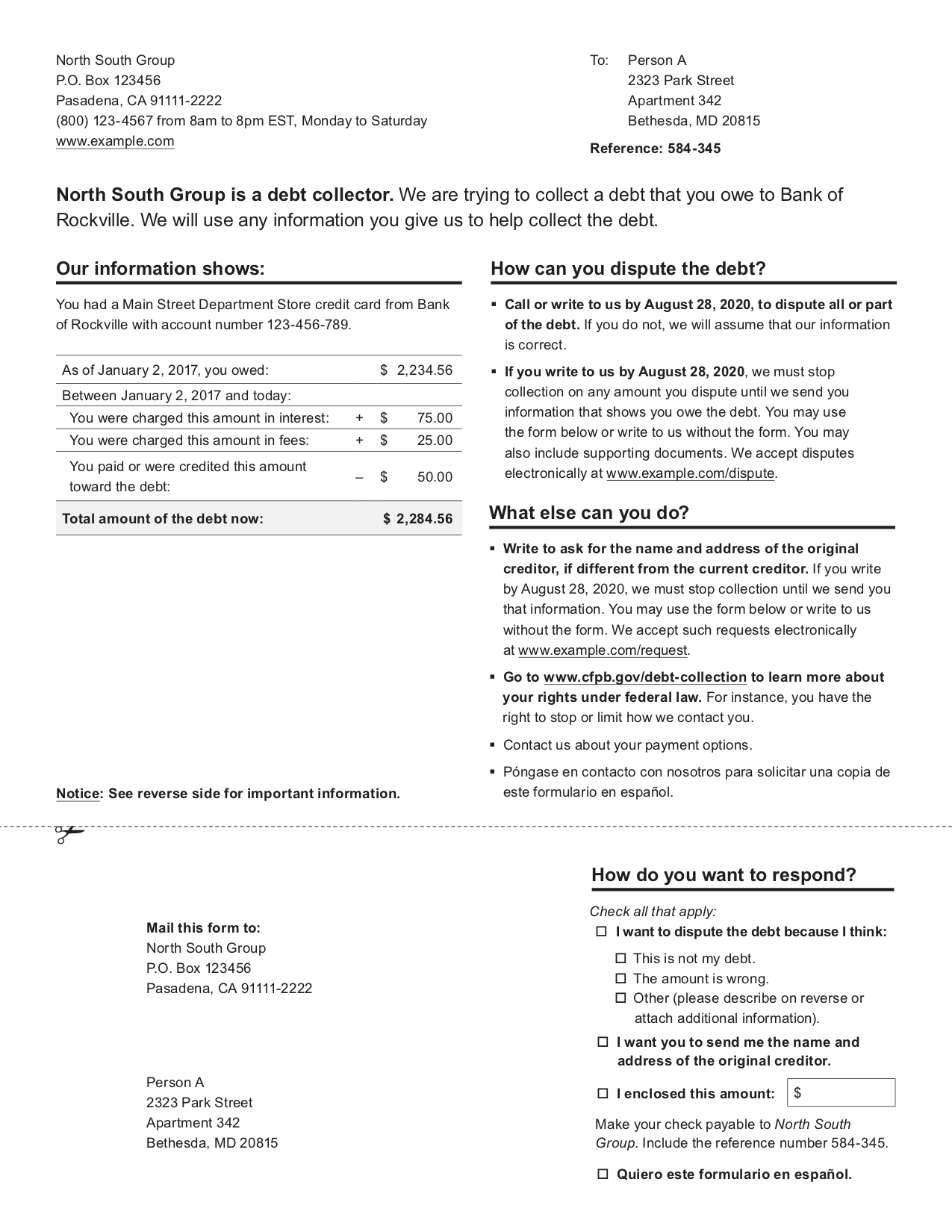
R002-P1-C059 A002 Validation itemization uses one of five permitted reference dates: statement, charge-off, last payment, transaction, or judgment. It distinguishes the baseline balance, subsequent interest/fees/payments/credits, and current amount. A specified mortgage-statement alternative exists. S020, §1006.34(b)(3), (c)(2)(vi)–(ix), (c)(5). Consumer Financial Protection Bureau+1 The baseline may already include fees and interest. A collector must use its chosen date consistently as required; a successor collector may choose another permitted date. An itemization is not an adjudication.
R002-P1-C060 A002 Covered mortgage statements distinguish payment due, principal/interest/escrow components, fees, arrears, payments applied, suspense funds, and outstanding principal. After acceleration, the displayed amount due can be an accepted reinstatement amount, distinct from the accelerated balance or payoff. S011, §1026.41(a), (d)(1)–(7), comments 41(d)(1)-1, 41(d)(2)-1. Consumer Financial Protection Bureau+1 Used as a document-field example. Section 41 has exemptions and bankruptcy modifications; a statement obligation was not decided for any actual transaction.
R002-P1-C061 A002 Official Form 106D separately records who allegedly owes, the nature of a lien, claim and collateral amounts, contingent/unliquidated/disputed characteristics, and additional parties to notify. CFPB’s published model validation notice separately presents the asserted debt and response categories. S029, model PDF p.1/index 0; S030, Form 106D pp.1–3/indices 0–2. files.consumerfinance.gov+1 These are useful organizational models, not proof of liability or a direction to file, pay, enroll, or contact anyone.

2. Source table

Reading and status conventions

D = actual check October 27, 2026, America/Los_Angeles.

U means the retrieved official OLRC U.S. Code text states currency through Public Law 119-121, October 9, 2026. E means the retrieved eCFR Title 12 display states currency through October 23, 2026; eCFR itself explains that it is not the official legal edition of the CFR. CFPB-current means the agency page labeled the displayed regulation current; it is not a claim that every linked historical version or cross-reference was independently audited.

Multiple sections, mirrors, and repeated openings are grouped usage, not independent corroboration. PDF page indices below are zero-based. PDF reading was parsed-text reading; no visual inspection is claimed.

Source ID Title, issuer, jurisdiction Complete literal HTTPS URL(s) Actual selected read bounds and pinpoint Version, effective trigger, status, and limits Check
R002-P1-S001 TILA definitions; Congress/OLRC; federal https://uscode.house.gov/us/usc/119-121/t15/s1602/ §1602(a), (d)–(i), especially credit, creditor, credit sale, consumer; relevant notes. U; statutory definitions. Not the entire TILA product framework. D
R002-P1-S002 TILA exemptions; Congress/OLRC; federal https://uscode.house.gov/us/usc/119-121/t15/s1603/ Complete operative paragraphs (1)–(7). U; exemptions and inflation mechanism. Current annual amount checked in S005 rather than treating the statutory base as the 2026 amount. D
R002-P1-S003 Regulation Z authority and coverage; CFPB; federal https://www.consumerfinance.gov/rules-policy/regulations/1026/1/ §1026.1(c) general coverage and comment 1(c)-1 foreign applicability. CFPB-current; ordinary coverage rules. Separate AVM amendment checked in S033. D
R002-P1-S004 Regulation Z definitions and official interpretations; CFPB/OFR; federal https://www.consumerfinance.gov/rules-policy/regulations/1026/2/ ; https://www.ecfr.gov/current/title-12/chapter-X/part-1026/subpart-A/section-1026.2 Material definitions in (a)(8), (10)–(17), (22), (25)–(26); related consumer, consummation, credit, credit-sale, creditor, and security-interest comments. Complete comment 2(a)(14)-1(i)–(ix) and security-interest comments read. E/CFPB-current. Mirrors treated as one usage. eCFR included the AVM consumer clause absent from the retrieved CFPB inline text; S033 resolves that narrow difference. Unrelated product provisions were not used for a currentness conclusion. D
R002-P1-S005 Regulation Z exemptions and official interpretations; CFPB/OFR; federal https://www.consumerfinance.gov/rules-policy/regulations/1026/3/ ; https://www.ecfr.gov/current/title-12/chapter-X/part-1026/subpart-A/section-1026.3 Operative (a)–(i); comments 3(a)-1–10; exemption/card relationship; annual-threshold commentary through 2026; selected open-end commentary. E/CFPB-current. 2026 threshold effective Jan.1–Dec.31, 2026. Full open-end transition history and all product exemptions’ applications not closed. D
R002-P1-S006 FDCPA definitions; Congress/OLRC; federal https://uscode.house.gov/us/usc/119-121/t15/s1692a/ Complete operative definitions (1)–(8), including all collector exclusions; attorney-amendment note. U. One grouped definition source, not separate corroboration for each clause. D
R002-P1-S007 Regulation F coverage and definitions; CFPB/OFR; federal https://www.consumerfinance.gov/rules-policy/regulations/1006/1/ ; https://www.consumerfinance.gov/rules-policy/regulations/1006/2/ ; https://www.ecfr.gov/current/title-12/chapter-X/part-1006/subpart-A/section-1006.2 §1006.1(a)–(c); §1006.2(e)–(i), all operative collector exclusions and relevant consumer/debt-buyer commentary. CFPB-current; eCFR comparison. Rule’s 2021 effective-date material in S029. D
R002-P1-S008 Bankruptcy definitions and construction; Congress/OLRC; federal https://uscode.house.gov/us/usc/119-121/t11/s101/ ; https://uscode.house.gov/us/usc/119-121/t11/s102/ §101(5), (8), (12), (36), (37), (50), (51), (53); §102 operative text, especially (2), and its legislative explanation. U. Legislative explanation separately identified. No transfer of Title 11 definitions into TILA/FDCPA. D
R002-P1-S009 Pennsylvania enacted Commercial Code, Chapter 91; General Assembly; Pennsylvania only https://www.legis.state.pa.us/WU01/LI/LI/CT/HTM/13/09.091..HTM §9102 selected party/consumer/collateral definitions; complete §9103(a)–(h); §9109 scope and exclusions. Current published enacted compilation; includes 2024 amendment notes. Not a model UCC and not an all-state source. Attachment/perfection/priority provisions not investigated in full. D
R002-P1-S010 Regulation Z disclosure content; CFPB; federal https://www.consumerfinance.gov/rules-policy/regulations/1026/18/ §1026.18(m), (p); complete accompanying security and contract-reference comments. CFPB-current. Used for classification/document meaning, not a complete disclosure-compliance review. D
R002-P1-S011 Regulation Z mortgage periodic statements; CFPB; federal https://www.consumerfinance.gov/rules-policy/regulations/1026/41/ (a); relevant (d)(1)–(8) fields and comments; selected exemption/modification passages. CFPB-current. Full exemption and bankruptcy-statement applicability not closed. D
R002-P1-S012 Regulation X definitions and commentary; CFPB; federal mortgage-servicing context https://www.consumerfinance.gov/rules-policy/regulations/1024/31/ ; https://www.consumerfinance.gov/rules-policy/regulations/1024/interp-31/ Complete relevant “delinquency” and “mortgage loan” definitions; delinquency comments 1–4. CFPB-current. Does not supply a universal contractual or reporting delinquency rule. D
R002-P1-S013 Uniform Retail-Credit Classification and Account-Management Policy; FFIEC, published by Federal Reserve; federal supervision https://www.federalreserve.gov/frrs/guidance/uniform-retail-credit-classification-and-account-management-policy.htm Policy body, implementation paragraph, footnotes 1–3; particularly loss classification and re-aging/extension/deferral definitions. Issued June12, 2000; stated implementation for Dec.31, 2000 reporting. Historical issuance still published. Used for accounting distinctions, not current institution-specific GAAP/CECL rules or universal borrower clocks. D
R002-P1-S014 Charge-off consumer FAQ; OCC HelpWithMyBank; federal banking explanation https://helpwithmybank.gov/help-topics/debt-credit-scores/debt-management/debt-collection/loan-charge-off.html Complete question and substantive answer. Page states review April2021; generic explanation, not a judgment or release. D
R002-P1-S015 OCC Bulletin 2014-37, Consumer Debt Sales: Risk Management Guidance; federal bank supervision https://www.occ.gov/news-issuances/bulletins/2014/bulletin-2014-37.html Summary, background, resale/documentation passages, and relevant footnotes; particularly required supporting information and disputes. Issued Aug.4, 2014; page expressly removes reputation-risk references as of Mar.20, 2025. Supervisory guidance; no new private rights. Its older generalized buyer descriptions are not used instead of current statutory tests. D
R002-P1-S016 Bankruptcy allowance of claims; Congress/OLRC; federal https://uscode.house.gov/us/usc/119-121/t11/s502/ Operative section read; reliance limited to (a), (b)(1), (c). U. Full claims litigation and bankruptcy eligibility excluded. D
R002-P1-S017 Effect of bankruptcy discharge; Congress/OLRC; federal https://uscode.house.gov/us/usc/119-121/t11/s524/ (a)–(f) read; reliance on (a)(1)–(3), (e). U. Later specialized subsections and complete discharge exceptions not reviewed for application. D
R002-P1-S018 FDCPA false representations and unfair practices; Congress/OLRC; federal https://uscode.house.gov/us/usc/119-121/t15/s1692e/ ; https://uscode.house.gov/us/usc/119-121/t15/s1692f/ Complete operative sections; reliance on e(2)(A), e(6), e(8), f(1), f(6). U. Conduct/remedies survey excluded. D
R002-P1-S019 FDCPA validation; Congress/OLRC; federal https://uscode.house.gov/us/usc/119-121/t15/s1692g/ Complete operative (a)–(e). U. Used for non-admission and conditional procedure, not individualized deadline advice. D
R002-P1-S020 Regulation F validation information; CFPB; federal https://www.consumerfinance.gov/rules-policy/regulations/1006/34/ (a); relevant (b), including itemization/validation-period definitions; (c)(1)–(5); relevant commentary; (d)(2) model-form framework. CFPB-current. Optional-disclosure and every formatting variation not comprehensively audited. D
R002-P1-S021 Regulation F disputes and original-creditor information; CFPB; federal https://www.consumerfinance.gov/rules-policy/regulations/1006/38/ Complete section and relevant commentary, including duplicative-dispute provisions. CFPB-current. No actual dispute chronology analyzed. D
R002-P1-S022 Regulation F communications; CFPB; federal https://www.consumerfinance.gov/rules-policy/regulations/1006/6/ §1006.6(a) and its complete relevant commentary. CFPB-current. Expanded communication definition only; not the entire communications rule. D
R002-P1-S023 Regulation F unfair or unconscionable means; CFPB; federal https://www.consumerfinance.gov/rules-policy/regulations/1006/22/ Operative body; particular reliance on (b), (e). CFPB-current. No actual fee or possession-right determination. D
R002-P1-S024 Certain bad-check-program exception; Congress/OLRC; federal with state-law predicates https://uscode.house.gov/us/usc/119-121/t15/s1692p/ Complete (a)–(c), including six excluded-check categories. U. Incorporated §5002 check definition and jurisdiction-specific criminal/program conditions not separately applied. D
R002-P1-S025 Heintz v. Jenkins, 514 U.S.291 (1995); Supreme Court; federal interpretation https://www.govinfo.gov/content/pkg/USREPORTS-514/pdf/USREPORTS-514-291.pdf Actual majority/unanimous opinion, printed pp.292–299, PDF indices1–8; key pp.294–295,299. Official bound-report opinion. Holding, posture, disposition read. Syllabus not substituted for opinion. Later-history/citator review held. D
R002-P1-S026 Obduskey v. McCarthy & Holthus LLP, March20,2019; Supreme Court https://www.supremecourt.gov/opinions/18pdf/17-1307_7lho.pdf Majority slip pp.1–14, PDF indices3–16; key holding/limits pp.1–2,5–9,12–14. Actual opinion read. Syllabus indices0–2 not treated as holding; concurrence indices17–19 not relied on. Later history held. D
R002-P1-S027 FDCPA/Regulation F relation to state law and state exemptions; Congress/CFPB https://uscode.house.gov/us/usc/119-121/t15/s1692n/ ; https://www.consumerfinance.gov/rules-policy/regulations/1006/104/ ; https://www.consumerfinance.gov/rules-policy/regulations/1006/108/ Complete §1692n; §§1006.104 and1006.108, relevant commentary. U/CFPB-current. Appendix A procedures and actual state exemption determinations not fully investigated. D
R002-P1-S028 CFPA auto-dealer exclusion; Congress/OLRC; federal https://uscode.house.gov/us/usc/119-121/t12/s5519/ Complete operative (a)–(f), including exceptions, preservation, and definitions. U. No dealer or licensing lookup. D
R002-P1-S029 Regulation F model validation notice and promulgation material; CFPB/Federal Register https://files.consumerfinance.gov/f/documents/cfpb_model-validation-notice_2020-12.pdf ; https://www.consumerfinance.gov/rules-policy/regulations/1006/b/ ; https://files.consumerfinance.gov/f/images/cfpb_regulations_1006-B-1.original.png ; https://www.consumerfinance.gov/rules-policy/final-rules/debt-collection-practices-regulation-f-2020-12/ ; https://www.federalregister.gov/documents/2021/01/19/2020-28422/debt-collection-practices-regulation-f Complete one-page model PDF parsed, index0; appendix heading/link; final-rule entry; Federal Register effective-date paragraph. Published sample, not a real account. Rule effective Nov.30,2021. Image not visually inspected. Full final-rule preamble not claimed read; current operative requirements supported separately by S020–S021. D
R002-P1-S030 Official Form106D, Schedule D; U.S. Courts; federal bankruptcy https://www.uscourts.gov/forms-rules/forms/schedule-d-creditors-who-hold-claims-secured-property-individuals ; https://www.uscourts.gov/sites/default/files/form_b106d.pdf Form complete pp.1–3, PDF indices0–2; official landing-page version information. Effective Dec.1,2015 as identified by the official page. Blank form only; no entries or filing. D
R002-P1-S031 Instructions for Bankruptcy Forms for Individuals; U.S. Courts https://www.uscourts.gov/sites/default/files/2025-04/instructions-individuals-2025-04v2-instructions.pdf Revision cover; printed p.2/index3, sole-proprietor context; printed p.19/index20, claim-status definitions; selected adjacent material. Revised April2025; 50-page PDF. Only identified portions used, not a claim of full-document review. D
R002-P1-S032 Withdrawn Guidance register; CFPB; federal agency status information https://www.consumerfinance.gov/compliance/guidance/withdrawn-guidance/ Register body and listed withdrawals read. Page displayed update July22,2026. Withdrawn guidance was not used as operative support. A register update is not enactment or a general repeal of statutory duties. D
R002-P1-S033 Quality Control Standards for Automated Valuation Models, final rule; federal agencies https://www.federalregister.gov/documents/2024/08/07/2024-16197/quality-control-standards-for-automated-valuation-models “DATES”; amendments to §§1026.2(a)(11),1026.3(i), and related commentary; printed-page references64577,64579 in HTML. Final rule effective Oct.1,2025; checked against current eCFR. Used solely to preserve the narrow exception to general Regulation Z exemptions. No complete AVM investigation. D
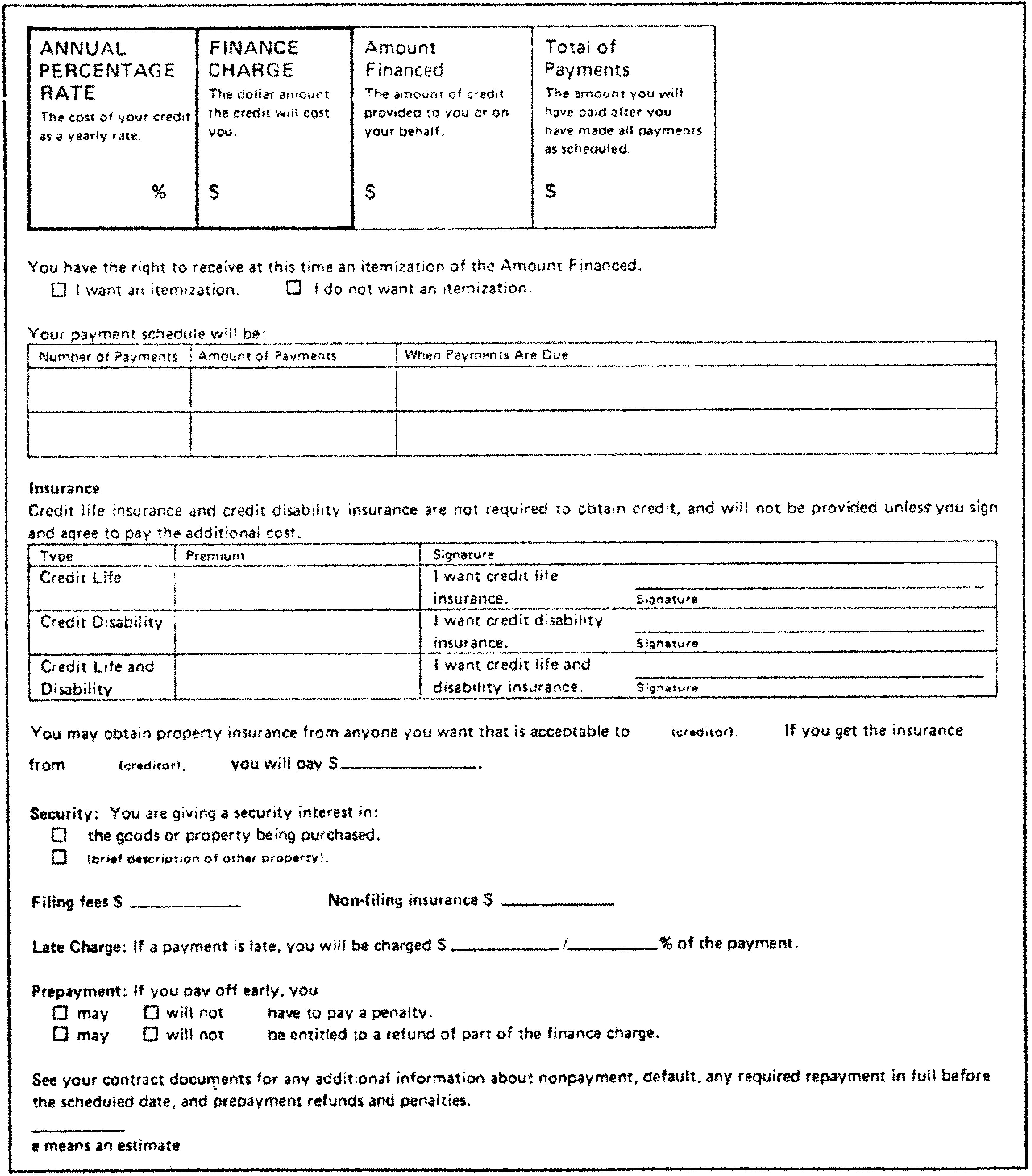
R002-P1-S034 Regulation Z Appendix H / H-2 discovery material; CFPB https://www.consumerfinance.gov/rules-policy/regulations/1026/h/ ; https://files.consumerfinance.gov/eregulations/ER22DE11.034-1.png Appendix/model headings and selected introductory commentary; image retrieval. Discovery/limited read only. No visual inspection or assertion of H-2’s complete fields. Worksheet fields instead supported by S010–S011 and S029–S031. D
R002-P1-S035 Legacy OLRC retrieval failures https://uscode.house.gov/view.xhtml?req=granuleid:USC-prelim-title15-section1602&num=0&edition=prelim ; https://uscode.house.gov/view.xhtml?req=granuleid:USC-prelim-title15-section1603&num=0&edition=prelim ; https://uscode.house.gov/view.xhtml?req=granuleid:USC-prelim-title15-section1692a&num=0&edition=prelim ; https://uscode.house.gov/view.xhtml?req=granuleid:USC-prelim-title11-section101&num=0&edition=prelim Body retrieval failed at legacy paths. Failure, no evidentiary weight. Recovered through official versioned paths in S001,S002,S006,S008. D
R002-P1-S036 California enacted-UCC retrieval attempts; Legislature https://leginfo.legislature.ca.gov/faces/codes_displaySection.xhtml?lawCode=COM&sectionNum=9102. ; https://leginfo.legislature.ca.gov/faces/codes_displaySection.xhtml?lawCode=COM&sectionNum=9103. Bodies not obtained; access/error response. Unresolved retrieval gap. No California proposition asserted. Pennsylvania was used as an explicitly different jurisdiction, not as a substitute for California law. D
R002-P1-S037 FDIC retail-credit policy mirror attempt https://www.fdic.gov/news/financial-institution-letters/2000/fil0040a.html Body retrieval failed. Failure. Policy read from the Federal Reserve’s public primary-source reproduction, S013. D
R002-P1-S038 Incorrect Regulation F appendix path https://www.consumerfinance.gov/rules-policy/regulations/1006/appendix-b/ Body retrieval failed. Failure recovered through canonical /1006/b/ and the actual model PDF in S029. D

3. Multidimensional blank classification worksheet

This is a document-analysis worksheet, not a questionnaire to submit anywhere. Every entry begins as a statement about what a generic document says. “Unknown,” “not supplied,” “conflicting,” and “not applicable” are valid results.

Blank worksheet

Dimension Blank entry Evidence to identify within the generic document set Stop condition or unresolved question
Document inventory Document type: ___; date/version: ___; pages supplied: ___ Generic agreement, disclosure, statement, notice, amendment, or published form. Missing pages, attachments, incorporated terms, or conflicting versions.
Legal issuer / initial payee Named issuer: ___; initial payee: ___; legal capacity: ___ Agreement heading, payment clause, execution block, disclosure. Brand/DBA may not establish legal identity or initial creditor status.
Current claimant Name as displayed: ___; asserted role: ___ Current-creditor field, assignment allegation, servicing or collection statement. Ownership, assignment linkage, or agency authority unsupported.
Alleged obligors Primary obligor: ___; co-obligor: ___; guarantor: ___ Promise-to-pay language, signature capacity, guarantee terms. Being named, receiving a notice, or owning collateral does not establish personal liability.
Collateral owners Owner/interest holder: ___; same as obligor? ___ Generic security agreement and ownership descriptions. Ownership, signing authority, and scope of pledged interest unproved.
Transaction and purpose Acquisition/service/cash advance/other: ___; intended use: ___ Purpose statement, goods/services financed, disbursement description. Marketing label or source of funds alone is insufficient.
Mixed purpose Household uses: ___; business/agricultural uses: ___; supporting facts: ___ For Regulation Z acquisition analysis, record all five factors; separately identify any special rental/card rule. Dominant purpose or relevant forum’s FDCPA treatment cannot be resolved.
Borrower capacity Natural person / organization / specified trust / unknown: ___ Actual contracting party and capacity. Trade name, guarantor, and beneficial owner are being confused with borrower.
Statute-specific gate TILA/Reg Z: ___; FDCPA debt: ___; collector status: ___; Title11 comparison only: ___ Apply separate definition and exemption fields. A single “consumer debt” flag is being reused across statutes.
Security claimed None stated / consensual / statutory / judicial / unknown: ___ Alleged grant, identified collateral, cited lien statute or process. Missing basis, property description, governing law, or proof of effective creation.
Purchase-money relationship Price financing: ___; enabling funds: ___; actual use: ___ Purchase and financing relationship; collateral tied to acquisition. No traceable acquisition use, mixed obligations, refinance, or jurisdiction-specific rule.
Recourse Personal claim alleged: ___; property claim alleged: ___; conditions: ___ Note, guarantee, security-only instrument, applicable-law question. Deficiency rights, anti-deficiency rules, releases, or guarantee triggers unresolved.
Amounts Original principal: ___; baseline balance/date: ___; later interest: ___; fees: ___; payments/credits: ___; current balance: ___ Itemized statement or notice, with each figure’s date and scope. Baseline already includes charges, missing payment application, unexplained adjustments.
Present payment demand Installment due: ___; arrears: ___; reinstatement: ___; accelerated balance: ___; payoff: ___ Identify the document’s exact label and “as of/good through” date. These amounts are conflated or supporting calculation is absent.
Dispute Identity / liability / purpose / amount / fee / ownership / security / other: ___ Record the precise contested proposition and document conflict. Do not mark undisputed merely because no response appears in supplied material.
Lifecycle attributes Current: ___; delinquent: ___; default alleged: ___; charge-off: ___; sale/placement: ___; judgment alleged: ___ Separate each status and its asserted source/date. A later accounting or collection label is being treated as discharge or proof.
Conditional status Fixed/contingent: ___; liquidated/unliquidated: ___; matured/unmatured: ___; disputed: ___ Trigger clause, calculation method, due date, nature of disagreement. Future maturity is being substituted for contingency, or dispute for uncertainty of amount.
Legal termination/change Payment / release / cancellation / discharge / satisfaction / modification alleged: ___ Identify the claimed legal event and its stated scope. No supporting instrument, operative terms, or applicable-law analysis.
Jurisdiction and law Relevant state/territory/tribal/foreign connections: ___; choice-of-law text: ___ Only generic facts supplied in the documents. No automatic inference that a clause resolves all mandatory law or forum questions.
Conclusion and holds Supported classification: ___; allegation only: ___; unknown: ___; excluded from this pass: ___ Tie every conclusion to document location and claim/source ID. No eligibility, liability, enforcement, or enrollment decision from incomplete evidence.

Optional arithmetic check, not a legal validation:

Reported current balance = stated baseline balance + later interest + later fees − payments − credits, subject to separately identified adjustments.

That reconciliation can expose missing or duplicated entries. It cannot establish that any component is legally owed. A payment currently due may differ from the resulting balance. See C037, C059–C060.

4. Ten clearly hypothetical worked classifications and failure branches

All facts below are invented solely to test the worksheet. They contain no real names, account identifiers, property identifiers, or real amounts.

Example Explicit hypothetical facts Statute-specific result versus unknown Missing evidence and permissible published-law follow-up Adverse misclassification
H01 — Personal unsecured loan An individual signs an installment-loan document for household expenses. It expressly takes no collateral. For this example only, the creditor’s regularity, finance-charge condition, and absence of another Regulation Z exemption are stipulated. Consumer credit under Regulation Z on the stipulated facts. The transaction can produce FDCPA consumer debt, but collector coverage remains a separate question. “Current” installments would not eliminate future payments. C001,C004–C008,C032. Complete terms, amendments, payment application, and the collecting actor’s role remain necessary before any real conclusion. Published authority can resolve the relevant coverage gate, not prove missing facts. Treating “unsecured” as unenforceable, or treating an original creditor as automatically subject to every FDCPA requirement.
H02 — Sole-proprietor business use with personal collateral The borrower is an individual sole proprietor. The stated and stipulated use is business inventory. A separate instrument claims a lien on the individual’s residence. Business-purpose Regulation Z exemption; personal collateral does not reverse it. The stipulated business transaction does not satisfy the FDCPA household-purpose requirement. The existence and extent of the home lien remain unproved. C013,C020,C024,C031. Security instrument, ownership/capacity, governing property law, and separate AVM applicability if relevant. Full foreclosure and deficiency analysis held. Calling the obligation consumer because a home is collateral, or assuming that an alleged mortgage creates unrestricted personal and property remedies.
H03 — Mixed-purpose purchase A vehicle is bought for both household travel and paid work. Both uses are substantial; the document gives no reliable primary-purpose account. Financing may cover the vehicle price and other items. Regulation Z purpose remains unknown pending the acquisition factors. FDCPA purpose requires its own transaction analysis. Purchase-money status is separately conditional on applicable law and acquisition use. C013,C019,C025–C027. Purpose evidence, financed-item breakdown, security grant, applicable jurisdiction, and that forum’s published mixed-purpose/PMSI authority. Inventing a universal percentage rule or treating every part of the balance as purchase money.
H04 — Guarantor who owns no collateral An individual guarantees an organizational borrower’s business obligation. The borrower’s goods are alleged collateral; the guarantor owns none of them. The guarantee’s conditions are missing. The guarantee does not remove the organizational Regulation Z exemption. The stipulated business purpose does not establish FDCPA consumer debt. The guarantor’s exposure, trigger, defenses, and any separate security remain unknown. C017,C028–C030. Full guarantee and governing guarantee law; distinguish payment guarantee from collection guarantee and any conditions using published jurisdiction-specific authority. Calling the entire obligation unsecured because the guarantor owns no collateral, or assuming immediate unlimited personal liability.
H05 — Collection after charge-off and sale A notice alleges a household loan was charged off, sold, and is now being collected. It supplies a current balance and added fees but no underlying agreement or transfer linkage. Record all three lifecycle allegations. Charge-off does not establish cancellation; sale does not establish title or amount. FDCPA debt nature may fit the alleged household transaction, while actor coverage and enforceability remain unknown. C035–C037,C043–C045,C058–C059. Contract, itemization, payments, transfer/agency support, actor facts, and any release/discharge evidence. Published law can define required proof for the relevant forum; no records retrieval occurs here. Assuming either “charged off means nothing is owed” or “purchased means the buyer has proved the entire balance.”
H06 — Disputed amount without a liability assumption A generic notice alleges a household obligation. Another supplied generic statement contains a different fee total. The alleged obligor disputes the difference; the underlying agreement is absent. Classification remains alleged household monetary obligation; amount disputed; liability unadjudicated. The arithmetic conflict does not itself prove either party correct. C007–C008,C037,C039–C040. Fee-authorizing terms/law, dated itemization, payment application, and procedural facts if assessing a dispute response. Treating a dispute as proof of invalidity, or treating silence about another component as an admission that it is owed.
H07 — Contingent and unliquidated undertaking A generic undertaking provides reimbursement only if a specified future loss occurs. The event has not occurred, and the potential loss cannot presently be calculated. Potentially contingent and unliquidated for the Bankruptcy Code comparison, assuming a legally cognizable payment right exists. It is not automatically a currently due loan or FDCPA consumer debt. C009–C011,C041. Trigger language, legal basis, calculation method, transaction purpose, and applicable contract law. No conclusion about claim allowance or program eligibility. Confusing future maturity with contingency or assigning a present fixed balance without a basis.
H08 — Security-interest enforcement; recourse unresolved A notice describes nonjudicial enforcement against a principal dwelling. No separate personal-payment demand is supplied. The actor’s other activities and the governing instruments are unknown. Obduskey’s limited-purpose treatment is a conditional branch, not an established result. The present possession right, full collector status, and personal recourse remain unresolved. C029,C052–C053. Exact notice conduct, security instrument, actor’s functions, relevant state-required procedure, and published law on possession and deficiency. Assuming every foreclosure communication is exempt, or that loss of collateral necessarily satisfies every personal obligation.
H09 — Nonborrower owner or spouse A person owns an interest in the encumbered principal dwelling and receives collection communications but is not shown as a note signer. A marital relationship is stated. Potential provision-specific rescission or communication treatment does not establish note liability. Co-owner, spouse, consumer-for-a-specific-rule, and payment obligor remain separate fields. C030,C058,C060. Signed instruments, ownership capacity, any applicable marital-property statute, and the exact right being analyzed. No spouse-liability conclusion. Inferring joint liability from marriage, ownership, or receipt of a statement.
H10 — Judgment or tax obligation versus new financing One generic document alleges an involuntary assessment or judgment. A separate hypothetical loan would finance its payment. The new loan’s purpose and parties are not specified. The original obligation is not itself Regulation Z credit merely because unpaid; the separate financing can be credit. FDCPA classification still requires the relevant transaction and purpose. Bankruptcy’s claim definition asks different questions. C001–C002,C007–C010,C038. Origin and legal nature of the obligation, new financing terms/purpose, and any specific public-debt statute. Tax/public-debt and judgment-clock investigations remain held. Treating every assessment or judgment as a consumer loan, or automatically transferring its original classification to the new financing.

5. Granular coverage table

“Answered” means answered within this component’s stated bounds. It does not mean an actual obligation has been classified or all potentially applicable law has been closed.

Assigned subquestion Status Findings / examples Exact missing evidence or retained limit Next bounded permissible investigation
1. TILA credit and consumer-credit definitions Answered C001–C006; H01,H10 Actual right to defer, borrower capacity, creditor facts, and exemption facts absent. Read only the relevant product’s current operative provision and commentary once a generic instrument type is specified.
1. FDCPA debt and consumer definitions Answered C007–C008 Transaction origin and primary purpose may be only alleged. Published controlling authority on the particular transaction category; no debtor lookup.
1. Bankruptcy comparison Answered, limited C009–C011 No allowance, dischargeability, chapter, or eligibility analysis. Separate authorized Title11 investigation if needed; do not import this comparison into other programs.
1. Agreement, liability, amount due, dispute, enforceability Answered as framework; actual application unresolved C003,C012,C037–C042 Contract, applicable law, amendments, performance, and any operative legal event absent. Examine a complete generic instrument and a narrowly chosen governing-law question.
1. Complete relevant clauses/comments and exclusions Answered for selected definitions; product closure excluded S001–S008 Full instrument taxonomy and every special-product provision intentionally unreviewed. Product-specific coverage module, including exact exemption conditions.
2. Household versus business/commercial purpose Answered C013,C019–C020; H01–H03 Purpose evidence and actual contracting capacity absent. Apply the stated test to a generic fact pattern without inventing missing facts.
2. Agricultural purpose Answered at gateway C016; H02 analogy only Specific agricultural activities and transaction use not supplied. Read the relevant agricultural facts against comment 3(a)-8; specialized agricultural regimes held.
2. Mixed purpose Partial C013–C015,C019; H03 No universal federal percentage rule identified; controlling FDCPA forum-specific weighting not researched. Read actual published controlling opinions for one identified jurisdiction and transaction type.
2. Owner, sole proprietor, organization, trust Answered at gateway C017,C020,C030; H02,H04,H09 Legal capacity and trust terms absent. Generic organizational/trust-capacity analysis under the relevant published law.
2. Extensions, guarantees, cards, refinancing Answered at narrow gateway C015,C017–C018,C030 Whether replacement occurred, plan purpose, guarantee conditions, and applicable special rules unknown. One focused extension/refinancing/guarantee module; no full product taxonomy now.
2. Purchase money versus cash advance Answered as separate dimensions C025–C027; H03 Actual use, price allocation, collateral grant, governing state unknown. One jurisdiction’s enacted purchase-money rule and published interpretations.
2. Effect on other legal programs Answered as nontransfer rule C010,C020 Tax, licensing, state contracts, and other programs not investigated. Investigate each program’s own definitions separately.
3. Secured/unsecured and lien type Answered definitionally C021–C024,C031 No actual creation, property scope, or validity evidence. Full state property/UCC module remains held.
3. Purchase-money statutory example Answered for Pennsylvania only C025–C026 Consumer-goods judicial rules and other states not closed; California retrieval failed. Read the chosen state’s enacted text and necessary published opinions; no model-act substitution.
3. Recourse/nonrecourse Partial by design C029; H08 Personal-liability terms, anti-deficiency law, remedy conditions, and releases absent. Narrow published-law review for one jurisdiction and instrument; no property/case search.
3. Borrower/co-obligor/guarantor/collateral owner Answered as role separation C028–C030; H04,H09 Who signed in what capacity and what each promise covers. Generic contract-capacity/guarantee analysis under identified law.
3. Attachment, perfection, priority, deficiency, spouse liability Excluded C031 Requires separate substantive law and facts. Retain full UCC/property, priority, marital-property, and remedies holds.
4. Current and delinquent Answered within identified contexts C032–C033 Account-management system, payment application, due dates, and product scope absent. One product’s contractual/regulatory status rules.
4. Default, acceleration, limitations accrual Partial; clock calculation excluded C034 Contractual triggers, notice/election requirements, jurisdiction, and chronology absent. Dedicated limitations/accrual/revival/judgment-clock component.
4. Charged off Answered C035; H05 Any separate cancellation, payment, discharge, or error remains unknown. Relevant published accounting instructions or legal termination rule only if required by a later bounded question.
4. Sold and in collection Answered as evidentiary distinction C036,C043–C045; H05 Transfer linkage, agency, amount, and actor functions unproved. Forum-specific published rules governing proof/standing; no transaction or case-record retrieval.
4. Judgment Answered at definitional gateway C038; H10 No operative judgment, satisfaction, lien scope, or clock analysis. Published judgment/lien law for a specified jurisdiction; actual case records remain prohibited.
4. Disputed Answered C039–C040; H06 Exact dispute content, timing, method, response, and underlying merits absent. Narrow statutory procedure analysis; full remedies/deadlines remain held.
4. Contingent/unliquidated/unmatured Answered definitionally C009,C041; H07 Trigger, calculability, legal basis, and enforceability absent. Specific generic contract plus controlling published law, without deciding actual liability.
4. Reporting/accounting versus legal discharge Answered distinction; reporting regime excluded C032,C035,C042 No FCRA accuracy/removal/clock analysis or actual discharge scope. Separate reporting and discharge modules.
5. Multidimensional blank worksheet Answered Section3; C012,C058–C061 No actual document set supplied or examined. Test only against an authorized generic sample.
5. Published sample/blank materials Answered S029–S031 Images not visually inspected; H-2 fields not relied on. If layout matters later, inspect an authorized public blank/sample visually.
5. Eight or more worked classifications Answered H01–H10 Hypotheses do not establish real facts. Additional hypothetical branches only within a later bounded component.
5. Unknowns and missing evidence Answered Worksheet stop conditions and all examples Missing evidence cannot be supplied by an authoritative legal rule. Identify the applicable rule and leave factual uncertainty visible; no contact/private retrieval.
6. Original creditor, collector, debt buyer Answered at federal gateway C043–C049 Actor activity, principal purpose, ownership/agency, acquisition/default facts absent. Generic actor-role analysis from statutory conditions; no roster or company investigation.
6. Attorneys Answered, with history limit C051 Later history/citator not checked; actual attorney activity unknown. Published-opinion later-history review if separately authorized; no docket/status inquiry.
6. Nonprofit/public/bad-check status Answered conditionally C047–C050 All statutory program/role conditions and specialized public-debt laws not applied. One specific statutory gateway using published law, without organization or license lookup.
6. Security enforcement versus full collection Answered, with application limits C052–C053; H08 Other collection conduct, required-state-notice assumption, possession right, and recourse unresolved. One jurisdiction’s published foreclosure/security-enforcement authorities; no case records.
6. Federal versus additional state coverage Answered federally; state survey excluded C054–C055 No state-specific collector definition, exemption determination, or licensing analysis. One defined jurisdiction’s published statute and rules.
6. Territories Partial C056 Local law and court/remedial differences not surveyed. One territory’s official law, not a blanket extension from the federal definition.
6. Tribal and cross-border gaps Partial/unresolved C057 Tribal status, immunity, jurisdiction, foreign-account facts, FDCPA extraterritorial doctrine, conflicts rules absent. Dedicated generic jurisdictional research; no tribal lender/entity or foreign-provider query.
6. Licensing, remedies, enforcement histories, country/state surveys Excluded Scope hold Expressly outside assignment. Preserve for later authorized components.

6. Question-to-source and claim crosswalk

Assigned question Principal source groups Claim range Worksheet / worked examples
1. Definitions and distinctions S001–S008,S011,S016–S017,S019 C001–C012,C038–C042 Statute-specific gate, amounts, dispute, legal-change fields; H01,H06,H07,H10
2. Purpose and borrower form S001–S005,S006–S008,S009–S010 C013–C020,C025–C027,C030 Purpose, mixed purpose, borrower capacity; H01–H04
3. Security and parties S004,S008–S010,S022,S026 C021–C031,C052–C053 Collateral, owners, roles, purchase money, recourse; H02–H04,H08–H09
4. Lifecycle and legal status S010–S021,S031 C032–C042 Amounts, current demand, lifecycle, conditional status, legal change; H05–H08,H10
5. Practical worksheet and examples S010–S011,S020–S021,S029–S031 C012,C058–C061 Entire worksheet; H01–H10
6. Coverage gateways and gaps S006–S007,S018,S022–S028 C043–C057 Actor role, statute-specific gate, jurisdiction/holds; H04–H05,H08–H09

7. Read and failure log

Log item Actual result Evidentiary consequence
Definitions and exclusions Operative statutory definitions, selected complete regulatory clauses, and necessary official comments were opened and read as bounded in S001–S008. Findings rest on bodies, not search snippets. Sections and mirrors are not counted as separate corroboration.
Legacy U.S. Code paths Four legacy paths failed; current versioned official pages succeeded. S035 → S001,S002,S006,S008. Failure was a URL/body-retrieval problem, not evidence that the law was absent.
California UCC Bodies were not obtained. S036. California classification remains a gap. No bypass attempted; Pennsylvania findings are expressly Pennsylvania-only.
Retail-credit policy mirror FDIC path failed; Federal Reserve reproduction succeeded. S037 → S013. Accounting distinctions rely on the successfully read primary-source reproduction.
Regulation F model path Initial appendix path failed; canonical appendix and actual model PDF succeeded. S038 → S029. Model fields were read from the parsed PDF.
PDF handling Model validation notice and Form106D parsed completely; instructions selectively parsed; actual majority opinions read. No claim of visual inspection, full instructions review, or reliance on a case headnote as the holding.
Image handling Model-image URLs resolved, but no visual-review conclusion was used. S029,S034. No unsupported assertion about graphical layout or complete H-2 content.
Long/truncated retrieval windows Some responses exposed only selected portions; relevant remaining clauses were reopened before use. Read bounds identify what was actually read. A page opening was not treated as full-document review.
CFPB guidance status Withdrawn Guidance register checked. S032. No operative proposition relies on a withdrawn circular, bulletin, or advisory opinion. Fee and collection claims are supported in current statutory/rule text.
Opinions Heintz and Obduskey majority holdings, posture, disposition, and limiting passages read. Later-history/citator checking is held. No docket, case-status, or underlying case-record query occurred.
Search discovery Search hits and index pages helped locate sources. Unopened snippets, secondary summaries, and model-act material were not used to establish legal propositions.
Future/proposed material Proposal links and historical material appeared in source navigation. No proposed or future rule was treated as operative. No claim is made that the absence of a future-year entry proves no future rule exists.

8. Self-check and remaining A002 holds

This is a self-check, not independent review.

The investigation provides the requested federal definition comparison, purpose criteria, narrow security and party distinctions, lifecycle/accounting distinctions, collector gateways, source register, atomic claims, blank worksheet, ten hypothetical branches, coverage table, crosswalk, and read/failure log.

The material limits are concrete:

  • No actual debt was assessed. A supplied label, notice, signature line, balance, charge-off entry, or transfer assertion would still require the missing evidence identified above.
  • Currentness is bounded by retrieved sources. The October 27 check date is distinct from the Code’s October 9 compilation cutoff, eCFR’s October 23 currency display, rules’ effective dates, and agencies’ page-update dates.
  • Opinion later history is unverified. The actual opinions were read, but no citator or comprehensive later published-opinion review was completed.
  • State and jurisdictional closure is absent. Pennsylvania supplies a narrow enacted-law illustration. California body retrieval failed. No all-state, territory, tribal, or international conclusion is asserted.
  • No classification is an award, eligibility decision, enrollment recommendation, or finding of legal liability. The worksheet deliberately preserves allegations, conflicts, and unknowns.

The remaining parent dimensions stay open: complete instrument/product taxonomy; priority and subordination; limitation, accrual, revival, reporting, and judgment clocks; contingent/future/secured guarantees under specific state or country law; family, succession, estate, employment, tax, and public debts; student, medical, housing, utility, business, tribal, and international regimes; debt validity, evidence, and remedies; actual program eligibility; insolvency or settlement suitability; and operational tools.

R002 PASS-01 is this bounded reference component only. It does not establish completion or acceptance of A002, the parent assignment, operations, or publication.

END R002 PASS-01

Every captured table

Captured cells with original header handling and explicitly labeled bounded correction overlays. Downloaded JSON retains original cells. Tables may contain source limitations, historical examples and identified corrections; the complete reading supplies context.

Read the evidence with its boundaries. These are saved research components, including revisions. A scoped coordinator review checks selected evidence; it does not certify every claim, a complete jurisdiction, current law or individual applicability. Dates and access limits remain attached to the records.

How to read the research →

Captured table 01

Claim ID · Assignment · Precise assertion · 12 data rows

Claim IDAssignmentPrecise assertionSources and exact pinpointsConditions, jurisdiction, status, and limits
R002-P1-C001A002TILA’s “credit” concerns a creditor-granted right to postpone payment of debt or incur debt with deferred payment. It does not define every unpaid monetary obligation as credit.S001, 15 U.S.C. §1602(f); S004, §1026.2(a)(14). ecfr.govFederal TILA/Regulation Z definition; current retrieved text. Whether a particular arrangement grants that right requires its terms.
R002-P1-C002A002Regulation Z commentary distinguishes credit from obligations such as involuntary tax liens, tax assessments, court judgments, and court-approved bankruptcy reaffirmations. Financing those obligations through a third party can separately constitute credit. A layaway arrangement without an obligation to continue payments is another express exclusion; forfeiture of payments alone does not supply that obligation.S004, comment 2(a)(14)-1, especially (i)–(ii); complete exclusion comment (i)–(ix) read. Consumer Financial Protection BureauThese are Regulation Z distinctions, not declarations that the underlying obligations are invalid, uncollectible, or outside every other law.
R002-P1-C003A002“Consummation” occurs when the consumer becomes contractually obligated on the credit transaction. Applicable state law determines when that obligation arises; a purchase agreement or deposit is not necessarily the financing agreement.S004, §1026.2(a)(13), comments 2(a)(13)-1–2. Consumer Financial Protection BureauFederal disclosure timing uses an underlying state-law obligation. No contract formation, capacity, assent, or enforceability determination is made here.
R002-P1-C004A002Ordinary Regulation Z consumer credit is credit offered or extended to a consumer primarily for personal, family, or household purposes. The consumer definition includes specified additional persons for particular provisions, rather than giving every participant identical rights.S001, §1602(i); S004, §1026.2(a)(11)–(12). ecfr.govSee C030 for guarantors, owners, and successors; C006 for additional coverage gates.
R002-P1-C005A002The ordinary Regulation Z creditor test combines regular extension of qualifying consumer credit, a finance charge or a written agreement for more than four installments excluding a down payment, and initial payability to that person. The ordinary frequency test is more than 25 extensions, or more than five dwelling-secured extensions, in the preceding calendar year, with a current-year fallback. Card-specific inclusions and separate high-cost-mortgage rules also exist.S001, §1602(g); S004, §1026.2(a)(17)(i)–(v), including the special high-cost rule and initial-payee commentary. ecfr.govAn assignee, broker, seller, servicer, and initial creditor are not interchangeable labels. The special high-cost test includes more than one qualifying extension in 12 months, or one or more through a mortgage broker. Card provisions require their own subsection check.
R002-P1-C006A002Consumer purpose alone does not establish complete Regulation Z coverage. Section 1026.3 adds amount, utility-service, regulated broker-account, home-fuel, Title IV student-loan, qualified retirement-plan, and limited mortgage-disclosure exemptions. For the 2026 period, the amount threshold is $73,400; the amount exemption has real-property, principal-dwelling, and private-education-loan exceptions.S002, §1603; S005, §1026.3(b)–(h), comment 3(b)-3(xvii). ecfr.gov +1Each exemption has specific conditions. Open-end commitments and later changes require additional analysis; the current balance alone is insufficient. Section 3(h) is only a partial disclosure exemption. Section 3(i) preserves separate automated-valuation-model requirements even for otherwise exempt transactions; that amendment became effective October 1, 2025. S033. federalregister.gov
R002-P1-C007A002FDCPA debt is an actual or alleged monetary obligation arising from a transaction whose money, property, insurance, or services are primarily personal, family, or household in purpose. Reduction to judgment does not remove an otherwise qualifying obligation from the definition.S006, 15 U.S.C. §1692a(5). uscode.house.govThe transaction and purpose requirements matter. This is not a definition of all money owed.
R002-P1-C008A002FDCPA/Regulation F consumer status concerns a natural person obligated or allegedly obligated to pay a debt; Regulation F expressly includes a deceased natural person. The debt definition does not add a requirement that the obligation be a contractual loan or a TILA-covered credit extension.S006, §1692a(3), (5); S007, §1006.2(e), (h), comment 2(h)-1. Consumer Financial Protection BureauThe absence of a loan does not answer the separate transaction-purpose test. Treatment of particular taxes, torts, penalties, or public obligations requires further authority.
R002-P1-C009A002Bankruptcy “claim” includes a right to payment regardless of judgment, liquidation, contingency, maturity, dispute, legal/equitable character, or security. It also includes an equitable remedy for breach when the breach gives rise to a payment right, subject to the definition’s qualifications.S008, 11 U.S.C. §101(5)(A)–(B). uscode.house.govTitle 11 definition. A possible claim must still have a legal basis; the definition does not manufacture a payment right.
R002-P1-C010A002Bankruptcy “debt” means liability on a claim. Its separate “consumer debt” definition concerns debt incurred by an individual primarily for personal, family, or household purposes. These definitions do not incorporate TILA’s creditor-frequency test or the FDCPA’s complete transaction/collector framework.S008, §101(8), (12). uscode.house.gov +1Comparative synthesis: similar words do not make the statutes interchangeable. Bankruptcy classification beyond this comparison remains held.
R002-P1-C011A002Inclusion within the Bankruptcy Code’s broad claim definition does not resolve allowance. Section 502 separately addresses objections, unenforceability under agreement or applicable law, and estimation of specified contingent or unliquidated claims.S016, §502(a), (b)(1), (c). uscode.house.govThis is a definitional safeguard, not a bankruptcy filing, allowance, or eligibility analysis.
R002-P1-C012A002Worksheet synthesis: keep five questions separate: what agreement is alleged; whether it legally binds the alleged obligor; what amount is presently due; what is disputed; and what remedies are enforceable. None is established merely by answering another.S004, consummation commentary; S011, §1026.41(d); S016, §502(b)(1); S019, §1692g(c).This is an analytical method derived from the sources, not an additional statutory definition or an actual liability decision.
Source links captured in this table

Captured table 02

Claim ID · Assignment · Precise assertion · 8 data rows

Claim IDAssignmentPrecise assertionSources and exact pinpointsConditions, jurisdiction, status, and limits
R002-P1-C013A002Regulation Z requires a transaction-specific primary-purpose determination. For acquisition credit, its commentary identifies occupation connection, personal management, acquisition-income ratio, transaction size, and the borrower’s purpose statement. Increasing the first four generally points toward business purpose.S005, comments 3(a)-1, -3. Consumer Financial Protection BureauNo universal mixed-purpose percentage or dispositive single factor is supplied by these provisions. Making consumer disclosures does not itself decide exemption.
R002-P1-C014A002Regulation Z treats acquisition, improvement, or maintenance of non-owner-occupied rental property as business purpose. Expected occupancy exceeding 14 days in the coming year defeats that particular rule. For owner-occupied rentals, acquisition of more than two units, or improvement/maintenance of more than four, is deemed business purpose.S005, comments 3(a)-4–5. Consumer Financial Protection BureauFewer units do not automatically establish consumer purpose. These are specific Regulation Z rules, not universal real-estate or FDCPA thresholds.
R002-P1-C015A002Occasional household use does not generally convert a business-purpose credit-card plan into a consumer plan under Regulation Z; occasional business use of a consumer-purpose card does not generally remove its coverage. Renewal can involve a purpose conversion.S005, comments 3(a)-2, -7. Consumer Financial Protection BureauCard issuance and unauthorized-use provisions remain specifically relevant to otherwise exempt cards. Do not transfer this plan treatment to every FDCPA charge or transaction.
R002-P1-C016A002Regulation Z expressly exempts primarily agricultural credit. Its commentary describes specified agricultural activities by persons engaged in farming, fishing, or growing, and includes primarily agricultural real-estate transactions containing a homestead.S002, §1603(1); S005, §1026.3(a)(1), comment 3(a)-8. Consumer Financial Protection BureauA home on agricultural property does not alone establish household purpose. A product or industry label still requires facts about the extension.
R002-P1-C017A002An actual organizational borrower is an independent Regulation Z exemption, regardless of a natural person’s guarantee or collateral. Certain consumer-purpose tax/estate-planning trusts and land trusts receive natural-person treatment under the commentary.S002, §1603(1); S005, §1026.3(a)(2), comments 3(a)-9–10. ecfr.gov +1Verify legal borrower capacity. A trade name alone does not establish a separate entity. The trust exception requires its stated circumstances; it is not an exemption for every trust.
R002-P1-C018A002Previously exempt business credit rewritten for consumer purposes becomes the described consumer refinancing only when the old obligation is satisfied and replaced by a new consumer-purpose obligation of the same obligor.S005, comment 3(a)-6. Consumer Financial Protection BureauA new description, payment accommodation, or later personal use alone does not prove that replacement occurred.
R002-P1-C019A002FDCPA purpose classification follows its own primarily-personal/family/household transaction test. These statutory and Regulation F definitions do not prescribe Regulation Z’s five-factor acquisition test, rental-unit rules, or a universal mixed-purpose percentage.S006, §1692a(5); S007, §1006.2(h). Consumer Financial Protection BureauSynthesis and limit: resolving a close mixed transaction may require the relevant forum’s published controlling opinions. That jurisdiction-specific weighting was not closed here.
R002-P1-C020A002Synthesis: funding source, collateral, borrower capacity, and transaction purpose are separate facts. Personal collateral can support business credit; an employer can extend personal-purpose credit. A federal consumer/business classification does not establish bankruptcy, tax, licensing, state-law, or contract treatment.S001–S005; S008, §101(8).A sole proprietor borrowing personally requires a purpose inquiry; an actual organizational borrower presents an additional Regulation Z gate. No cross-program classification is presumed.
Source links captured in this table

Captured table 03

Claim ID · Assignment · Precise assertion · 11 data rows

Claim IDAssignmentPrecise assertionSources and exact pinpointsConditions, jurisdiction, status, and limits
R002-P1-C021A002In the Bankruptcy Code, a lien is a charge against or interest in property securing debt or performance; a security interest is a lien created by agreement, and a security agreement creates or provides for it.S008, §101(37), (50), (51). uscode.house.govTitle 11 terminology. It does not independently create a lien under state property law.
R002-P1-C022A002A Bankruptcy Code judicial lien is obtained through judgment, levy, sequestration, or other legal or equitable process or proceeding.S008, §101(36). uscode.house.govA judgment label alone does not identify what property, if any, is encumbered under applicable law.
R002-P1-C023A002A Bankruptcy Code statutory lien arises solely through a statute’s specified circumstances or conditions, or specified rent distress. It excludes a security interest or judicial lien even when a statute supports that other lien.S008, §101(53). uscode.house.gov“There is a statute about the lien” is not sufficient to classify it as statutory.
R002-P1-C024A002Regulation Z’s security-interest definition requires an interest recognized by state or federal law. Its disclosure definition excludes specified incidental interests and treats operation-of-law interests differently for certain disclosures and rescission.S004, §1026.2(a)(25), comments 2(a)(25)-1–6. Consumer Financial Protection BureauA blank disclosure box is not a complete lien search or proof that no property interest exists. Regulation Z does not itself supply lien creation or perfection.
R002-P1-C025A002Pennsylvania’s enacted UCC defines a purchase-money obligation by the collateral’s price or value enabling acquisition of rights in or use of the collateral, actually used for that purpose. Its purchase-money-security-interest rules apply to the stated extent and collateral categories.S009, 13 Pa.C.S. §9103(a)–(d). COMMERCIAL CODEPennsylvania example only. Proof of actual use and a qualifying security interest remains necessary. No nationwide purchase-money conclusion follows.
R002-P1-C026A002Pennsylvania’s express allocation, dual-status/refinancing, and burden rules in §9103(e)–(g) are limited to non-consumer-goods transactions; subsection (h) leaves the corresponding consumer-goods rules to courts without an inference from that limitation.S009, §9103(e)–(h). COMMERCIAL CODEConsumer refinancing, consolidation, cross-collateralization, and other states remain unresolved.
R002-P1-C027A002A Regulation Z credit sale involves a seller that is a creditor; qualifying leases/bailments are included on stated conditions. Purchase-money financing can instead be a loan. A cash advance describes the financing mechanism and does not by itself answer purpose, collateral, or purchase-money status.S001, §1602(h); S004, §1026.2(a)(16); S010, comment 18(m)-1–3. Consumer Financial Protection BureauSynthesis: identify who initially receives payment and what the funds actually acquire. “Purchase money” does not establish perfection or priority.
R002-P1-C028A002Pennsylvania distinguishes the person with an interest in collateral—the UCC debtor—from the obligor accountable for payment or performance. Its secondary-obligor definition addresses secondary liability or specified recourse rights. Those roles need not belong to one person.S009, §9102 definitions of “debtor,” “obligor,” and “secondary obligor.” COMMERCIAL CODE +1Pennsylvania terminology only. A guarantor’s lack of collateral does not establish that the underlying obligation is unsecured.
R002-P1-C029A002A claim against property is analytically distinct from personal recovery. Bankruptcy §102(2) includes claims against the debtor’s property; its legislative explanation expressly addresses nonrecourse obligations.S008, §102(2) and accompanying paragraph-(2) legislative explanation. uscode.house.govWorksheet terminology: recourse asks whether personal recovery is available; nonrecourse describes property recovery without that personal claim. Contract, applicable law, and procedural conditions must determine the answer. Legislative explanation is identified as such, not treated as additional statutory text.
R002-P1-C030A002A guarantor is generally not a Regulation Z consumer merely because of the guarantee, subject to specified card and rescission circumstances. An owner whose principal-dwelling interest is encumbered may be a consumer for rescission without being the note obligor. Regulation F’s communication definition separately includes specified spouses, parents, representatives, and successors.S004, §1026.2(a)(11), comments 2(a)(11)-1–3; S022, §1006.6(a), commentary. Consumer Financial Protection Bureau +1These are provision-specific protections or communication rules, not rules creating spouse, co-owner, estate-representative, or guarantor liability.
R002-P1-C031A002Synthesis: “secured,” “unsecured,” “purchase money,” “joint,” or “guaranteed” does not establish attachment, perfection, priority, enforceability, deficiency liability, or another person’s liability.S004, §1026.2(a)(25); S009, §§9102–9103, 9109; S010, comment 18(m)-7.Full state UCC/property and foreclosure/repossessions analysis remains held. Pennsylvania §9109 also contains substantial scope exclusions, including real-property interests subject to specified exceptions.
Source links captured in this table

Captured table 04

Claim ID · Assignment · Precise assertion · 11 data rows

Claim IDAssignmentPrecise assertionSources and exact pinpointsConditions, jurisdiction, status, and limits
R002-P1-C032A002“Current” is a status that requires its reference system and date. The federal retail-credit policy expressly describes re-aging, extensions, and deferrals that return accounts to current status without necessarily collecting everything previously due.S013, “Re-aging…” and footnote 3. federalreserve.govSupervisory/account-management context. “Current” does not mean no remaining obligation or establish credit-reporting accuracy.
R002-P1-C033A002For Regulation X’s mortgage-servicing subpart, delinquency begins when a sufficient periodic principal, interest, and applicable escrow payment becomes due and unpaid. A late-fee grace period does not postpone that definition; payment application and the stated payment-tolerance rule can affect it.S012, §1024.31 “Delinquency” and comments 1–4. Consumer Financial Protection BureauThis is a defined mortgage-servicing context, with its own mortgage-loan scope and exclusions. It is not a universal definition for every account.
R002-P1-C034A002Nonpayment, default, acceleration, and maturity require separate treatment. Regulation Z’s contract-reference provision directs attention to the relevant contract; Regulation X separately recognizes contractual acceleration. The FDCPA definitions read do not establish a universal default date.S010, §1026.18(p), comment 18(p)-1; S012, delinquency comment 4; S006–S007. Consumer Financial Protection Bureau +1No equation between first delinquency, default, acceleration, limitations accrual, or reporting dates is adopted. Contract and jurisdiction-specific clocks remain held.
R002-P1-C035A002A charge-off is an accounting treatment, not automatic cancellation. The retail policy permits the possibility of later recovery after loss classification; OCC’s consumer explanation distinguishes charge-off from forgiveness/cancellation.S013, footnote 1; S014, complete FAQ answer; S015, “Background.” federalreserve.gov +1This does not prove that any particular charged-off balance remains valid or enforceable. A separate release, payment, discharge, error, or other legal event may matter.
R002-P1-C036A002Sale, servicing transfer, collection placement, and ownership are separate propositions. OCC debt-sale guidance calls for underlying obligation records, itemized balances, relevant dates, and dispute information, and identifies information-loss risks in resale.S015, documentation and resale-risk passages, especially retrieved lines 216–230. OCCSynthesis: a sale or collection notice alone does not establish the amount, assignment linkage, agency authority, or standing. Required legal proof depends on the relevant law and procedure. OCC guidance creates no new private legal rights.
R002-P1-C037A002For covered collectors, the FDCPA prohibits false representations about a debt’s character, amount, or legal status. Collection of interest, fees, or other incidental amounts requires authorization by the agreement creating the debt or permission by law.S018, §§1692e(2)(A), 1692f(1); S023, §1006.22(b). uscode.house.gov +1A line item’s appearance on a statement does not establish its contractual or statutory basis. No actual fee is adjudicated here.
R002-P1-C038A002A judgment does not erase an otherwise qualifying debt’s FDCPA character. A judgment itself is not automatically a new Regulation Z credit extension. A judicial lien requires its own applicable legal basis and scope.S006, §1692a(5); S004, comment 2(a)(14)-1(ii); S008, §101(36).Comparative synthesis: record the underlying transaction, alleged judgment, and alleged lien separately. No judgment record or status was queried.
R002-P1-C039A002A dispute is not an admission of liability. Conversely, failure to dispute under the FDCPA validation procedure may not be construed by a court as an admission of liability.S019, §1692g(c); S021, §1006.38(d)(1). Consumer Financial Protection BureauThis does not adjudicate the dispute or address every possible evidentiary admission outside that procedure.
R002-P1-C040A002The specified timely written dispute procedure requires cessation of collection of the disputed debt or portion until the required verification or judgment information is sent. Regulation F separately addresses qualifying duplicative disputes.S019, §1692g(b); S021, §1006.38(d)(2), including commentary. Consumer Financial Protection BureauDo not infer that every oral, late, or repeated dispute automatically stops every collection activity. No individual deadline was calculated; full procedures and remedies remain outside this pass.
R002-P1-C041A002Official bankruptcy instructions distinguish contingent obligations dependent on an event, unliquidated amounts not readily determinable, and disputed obligations. These characteristics can coexist; a disputed fixed amount need not be unliquidated, and a future due date alone does not necessarily make liability contingent.S031, printed p.19, PDF index 20; S008, §101(5). uscourts.govThe last two distinctions are classification synthesis from the separate categories. A guarantee’s trigger and present enforceability require its terms and applicable law.
R002-P1-C042A002Bankruptcy discharge has specified legal effects, including treatment of personal-liability judgments and collection of discharged personal obligations. It is not equivalent to charge-off and does not automatically determine every lien or other party’s liability.S017, §524(a)(1)–(3), (e). uscode.house.govSection 524(e) itself excepts subsection (a)(3). No discharge eligibility, exception, lien survival, community-property, or actual order determination is made.
Source links captured in this table

Captured table 05

Claim ID · Assignment · Precise assertion · 15 data rows

Claim IDAssignmentPrecise assertionSources and exact pinpointsConditions, jurisdiction, status, and limits
R002-P1-C043A002The FDCPA creditor definition covers specified credit-extending persons and persons to whom debt is owed, but excludes an assignee receiving defaulted debt solely to facilitate collection for another.S006, §1692a(4). uscode.house.govThis exclusion does not mean every defaulted-debt purchaser necessarily satisfies every collector test.
R002-P1-C044A002The general collector definition has a principal-purpose branch and a regular-collection-for-another branch, with the stated interstate-commerce/mail connection. A creditor collecting its own debts under a name suggesting a third-party collector is specifically included.S006, §1692a(6), opening provisions. uscode.house.gov“Original creditor,” “servicer,” or “debt buyer” branding alone does not answer the statutory conditions.
R002-P1-C045A002Regulation F’s debt-buyer example excludes a purchaser collecting its own debts only on the example’s additional facts: it neither regularly collects for another nor has debt collection as its principal business purpose.S007, comment 2(i)-1. Consumer Financial Protection BureauOwnership is not a universal exemption. Default when acquired is relevant to particular exclusions, not a complete classification engine.
R002-P1-C046A002Express exclusions cover creditor officers/employees collecting in the creditor’s name and qualifying related entities collecting only for affiliates where debt collection is not their principal business.S007, §1006.2(i)(2)(i)–(ii); S006, §1692a(6)(A)–(B). Consumer Financial Protection BureauThe affiliation, exclusivity, activity, and business-purpose conditions must actually be met.
R002-P1-C047A002The public-official exclusion concerns U.S. or state officers/employees acting in official duties; the process-server exclusion concerns service or attempted service of legal process. Neither label supplies a blanket exception for unrelated collection conduct or every government contractor.S006, §1692a(6)(C)–(D); S007, corresponding exclusions. uscode.house.govThe underlying public obligation’s transaction character is a separate question. Federal public-debt statutes and sovereign issues remain held.
R002-P1-C048A002The nonprofit exclusion requires a bona fide nonprofit organization, consumer-requested credit counseling, and assistance liquidating debts through receipt and distribution of consumer payments to creditors.S007, §1006.2(i)(2)(v); S006, §1692a(6)(E). Consumer Financial Protection BureauNonprofit status alone is insufficient. This is not enrollment or suitability advice.
R002-P1-C049A002For collection of another’s debt, the specified activity-based exclusions concern incidental bona fide fiduciary/escrow functions, debt originated by the person, debt not in default when obtained, and debt obtained as a secured party in a commercial-credit transaction involving the creditor.S007, §1006.2(i)(2)(vi)(A)–(D); S006, §1692a(6)(F). Consumer Financial Protection BureauEach applies only to its stated extent. “Obtained,” the relevant role, and default status require evidence; no universal default clock is supplied.
R002-P1-C050A002A private bad-check-program operator receives the special exclusion only under §1692p’s combined conditions: qualifying voluntary prosecutorial diversion program; supervised administrative-support contract; compliance with penal law, contract, and directives; no independent prosecutorial discretion; required prosecutor screening and prior payment demand; prescribed initial dispute/fraud information and renewed probable-cause procedure; and contract-authorized fees.S024, §1692p(a)–(c). uscode.house.govExcluded check categories include specified payday/postdated checks, reasonable good-faith stop payments, unnotified bank adjustments, previously accepted partial payments, incapacity/minority, and illegal transactions. No program’s qualification is decided; incorporated check-definition and state-law application remain unclosed.
R002-P1-C051A002Heintz v. Jenkins holds that attorneys regularly engaged in consumer-debt collection through litigation can fall within the FDCPA. The Supreme Court affirmed the appellate reversal of dismissal; it did not decide that every alleged collection practice was unlawful.S025, 514 U.S. 291, 294–295, 299; PDF indices 3–4, 8. govinfo.gov +1Actual unanimous opinion read. No general attorney exemption follows from profession. Later history was not independently checked.
R002-P1-C052A002Obduskey holds that an actor doing no more than the relevant nonjudicial security-interest enforcement falls within the limited-purpose definition, rather than the FDCPA’s full collector definition on those facts. The Supreme Court affirmed dismissal.S026, majority slip pp.1–2, 5–9, 12–14; PDF indices 3–4, 7–11, 14–16. supremecourt.gov +1The majority reserved judicial foreclosure and other collection activity, and proceeded on the assumption that the communications were state-required. It is not immunity for every foreclosure actor. Later history was not independently checked.
R002-P1-C053A002The limited security-enforcement provision prohibits specified nonjudicial dispossession/disablement conduct when there is no present enforceable right to possession, no present intent to take possession, or a legal exemption from the dispossession/disablement.S018, §1692f(6); S023, §1006.22(e). Consumer Financial Protection BureauAny one of the listed conditions matters. Whether a present right exists requires applicable property/security law and facts, which this pass does not decide.
R002-P1-C054A002Regulation F’s scope has an express exclusion tied to CFPA §1029(a), with §5519’s defined motor-vehicle-dealer and predominant-activity conditions and exceptions for specified real-estate, retained direct-financing, and unrelated financial-product activities.S007, §1006.1(c)(1); S028, 12 U.S.C. §5519(a)–(f). Consumer Financial Protection Bureau +2A CFPB-jurisdiction carveout does not itself erase the FDCPA or other agencies’ authority. No actual dealer, license, or business was investigated.
R002-P1-C055A002The FDCPA preserves state provisions affording greater consumer protection. Regulation F likewise addresses additional state requirements and provides a state-application mechanism for specified exemptions.S027, §1692n; §§1006.104, 1006.108. uscode.house.gov +2An exemption is not presumed merely because a state regulates collection. No state coverage, licensing, or exemption roster was queried.
R002-P1-C056A002The federal definitions of “State” read here expressly reach D.C., Puerto Rico, and territories/possessions, with statute-specific wording.S004, §1026.2(a)(26); S006, §1692a(8). ecfr.gov +1This does not establish identical local law, remedies, court jurisdiction, or treatment of tribes throughout those places.
R002-P1-C057A002Regulation Z’s foreign-applicability commentary distinguishes U.S.-located accounts extended to residents of a defined state from credit at foreign branches abroad; foreign issuer nationality or purchases abroad alone does not decide the former category.S003, comment 1(c)-1. Consumer Financial Protection BureauThis is a narrow Regulation Z gateway. FDCPA extraterritorial application, tribal jurisdiction/immunity, foreign law, and conflicts rules remain unresolved.
Source links captured in this table

Captured table 06

Claim ID · Assignment · Precise assertion · 4 data rows

Claim IDAssignmentPrecise assertionSources and exact pinpointsConditions, jurisdiction, status, and limits
R002-P1-C058A002Regulation F validation information distinguishes the collector, creditor at the itemization date where required, and current creditor. The commentary permits specified trade/DBA names; a displayed name is therefore not necessarily proof of exact legal identity.S020, §1006.34(c)(2)(i)–(v), commentary; S007, §1006.1(c)(2). Consumer Financial Protection BureauTwo specified disclosures apply only to consumer-financial-product/service debts. A name ambiguity is an evidence gap, not automatically a notice violation.
R002-P1-C059A002Validation itemization uses one of five permitted reference dates: statement, charge-off, last payment, transaction, or judgment. It distinguishes the baseline balance, subsequent interest/fees/payments/credits, and current amount. A specified mortgage-statement alternative exists.S020, §1006.34(b)(3), (c)(2)(vi)–(ix), (c)(5). Consumer Financial Protection Bureau +1The baseline may already include fees and interest. A collector must use its chosen date consistently as required; a successor collector may choose another permitted date. An itemization is not an adjudication.
R002-P1-C060A002Covered mortgage statements distinguish payment due, principal/interest/escrow components, fees, arrears, payments applied, suspense funds, and outstanding principal. After acceleration, the displayed amount due can be an accepted reinstatement amount, distinct from the accelerated balance or payoff.S011, §1026.41(a), (d)(1)–(7), comments 41(d)(1)-1, 41(d)(2)-1. Consumer Financial Protection Bureau +1Used as a document-field example. Section 41 has exemptions and bankruptcy modifications; a statement obligation was not decided for any actual transaction.
R002-P1-C061A002Official Form 106D separately records who allegedly owes, the nature of a lien, claim and collateral amounts, contingent/unliquidated/disputed characteristics, and additional parties to notify. CFPB’s published model validation notice separately presents the asserted debt and response categories.S029, model PDF p.1/index 0; S030, Form 106D pp.1–3/indices 0–2. files.consumerfinance.gov +1These are useful organizational models, not proof of liability or a direction to file, pay, enroll, or contact anyone.
Source links captured in this table

Captured table 07

Source ID · Title, issuer, jurisdiction · Complete literal HTTPS URL(s) · 38 data rows

Source IDTitle, issuer, jurisdictionComplete literal HTTPS URL(s)Actual selected read bounds and pinpointVersion, effective trigger, status, and limitsCheck
R002-P1-S001TILA definitions; Congress/OLRC; federalhttps://uscode.house.gov/us/usc/119-121/t15/s1602/§1602(a), (d)–(i), especially credit, creditor, credit sale, consumer; relevant notes.U; statutory definitions. Not the entire TILA product framework.D
R002-P1-S002TILA exemptions; Congress/OLRC; federalhttps://uscode.house.gov/us/usc/119-121/t15/s1603/Complete operative paragraphs (1)–(7).U; exemptions and inflation mechanism. Current annual amount checked in S005 rather than treating the statutory base as the 2026 amount.D
R002-P1-S003Regulation Z authority and coverage; CFPB; federalhttps://www.consumerfinance.gov/rules-policy/regulations/1026/1/§1026.1(c) general coverage and comment 1(c)-1 foreign applicability.CFPB-current; ordinary coverage rules. Separate AVM amendment checked in S033.D
R002-P1-S004Regulation Z definitions and official interpretations; CFPB/OFR; federalhttps://www.consumerfinance.gov/rules-policy/regulations/1026/2/ ; https://www.ecfr.gov/current/title-12/chapter-X/part-1026/subpart-A/section-1026.2Material definitions in (a)(8), (10)–(17), (22), (25)–(26); related consumer, consummation, credit, credit-sale, creditor, and security-interest comments. Complete comment 2(a)(14)-1(i)–(ix) and security-interest comments read.E/CFPB-current. Mirrors treated as one usage. eCFR included the AVM consumer clause absent from the retrieved CFPB inline text; S033 resolves that narrow difference. Unrelated product provisions were not used for a currentness conclusion.D
R002-P1-S005Regulation Z exemptions and official interpretations; CFPB/OFR; federalhttps://www.consumerfinance.gov/rules-policy/regulations/1026/3/ ; https://www.ecfr.gov/current/title-12/chapter-X/part-1026/subpart-A/section-1026.3Operative (a)–(i); comments 3(a)-1–10; exemption/card relationship; annual-threshold commentary through 2026; selected open-end commentary.E/CFPB-current. 2026 threshold effective Jan.1–Dec.31, 2026. Full open-end transition history and all product exemptions’ applications not closed.D
R002-P1-S006FDCPA definitions; Congress/OLRC; federalhttps://uscode.house.gov/us/usc/119-121/t15/s1692a/Complete operative definitions (1)–(8), including all collector exclusions; attorney-amendment note.U. One grouped definition source, not separate corroboration for each clause.D
R002-P1-S007Regulation F coverage and definitions; CFPB/OFR; federalhttps://www.consumerfinance.gov/rules-policy/regulations/1006/1/ ; https://www.consumerfinance.gov/rules-policy/regulations/1006/2/ ; https://www.ecfr.gov/current/title-12/chapter-X/part-1006/subpart-A/section-1006.2§1006.1(a)–(c); §1006.2(e)–(i), all operative collector exclusions and relevant consumer/debt-buyer commentary.CFPB-current; eCFR comparison. Rule’s 2021 effective-date material in S029.D
R002-P1-S008Bankruptcy definitions and construction; Congress/OLRC; federalhttps://uscode.house.gov/us/usc/119-121/t11/s101/ ; https://uscode.house.gov/us/usc/119-121/t11/s102/§101(5), (8), (12), (36), (37), (50), (51), (53); §102 operative text, especially (2), and its legislative explanation.U. Legislative explanation separately identified. No transfer of Title 11 definitions into TILA/FDCPA.D
R002-P1-S009Pennsylvania enacted Commercial Code, Chapter 91; General Assembly; Pennsylvania onlyhttps://www.legis.state.pa.us/WU01/LI/LI/CT/HTM/13/09.091..HTM§9102 selected party/consumer/collateral definitions; complete §9103(a)–(h); §9109 scope and exclusions.Current published enacted compilation; includes 2024 amendment notes. Not a model UCC and not an all-state source. Attachment/perfection/priority provisions not investigated in full.D
R002-P1-S010Regulation Z disclosure content; CFPB; federalhttps://www.consumerfinance.gov/rules-policy/regulations/1026/18/§1026.18(m), (p); complete accompanying security and contract-reference comments.CFPB-current. Used for classification/document meaning, not a complete disclosure-compliance review.D
R002-P1-S011Regulation Z mortgage periodic statements; CFPB; federalhttps://www.consumerfinance.gov/rules-policy/regulations/1026/41/(a); relevant (d)(1)–(8) fields and comments; selected exemption/modification passages.CFPB-current. Full exemption and bankruptcy-statement applicability not closed.D
R002-P1-S012Regulation X definitions and commentary; CFPB; federal mortgage-servicing contexthttps://www.consumerfinance.gov/rules-policy/regulations/1024/31/ ; https://www.consumerfinance.gov/rules-policy/regulations/1024/interp-31/Complete relevant “delinquency” and “mortgage loan” definitions; delinquency comments 1–4.CFPB-current. Does not supply a universal contractual or reporting delinquency rule.D
R002-P1-S013Uniform Retail-Credit Classification and Account-Management Policy; FFIEC, published by Federal Reserve; federal supervisionhttps://www.federalreserve.gov/frrs/guidance/uniform-retail-credit-classification-and-account-management-policy.htmPolicy body, implementation paragraph, footnotes 1–3; particularly loss classification and re-aging/extension/deferral definitions.Issued June12, 2000; stated implementation for Dec.31, 2000 reporting. Historical issuance still published. Used for accounting distinctions, not current institution-specific GAAP/CECL rules or universal borrower clocks.D
R002-P1-S014Charge-off consumer FAQ; OCC HelpWithMyBank; federal banking explanationhttps://helpwithmybank.gov/help-topics/debt-credit-scores/debt-management/debt-collection/loan-charge-off.htmlComplete question and substantive answer.Page states review April2021; generic explanation, not a judgment or release.D
R002-P1-S015OCC Bulletin 2014-37, Consumer Debt Sales: Risk Management Guidance; federal bank supervisionhttps://www.occ.gov/news-issuances/bulletins/2014/bulletin-2014-37.htmlSummary, background, resale/documentation passages, and relevant footnotes; particularly required supporting information and disputes.Issued Aug.4, 2014; page expressly removes reputation-risk references as of Mar.20, 2025. Supervisory guidance; no new private rights. Its older generalized buyer descriptions are not used instead of current statutory tests.D
R002-P1-S016Bankruptcy allowance of claims; Congress/OLRC; federalhttps://uscode.house.gov/us/usc/119-121/t11/s502/Operative section read; reliance limited to (a), (b)(1), (c).U. Full claims litigation and bankruptcy eligibility excluded.D
R002-P1-S017Effect of bankruptcy discharge; Congress/OLRC; federalhttps://uscode.house.gov/us/usc/119-121/t11/s524/(a)–(f) read; reliance on (a)(1)–(3), (e).U. Later specialized subsections and complete discharge exceptions not reviewed for application.D
R002-P1-S018FDCPA false representations and unfair practices; Congress/OLRC; federalhttps://uscode.house.gov/us/usc/119-121/t15/s1692e/ ; https://uscode.house.gov/us/usc/119-121/t15/s1692f/Complete operative sections; reliance on e(2)(A), e(6), e(8), f(1), f(6).U. Conduct/remedies survey excluded.D
R002-P1-S019FDCPA validation; Congress/OLRC; federalhttps://uscode.house.gov/us/usc/119-121/t15/s1692g/Complete operative (a)–(e).U. Used for non-admission and conditional procedure, not individualized deadline advice.D
R002-P1-S020Regulation F validation information; CFPB; federalhttps://www.consumerfinance.gov/rules-policy/regulations/1006/34/(a); relevant (b), including itemization/validation-period definitions; (c)(1)–(5); relevant commentary; (d)(2) model-form framework.CFPB-current. Optional-disclosure and every formatting variation not comprehensively audited.D
R002-P1-S021Regulation F disputes and original-creditor information; CFPB; federalhttps://www.consumerfinance.gov/rules-policy/regulations/1006/38/Complete section and relevant commentary, including duplicative-dispute provisions.CFPB-current. No actual dispute chronology analyzed.D
R002-P1-S022Regulation F communications; CFPB; federalhttps://www.consumerfinance.gov/rules-policy/regulations/1006/6/§1006.6(a) and its complete relevant commentary.CFPB-current. Expanded communication definition only; not the entire communications rule.D
R002-P1-S023Regulation F unfair or unconscionable means; CFPB; federalhttps://www.consumerfinance.gov/rules-policy/regulations/1006/22/Operative body; particular reliance on (b), (e).CFPB-current. No actual fee or possession-right determination.D
R002-P1-S024Certain bad-check-program exception; Congress/OLRC; federal with state-law predicateshttps://uscode.house.gov/us/usc/119-121/t15/s1692p/Complete (a)–(c), including six excluded-check categories.U. Incorporated §5002 check definition and jurisdiction-specific criminal/program conditions not separately applied.D
R002-P1-S025Heintz v. Jenkins, 514 U.S.291 (1995); Supreme Court; federal interpretationhttps://www.govinfo.gov/content/pkg/USREPORTS-514/pdf/USREPORTS-514-291.pdfActual majority/unanimous opinion, printed pp.292–299, PDF indices1–8; key pp.294–295,299.Official bound-report opinion. Holding, posture, disposition read. Syllabus not substituted for opinion. Later-history/citator review held.D
R002-P1-S026Obduskey v. McCarthy & Holthus LLP, March20,2019; Supreme Courthttps://www.supremecourt.gov/opinions/18pdf/17-1307_7lho.pdfMajority slip pp.1–14, PDF indices3–16; key holding/limits pp.1–2,5–9,12–14.Actual opinion read. Syllabus indices0–2 not treated as holding; concurrence indices17–19 not relied on. Later history held.D
R002-P1-S027FDCPA/Regulation F relation to state law and state exemptions; Congress/CFPBhttps://uscode.house.gov/us/usc/119-121/t15/s1692n/ ; https://www.consumerfinance.gov/rules-policy/regulations/1006/104/ ; https://www.consumerfinance.gov/rules-policy/regulations/1006/108/Complete §1692n; §§1006.104 and1006.108, relevant commentary.U/CFPB-current. Appendix A procedures and actual state exemption determinations not fully investigated.D
R002-P1-S028CFPA auto-dealer exclusion; Congress/OLRC; federalhttps://uscode.house.gov/us/usc/119-121/t12/s5519/Complete operative (a)–(f), including exceptions, preservation, and definitions.U. No dealer or licensing lookup.D
R002-P1-S029Regulation F model validation notice and promulgation material; CFPB/Federal Registerhttps://files.consumerfinance.gov/f/documents/cfpb_model-validation-notice_2020-12.pdf ; https://www.consumerfinance.gov/rules-policy/regulations/1006/b/ ; https://files.consumerfinance.gov/f/images/cfpb_regulations_1006-B-1.original.png ; https://www.consumerfinance.gov/rules-policy/final-rules/debt-collection-practices-regulation-f-2020-12/ ; https://www.federalregister.gov/documents/2021/01/19/2020-28422/debt-collection-practices-regulation-fComplete one-page model PDF parsed, index0; appendix heading/link; final-rule entry; Federal Register effective-date paragraph.Published sample, not a real account. Rule effective Nov.30,2021. Image not visually inspected. Full final-rule preamble not claimed read; current operative requirements supported separately by S020–S021.D
R002-P1-S030Official Form106D, Schedule D; U.S. Courts; federal bankruptcyhttps://www.uscourts.gov/forms-rules/forms/schedule-d-creditors-who-hold-claims-secured-property-individuals ; https://www.uscourts.gov/sites/default/files/form_b106d.pdfForm complete pp.1–3, PDF indices0–2; official landing-page version information.Effective Dec.1,2015 as identified by the official page. Blank form only; no entries or filing.D
R002-P1-S031Instructions for Bankruptcy Forms for Individuals; U.S. Courtshttps://www.uscourts.gov/sites/default/files/2025-04/instructions-individuals-2025-04v2-instructions.pdfRevision cover; printed p.2/index3, sole-proprietor context; printed p.19/index20, claim-status definitions; selected adjacent material.Revised April2025; 50-page PDF. Only identified portions used, not a claim of full-document review.D
R002-P1-S032Withdrawn Guidance register; CFPB; federal agency status informationhttps://www.consumerfinance.gov/compliance/guidance/withdrawn-guidance/Register body and listed withdrawals read.Page displayed update July22,2026. Withdrawn guidance was not used as operative support. A register update is not enactment or a general repeal of statutory duties.D
R002-P1-S033Quality Control Standards for Automated Valuation Models, final rule; federal agencieshttps://www.federalregister.gov/documents/2024/08/07/2024-16197/quality-control-standards-for-automated-valuation-models“DATES”; amendments to §§1026.2(a)(11),1026.3(i), and related commentary; printed-page references64577,64579 in HTML.Final rule effective Oct.1,2025; checked against current eCFR. Used solely to preserve the narrow exception to general Regulation Z exemptions. No complete AVM investigation.D
R002-P1-S034Regulation Z Appendix H / H-2 discovery material; CFPBhttps://www.consumerfinance.gov/rules-policy/regulations/1026/h/ ; https://files.consumerfinance.gov/eregulations/ER22DE11.034-1.pngAppendix/model headings and selected introductory commentary; image retrieval.Discovery/limited read only. No visual inspection or assertion of H-2’s complete fields. Worksheet fields instead supported by S010–S011 and S029–S031.D
R002-P1-S035Legacy OLRC retrieval failureshttps://uscode.house.gov/view.xhtml?req=granuleid:USC-prelim-title15-section1602&num=0&edition=prelim ; https://uscode.house.gov/view.xhtml?req=granuleid:USC-prelim-title15-section1603&num=0&edition=prelim ; https://uscode.house.gov/view.xhtml?req=granuleid:USC-prelim-title15-section1692a&num=0&edition=prelim ; https://uscode.house.gov/view.xhtml?req=granuleid:USC-prelim-title11-section101&num=0&edition=prelimBody retrieval failed at legacy paths.Failure, no evidentiary weight. Recovered through official versioned paths in S001,S002,S006,S008.D
R002-P1-S036California enacted-UCC retrieval attempts; Legislaturehttps://leginfo.legislature.ca.gov/faces/codes_displaySection.xhtml?lawCode=COM&sectionNum=9102. ; https://leginfo.legislature.ca.gov/faces/codes_displaySection.xhtml?lawCode=COM&sectionNum=9103.Bodies not obtained; access/error response.Unresolved retrieval gap. No California proposition asserted. Pennsylvania was used as an explicitly different jurisdiction, not as a substitute for California law.D
R002-P1-S037FDIC retail-credit policy mirror attempthttps://www.fdic.gov/news/financial-institution-letters/2000/fil0040a.htmlBody retrieval failed.Failure. Policy read from the Federal Reserve’s public primary-source reproduction, S013.D
R002-P1-S038Incorrect Regulation F appendix pathhttps://www.consumerfinance.gov/rules-policy/regulations/1006/appendix-b/Body retrieval failed.Failure recovered through canonical /1006/b/ and the actual model PDF in S029.D
Source links captured in this table

Captured table 08

Dimension · Blank entry · Evidence to identify within the generic document set · 20 data rows

DimensionBlank entryEvidence to identify within the generic document setStop condition or unresolved question
Document inventoryDocument type: ___; date/version: ___; pages supplied: ___Generic agreement, disclosure, statement, notice, amendment, or published form.Missing pages, attachments, incorporated terms, or conflicting versions.
Legal issuer / initial payeeNamed issuer: ___; initial payee: ___; legal capacity: ___Agreement heading, payment clause, execution block, disclosure.Brand/DBA may not establish legal identity or initial creditor status.
Current claimantName as displayed: ___; asserted role: ___Current-creditor field, assignment allegation, servicing or collection statement.Ownership, assignment linkage, or agency authority unsupported.
Alleged obligorsPrimary obligor: ___; co-obligor: ___; guarantor: ___Promise-to-pay language, signature capacity, guarantee terms.Being named, receiving a notice, or owning collateral does not establish personal liability.
Collateral ownersOwner/interest holder: ___; same as obligor? ___Generic security agreement and ownership descriptions.Ownership, signing authority, and scope of pledged interest unproved.
Transaction and purposeAcquisition/service/cash advance/other: ___; intended use: ___Purpose statement, goods/services financed, disbursement description.Marketing label or source of funds alone is insufficient.
Mixed purposeHousehold uses: ___; business/agricultural uses: ___; supporting facts: ___For Regulation Z acquisition analysis, record all five factors; separately identify any special rental/card rule.Dominant purpose or relevant forum’s FDCPA treatment cannot be resolved.
Borrower capacityNatural person / organization / specified trust / unknown: ___Actual contracting party and capacity.Trade name, guarantor, and beneficial owner are being confused with borrower.
Statute-specific gateTILA/Reg Z: ___; FDCPA debt: ___; collector status: ___; Title11 comparison only: ___Apply separate definition and exemption fields.A single “consumer debt” flag is being reused across statutes.
Security claimedNone stated / consensual / statutory / judicial / unknown: ___Alleged grant, identified collateral, cited lien statute or process.Missing basis, property description, governing law, or proof of effective creation.
Purchase-money relationshipPrice financing: ___; enabling funds: ___; actual use: ___Purchase and financing relationship; collateral tied to acquisition.No traceable acquisition use, mixed obligations, refinance, or jurisdiction-specific rule.
RecoursePersonal claim alleged: ___; property claim alleged: ___; conditions: ___Note, guarantee, security-only instrument, applicable-law question.Deficiency rights, anti-deficiency rules, releases, or guarantee triggers unresolved.
AmountsOriginal principal: ___; baseline balance/date: ___; later interest: ___; fees: ___; payments/credits: ___; current balance: ___Itemized statement or notice, with each figure’s date and scope.Baseline already includes charges, missing payment application, unexplained adjustments.
Present payment demandInstallment due: ___; arrears: ___; reinstatement: ___; accelerated balance: ___; payoff: ___Identify the document’s exact label and “as of/good through” date.These amounts are conflated or supporting calculation is absent.
DisputeIdentity / liability / purpose / amount / fee / ownership / security / other: ___Record the precise contested proposition and document conflict.Do not mark undisputed merely because no response appears in supplied material.
Lifecycle attributesCurrent: ___; delinquent: ___; default alleged: ___; charge-off: ___; sale/placement: ___; judgment alleged: ___Separate each status and its asserted source/date.A later accounting or collection label is being treated as discharge or proof.
Conditional statusFixed/contingent: ___; liquidated/unliquidated: ___; matured/unmatured: ___; disputed: ___Trigger clause, calculation method, due date, nature of disagreement.Future maturity is being substituted for contingency, or dispute for uncertainty of amount.
Legal termination/changePayment / release / cancellation / discharge / satisfaction / modification alleged: ___Identify the claimed legal event and its stated scope.No supporting instrument, operative terms, or applicable-law analysis.
Jurisdiction and lawRelevant state/territory/tribal/foreign connections: ___; choice-of-law text: ___Only generic facts supplied in the documents.No automatic inference that a clause resolves all mandatory law or forum questions.
Conclusion and holdsSupported classification: ___; allegation only: ___; unknown: ___; excluded from this pass: ___Tie every conclusion to document location and claim/source ID.No eligibility, liability, enforcement, or enrollment decision from incomplete evidence.

Captured table 09

Example · Explicit hypothetical facts · Statute-specific result versus unknown · 10 data rows

ExampleExplicit hypothetical factsStatute-specific result versus unknownMissing evidence and permissible published-law follow-upAdverse misclassification
H01 — Personal unsecured loanAn individual signs an installment-loan document for household expenses. It expressly takes no collateral. For this example only, the creditor’s regularity, finance-charge condition, and absence of another Regulation Z exemption are stipulated.Consumer credit under Regulation Z on the stipulated facts. The transaction can produce FDCPA consumer debt, but collector coverage remains a separate question. “Current” installments would not eliminate future payments. C001,C004–C008,C032.Complete terms, amendments, payment application, and the collecting actor’s role remain necessary before any real conclusion. Published authority can resolve the relevant coverage gate, not prove missing facts.Treating “unsecured” as unenforceable, or treating an original creditor as automatically subject to every FDCPA requirement.
H02 — Sole-proprietor business use with personal collateralThe borrower is an individual sole proprietor. The stated and stipulated use is business inventory. A separate instrument claims a lien on the individual’s residence.Business-purpose Regulation Z exemption; personal collateral does not reverse it. The stipulated business transaction does not satisfy the FDCPA household-purpose requirement. The existence and extent of the home lien remain unproved. C013,C020,C024,C031.Security instrument, ownership/capacity, governing property law, and separate AVM applicability if relevant. Full foreclosure and deficiency analysis held.Calling the obligation consumer because a home is collateral, or assuming that an alleged mortgage creates unrestricted personal and property remedies.
H03 — Mixed-purpose purchaseA vehicle is bought for both household travel and paid work. Both uses are substantial; the document gives no reliable primary-purpose account. Financing may cover the vehicle price and other items.Regulation Z purpose remains unknown pending the acquisition factors. FDCPA purpose requires its own transaction analysis. Purchase-money status is separately conditional on applicable law and acquisition use. C013,C019,C025–C027.Purpose evidence, financed-item breakdown, security grant, applicable jurisdiction, and that forum’s published mixed-purpose/PMSI authority.Inventing a universal percentage rule or treating every part of the balance as purchase money.
H04 — Guarantor who owns no collateralAn individual guarantees an organizational borrower’s business obligation. The borrower’s goods are alleged collateral; the guarantor owns none of them. The guarantee’s conditions are missing.The guarantee does not remove the organizational Regulation Z exemption. The stipulated business purpose does not establish FDCPA consumer debt. The guarantor’s exposure, trigger, defenses, and any separate security remain unknown. C017,C028–C030.Full guarantee and governing guarantee law; distinguish payment guarantee from collection guarantee and any conditions using published jurisdiction-specific authority.Calling the entire obligation unsecured because the guarantor owns no collateral, or assuming immediate unlimited personal liability.
H05 — Collection after charge-off and saleA notice alleges a household loan was charged off, sold, and is now being collected. It supplies a current balance and added fees but no underlying agreement or transfer linkage.Record all three lifecycle allegations. Charge-off does not establish cancellation; sale does not establish title or amount. FDCPA debt nature may fit the alleged household transaction, while actor coverage and enforceability remain unknown. C035–C037,C043–C045,C058–C059.Contract, itemization, payments, transfer/agency support, actor facts, and any release/discharge evidence. Published law can define required proof for the relevant forum; no records retrieval occurs here.Assuming either “charged off means nothing is owed” or “purchased means the buyer has proved the entire balance.”
H06 — Disputed amount without a liability assumptionA generic notice alleges a household obligation. Another supplied generic statement contains a different fee total. The alleged obligor disputes the difference; the underlying agreement is absent.Classification remains alleged household monetary obligation; amount disputed; liability unadjudicated. The arithmetic conflict does not itself prove either party correct. C007–C008,C037,C039–C040.Fee-authorizing terms/law, dated itemization, payment application, and procedural facts if assessing a dispute response.Treating a dispute as proof of invalidity, or treating silence about another component as an admission that it is owed.
H07 — Contingent and unliquidated undertakingA generic undertaking provides reimbursement only if a specified future loss occurs. The event has not occurred, and the potential loss cannot presently be calculated.Potentially contingent and unliquidated for the Bankruptcy Code comparison, assuming a legally cognizable payment right exists. It is not automatically a currently due loan or FDCPA consumer debt. C009–C011,C041.Trigger language, legal basis, calculation method, transaction purpose, and applicable contract law. No conclusion about claim allowance or program eligibility.Confusing future maturity with contingency or assigning a present fixed balance without a basis.
H08 — Security-interest enforcement; recourse unresolvedA notice describes nonjudicial enforcement against a principal dwelling. No separate personal-payment demand is supplied. The actor’s other activities and the governing instruments are unknown.Obduskey’s limited-purpose treatment is a conditional branch, not an established result. The present possession right, full collector status, and personal recourse remain unresolved. C029,C052–C053.Exact notice conduct, security instrument, actor’s functions, relevant state-required procedure, and published law on possession and deficiency.Assuming every foreclosure communication is exempt, or that loss of collateral necessarily satisfies every personal obligation.
H09 — Nonborrower owner or spouseA person owns an interest in the encumbered principal dwelling and receives collection communications but is not shown as a note signer. A marital relationship is stated.Potential provision-specific rescission or communication treatment does not establish note liability. Co-owner, spouse, consumer-for-a-specific-rule, and payment obligor remain separate fields. C030,C058,C060.Signed instruments, ownership capacity, any applicable marital-property statute, and the exact right being analyzed. No spouse-liability conclusion.Inferring joint liability from marriage, ownership, or receipt of a statement.
H10 — Judgment or tax obligation versus new financingOne generic document alleges an involuntary assessment or judgment. A separate hypothetical loan would finance its payment. The new loan’s purpose and parties are not specified.The original obligation is not itself Regulation Z credit merely because unpaid; the separate financing can be credit. FDCPA classification still requires the relevant transaction and purpose. Bankruptcy’s claim definition asks different questions. C001–C002,C007–C010,C038.Origin and legal nature of the obligation, new financing terms/purpose, and any specific public-debt statute. Tax/public-debt and judgment-clock investigations remain held.Treating every assessment or judgment as a consumer loan, or automatically transferring its original classification to the new financing.

Captured table 10

Assigned subquestion · Status · Findings / examples · 37 data rows

Assigned subquestionStatusFindings / examplesExact missing evidence or retained limitNext bounded permissible investigation
1. TILA credit and consumer-credit definitionsAnsweredC001–C006; H01,H10Actual right to defer, borrower capacity, creditor facts, and exemption facts absent.Read only the relevant product’s current operative provision and commentary once a generic instrument type is specified.
1. FDCPA debt and consumer definitionsAnsweredC007–C008Transaction origin and primary purpose may be only alleged.Published controlling authority on the particular transaction category; no debtor lookup.
1. Bankruptcy comparisonAnswered, limitedC009–C011No allowance, dischargeability, chapter, or eligibility analysis.Separate authorized Title11 investigation if needed; do not import this comparison into other programs.
1. Agreement, liability, amount due, dispute, enforceabilityAnswered as framework; actual application unresolvedC003,C012,C037–C042Contract, applicable law, amendments, performance, and any operative legal event absent.Examine a complete generic instrument and a narrowly chosen governing-law question.
1. Complete relevant clauses/comments and exclusionsAnswered for selected definitions; product closure excludedS001–S008Full instrument taxonomy and every special-product provision intentionally unreviewed.Product-specific coverage module, including exact exemption conditions.
2. Household versus business/commercial purposeAnsweredC013,C019–C020; H01–H03Purpose evidence and actual contracting capacity absent.Apply the stated test to a generic fact pattern without inventing missing facts.
2. Agricultural purposeAnswered at gatewayC016; H02 analogy onlySpecific agricultural activities and transaction use not supplied.Read the relevant agricultural facts against comment 3(a)-8; specialized agricultural regimes held.
2. Mixed purposePartialC013–C015,C019; H03No universal federal percentage rule identified; controlling FDCPA forum-specific weighting not researched.Read actual published controlling opinions for one identified jurisdiction and transaction type.
2. Owner, sole proprietor, organization, trustAnswered at gatewayC017,C020,C030; H02,H04,H09Legal capacity and trust terms absent.Generic organizational/trust-capacity analysis under the relevant published law.
2. Extensions, guarantees, cards, refinancingAnswered at narrow gatewayC015,C017–C018,C030Whether replacement occurred, plan purpose, guarantee conditions, and applicable special rules unknown.One focused extension/refinancing/guarantee module; no full product taxonomy now.
2. Purchase money versus cash advanceAnswered as separate dimensionsC025–C027; H03Actual use, price allocation, collateral grant, governing state unknown.One jurisdiction’s enacted purchase-money rule and published interpretations.
2. Effect on other legal programsAnswered as nontransfer ruleC010,C020Tax, licensing, state contracts, and other programs not investigated.Investigate each program’s own definitions separately.
3. Secured/unsecured and lien typeAnswered definitionallyC021–C024,C031No actual creation, property scope, or validity evidence.Full state property/UCC module remains held.
3. Purchase-money statutory exampleAnswered for Pennsylvania onlyC025–C026Consumer-goods judicial rules and other states not closed; California retrieval failed.Read the chosen state’s enacted text and necessary published opinions; no model-act substitution.
3. Recourse/nonrecoursePartial by designC029; H08Personal-liability terms, anti-deficiency law, remedy conditions, and releases absent.Narrow published-law review for one jurisdiction and instrument; no property/case search.
3. Borrower/co-obligor/guarantor/collateral ownerAnswered as role separationC028–C030; H04,H09Who signed in what capacity and what each promise covers.Generic contract-capacity/guarantee analysis under identified law.
3. Attachment, perfection, priority, deficiency, spouse liabilityExcludedC031Requires separate substantive law and facts.Retain full UCC/property, priority, marital-property, and remedies holds.
4. Current and delinquentAnswered within identified contextsC032–C033Account-management system, payment application, due dates, and product scope absent.One product’s contractual/regulatory status rules.
4. Default, acceleration, limitations accrualPartial; clock calculation excludedC034Contractual triggers, notice/election requirements, jurisdiction, and chronology absent.Dedicated limitations/accrual/revival/judgment-clock component.
4. Charged offAnsweredC035; H05Any separate cancellation, payment, discharge, or error remains unknown.Relevant published accounting instructions or legal termination rule only if required by a later bounded question.
4. Sold and in collectionAnswered as evidentiary distinctionC036,C043–C045; H05Transfer linkage, agency, amount, and actor functions unproved.Forum-specific published rules governing proof/standing; no transaction or case-record retrieval.
4. JudgmentAnswered at definitional gatewayC038; H10No operative judgment, satisfaction, lien scope, or clock analysis.Published judgment/lien law for a specified jurisdiction; actual case records remain prohibited.
4. DisputedAnsweredC039–C040; H06Exact dispute content, timing, method, response, and underlying merits absent.Narrow statutory procedure analysis; full remedies/deadlines remain held.
4. Contingent/unliquidated/unmaturedAnswered definitionallyC009,C041; H07Trigger, calculability, legal basis, and enforceability absent.Specific generic contract plus controlling published law, without deciding actual liability.
4. Reporting/accounting versus legal dischargeAnswered distinction; reporting regime excludedC032,C035,C042No FCRA accuracy/removal/clock analysis or actual discharge scope.Separate reporting and discharge modules.
5. Multidimensional blank worksheetAnsweredSection3; C012,C058–C061No actual document set supplied or examined.Test only against an authorized generic sample.
5. Published sample/blank materialsAnsweredS029–S031Images not visually inspected; H-2 fields not relied on.If layout matters later, inspect an authorized public blank/sample visually.
5. Eight or more worked classificationsAnsweredH01–H10Hypotheses do not establish real facts.Additional hypothetical branches only within a later bounded component.
5. Unknowns and missing evidenceAnsweredWorksheet stop conditions and all examplesMissing evidence cannot be supplied by an authoritative legal rule.Identify the applicable rule and leave factual uncertainty visible; no contact/private retrieval.
6. Original creditor, collector, debt buyerAnswered at federal gatewayC043–C049Actor activity, principal purpose, ownership/agency, acquisition/default facts absent.Generic actor-role analysis from statutory conditions; no roster or company investigation.
6. AttorneysAnswered, with history limitC051Later history/citator not checked; actual attorney activity unknown.Published-opinion later-history review if separately authorized; no docket/status inquiry.
6. Nonprofit/public/bad-check statusAnswered conditionallyC047–C050All statutory program/role conditions and specialized public-debt laws not applied.One specific statutory gateway using published law, without organization or license lookup.
6. Security enforcement versus full collectionAnswered, with application limitsC052–C053; H08Other collection conduct, required-state-notice assumption, possession right, and recourse unresolved.One jurisdiction’s published foreclosure/security-enforcement authorities; no case records.
6. Federal versus additional state coverageAnswered federally; state survey excludedC054–C055No state-specific collector definition, exemption determination, or licensing analysis.One defined jurisdiction’s published statute and rules.
6. TerritoriesPartialC056Local law and court/remedial differences not surveyed.One territory’s official law, not a blanket extension from the federal definition.
6. Tribal and cross-border gapsPartial/unresolvedC057Tribal status, immunity, jurisdiction, foreign-account facts, FDCPA extraterritorial doctrine, conflicts rules absent.Dedicated generic jurisdictional research; no tribal lender/entity or foreign-provider query.
6. Licensing, remedies, enforcement histories, country/state surveysExcludedScope holdExpressly outside assignment.Preserve for later authorized components.

Captured table 11

Assigned question · Principal source groups · Claim range · 6 data rows

Assigned questionPrincipal source groupsClaim rangeWorksheet / worked examples
1. Definitions and distinctionsS001–S008,S011,S016–S017,S019C001–C012,C038–C042Statute-specific gate, amounts, dispute, legal-change fields; H01,H06,H07,H10
2. Purpose and borrower formS001–S005,S006–S008,S009–S010C013–C020,C025–C027,C030Purpose, mixed purpose, borrower capacity; H01–H04
3. Security and partiesS004,S008–S010,S022,S026C021–C031,C052–C053Collateral, owners, roles, purchase money, recourse; H02–H04,H08–H09
4. Lifecycle and legal statusS010–S021,S031C032–C042Amounts, current demand, lifecycle, conditional status, legal change; H05–H08,H10
5. Practical worksheet and examplesS010–S011,S020–S021,S029–S031C012,C058–C061Entire worksheet; H01–H10
6. Coverage gateways and gapsS006–S007,S018,S022–S028C043–C057Actor role, statute-specific gate, jurisdiction/holds; H04–H05,H08–H09

Captured table 12

Log item · Actual result · Evidentiary consequence · 12 data rows

Log itemActual resultEvidentiary consequence
Definitions and exclusionsOperative statutory definitions, selected complete regulatory clauses, and necessary official comments were opened and read as bounded in S001–S008.Findings rest on bodies, not search snippets. Sections and mirrors are not counted as separate corroboration.
Legacy U.S. Code pathsFour legacy paths failed; current versioned official pages succeeded. S035 → S001,S002,S006,S008.Failure was a URL/body-retrieval problem, not evidence that the law was absent.
California UCCBodies were not obtained. S036.California classification remains a gap. No bypass attempted; Pennsylvania findings are expressly Pennsylvania-only.
Retail-credit policy mirrorFDIC path failed; Federal Reserve reproduction succeeded. S037 → S013.Accounting distinctions rely on the successfully read primary-source reproduction.
Regulation F model pathInitial appendix path failed; canonical appendix and actual model PDF succeeded. S038 → S029.Model fields were read from the parsed PDF.
PDF handlingModel validation notice and Form106D parsed completely; instructions selectively parsed; actual majority opinions read.No claim of visual inspection, full instructions review, or reliance on a case headnote as the holding.
Image handlingModel-image URLs resolved, but no visual-review conclusion was used. S029,S034.No unsupported assertion about graphical layout or complete H-2 content.
Long/truncated retrieval windowsSome responses exposed only selected portions; relevant remaining clauses were reopened before use.Read bounds identify what was actually read. A page opening was not treated as full-document review.
CFPB guidance statusWithdrawn Guidance register checked. S032.No operative proposition relies on a withdrawn circular, bulletin, or advisory opinion. Fee and collection claims are supported in current statutory/rule text.
OpinionsHeintz and Obduskey majority holdings, posture, disposition, and limiting passages read.Later-history/citator checking is held. No docket, case-status, or underlying case-record query occurred.
Search discoverySearch hits and index pages helped locate sources.Unopened snippets, secondary summaries, and model-act material were not used to establish legal propositions.
Future/proposed materialProposal links and historical material appeared in source navigation.No proposed or future rule was treated as operative. No claim is made that the absence of a future-year entry proves no future rule exists.

Find the assertion and its boundaries

Read the evidence with its boundaries. These are saved research components, including revisions. A scoped coordinator review checks selected evidence; it does not certify every claim, a complete jurisdiction, current law or individual applicability. Dates and access limits remain attached to the records.

How to read the research →

R002-P1-C001 Saved research record

TILA’s “credit” concerns a creditor-granted right to postpone payment of debt or incur debt with deferred payment. It does not define every unpaid monetary obligation as credit.

Recorded check status: supported with selected primary scope and explicit gaps

Assignment
A002
Sources and exact pinpoints
S001, 15 U.S.C. §1602(f); S004, §1026.2(a)(14). ecfr.gov
Conditions, jurisdiction, status, and limits
Federal TILA/Regulation Z definition; current retrieved text. Whether a particular arrangement grants that right requires its terms.
R002-P1-C002 Saved research record

Regulation Z commentary distinguishes credit from obligations such as involuntary tax liens, tax assessments, court judgments, and court-approved bankruptcy reaffirmations. Financing those obligations through a third party can separately constitute credit. A layaway arrangement without an obligation to continue payments is another express exclusion; forfeiture of payments alone does not supply that obligation.

Recorded check status: supported with selected primary scope and explicit gaps

Assignment
A002
Sources and exact pinpoints
S004, comment 2(a)(14)-1, especially (i)–(ii); complete exclusion comment (i)–(ix) read. Consumer Financial Protection Bureau
Conditions, jurisdiction, status, and limits
These are Regulation Z distinctions, not declarations that the underlying obligations are invalid, uncollectible, or outside every other law.
R002-P1-C003 Saved research record

“Consummation” occurs when the consumer becomes contractually obligated on the credit transaction. Applicable state law determines when that obligation arises; a purchase agreement or deposit is not necessarily the financing agreement.

Recorded check status: supported with selected primary scope and explicit gaps

Assignment
A002
Sources and exact pinpoints
S004, §1026.2(a)(13), comments 2(a)(13)-1–2. Consumer Financial Protection Bureau
Conditions, jurisdiction, status, and limits
Federal disclosure timing uses an underlying state-law obligation. No contract formation, capacity, assent, or enforceability determination is made here.
R002-P1-C004 Saved research record

Ordinary Regulation Z consumer credit is credit offered or extended to a consumer primarily for personal, family, or household purposes. The consumer definition includes specified additional persons for particular provisions, rather than giving every participant identical rights.

Recorded check status: supported with selected primary scope and explicit gaps

Assignment
A002
Sources and exact pinpoints
S001, §1602(i); S004, §1026.2(a)(11)–(12). ecfr.gov
Conditions, jurisdiction, status, and limits
See C030 for guarantors, owners, and successors; C006 for additional coverage gates.
R002-P1-C005 Saved research record

The ordinary Regulation Z creditor test combines regular extension of qualifying consumer credit, a finance charge or a written agreement for more than four installments excluding a down payment, and initial payability to that person. The ordinary frequency test is more than 25 extensions, or more than five dwelling-secured extensions, in the preceding calendar year, with a current-year fallback. Card-specific inclusions and separate high-cost-mortgage rules also exist.

Recorded check status: supported with selected primary scope and explicit gaps

Assignment
A002
Sources and exact pinpoints
S001, §1602(g); S004, §1026.2(a)(17)(i)–(v), including the special high-cost rule and initial-payee commentary. ecfr.gov
Conditions, jurisdiction, status, and limits
An assignee, broker, seller, servicer, and initial creditor are not interchangeable labels. The special high-cost test includes more than one qualifying extension in 12 months, or one or more through a mortgage broker. Card provisions require their own subsection check.
R002-P1-C006 Saved research record

Consumer purpose alone does not establish complete Regulation Z coverage. Section 1026.3 adds amount, utility-service, regulated broker-account, home-fuel, Title IV student-loan, qualified retirement-plan, and limited mortgage-disclosure exemptions. For the 2026 period, the amount threshold is $73,400; the amount exemption has real-property, principal-dwelling, and private-education-loan exceptions.

Recorded check status: supported with selected primary scope and explicit gaps

Assignment
A002
Sources and exact pinpoints
S002, §1603; S005, §1026.3(b)–(h), comment 3(b)-3(xvii). ecfr.gov +1
Conditions, jurisdiction, status, and limits
Each exemption has specific conditions. Open-end commitments and later changes require additional analysis; the current balance alone is insufficient. Section 3(h) is only a partial disclosure exemption. Section 3(i) preserves separate automated-valuation-model requirements even for otherwise exempt transactions; that amendment became effective October 1, 2025. S033. federalregister.gov
R002-P1-C007 Saved research record

FDCPA debt is an actual or alleged monetary obligation arising from a transaction whose money, property, insurance, or services are primarily personal, family, or household in purpose. Reduction to judgment does not remove an otherwise qualifying obligation from the definition.

Recorded check status: supported with selected primary scope and explicit gaps

Assignment
A002
Sources and exact pinpoints
S006, 15 U.S.C. §1692a(5). uscode.house.gov
Conditions, jurisdiction, status, and limits
The transaction and purpose requirements matter. This is not a definition of all money owed.
R002-P1-C008 Saved research record

FDCPA/Regulation F consumer status concerns a natural person obligated or allegedly obligated to pay a debt; Regulation F expressly includes a deceased natural person. The debt definition does not add a requirement that the obligation be a contractual loan or a TILA-covered credit extension.

Recorded check status: supported with selected primary scope and explicit gaps

Assignment
A002
Sources and exact pinpoints
S006, §1692a(3), (5); S007, §1006.2(e), (h), comment 2(h)-1. Consumer Financial Protection Bureau
Conditions, jurisdiction, status, and limits
The absence of a loan does not answer the separate transaction-purpose test. Treatment of particular taxes, torts, penalties, or public obligations requires further authority.
R002-P1-C009 Saved research record

Bankruptcy “claim” includes a right to payment regardless of judgment, liquidation, contingency, maturity, dispute, legal/equitable character, or security. It also includes an equitable remedy for breach when the breach gives rise to a payment right, subject to the definition’s qualifications.

Recorded check status: supported with selected primary scope and explicit gaps

Assignment
A002
Sources and exact pinpoints
S008, 11 U.S.C. §101(5)(A)–(B). uscode.house.gov
Conditions, jurisdiction, status, and limits
Title 11 definition. A possible claim must still have a legal basis; the definition does not manufacture a payment right.
R002-P1-C010 Saved research record

Bankruptcy “debt” means liability on a claim. Its separate “consumer debt” definition concerns debt incurred by an individual primarily for personal, family, or household purposes. These definitions do not incorporate TILA’s creditor-frequency test or the FDCPA’s complete transaction/collector framework.

Recorded check status: supported with selected primary scope and explicit gaps

Assignment
A002
Sources and exact pinpoints
S008, §101(8), (12). uscode.house.gov +1
Conditions, jurisdiction, status, and limits
Comparative synthesis: similar words do not make the statutes interchangeable. Bankruptcy classification beyond this comparison remains held.
R002-P1-C011 Saved research record

Inclusion within the Bankruptcy Code’s broad claim definition does not resolve allowance. Section 502 separately addresses objections, unenforceability under agreement or applicable law, and estimation of specified contingent or unliquidated claims.

Recorded check status: supported with selected primary scope and explicit gaps

Assignment
A002
Sources and exact pinpoints
S016, §502(a), (b)(1), (c). uscode.house.gov
Conditions, jurisdiction, status, and limits
This is a definitional safeguard, not a bankruptcy filing, allowance, or eligibility analysis.
R002-P1-C012 Saved research record

Worksheet synthesis: keep five questions separate: what agreement is alleged; whether it legally binds the alleged obligor; what amount is presently due; what is disputed; and what remedies are enforceable. None is established merely by answering another.

Recorded check status: supported with selected primary scope and explicit gaps

Assignment
A002
Sources and exact pinpoints
S004, consummation commentary; S011, §1026.41(d); S016, §502(b)(1); S019, §1692g(c).
Conditions, jurisdiction, status, and limits
This is an analytical method derived from the sources, not an additional statutory definition or an actual liability decision.
R002-P1-C013 Saved research record

Regulation Z requires a transaction-specific primary-purpose determination. For acquisition credit, its commentary identifies occupation connection, personal management, acquisition-income ratio, transaction size, and the borrower’s purpose statement. Increasing the first four generally points toward business purpose.

Recorded check status: supported with selected primary scope and explicit gaps

Assignment
A002
Sources and exact pinpoints
S005, comments 3(a)-1, -3. Consumer Financial Protection Bureau
Conditions, jurisdiction, status, and limits
No universal mixed-purpose percentage or dispositive single factor is supplied by these provisions. Making consumer disclosures does not itself decide exemption.
R002-P1-C014 Saved research record

Regulation Z treats acquisition, improvement, or maintenance of non-owner-occupied rental property as business purpose. Expected occupancy exceeding 14 days in the coming year defeats that particular rule. For owner-occupied rentals, acquisition of more than two units, or improvement/maintenance of more than four, is deemed business purpose.

Recorded check status: supported with selected primary scope and explicit gaps

Assignment
A002
Sources and exact pinpoints
S005, comments 3(a)-4–5. Consumer Financial Protection Bureau
Conditions, jurisdiction, status, and limits
Fewer units do not automatically establish consumer purpose. These are specific Regulation Z rules, not universal real-estate or FDCPA thresholds.
R002-P1-C015 Saved research record

Occasional household use does not generally convert a business-purpose credit-card plan into a consumer plan under Regulation Z; occasional business use of a consumer-purpose card does not generally remove its coverage. Renewal can involve a purpose conversion.

Recorded check status: supported with selected primary scope and explicit gaps

Assignment
A002
Sources and exact pinpoints
S005, comments 3(a)-2, -7. Consumer Financial Protection Bureau
Conditions, jurisdiction, status, and limits
Card issuance and unauthorized-use provisions remain specifically relevant to otherwise exempt cards. Do not transfer this plan treatment to every FDCPA charge or transaction.
R002-P1-C016 Saved research record

Regulation Z expressly exempts primarily agricultural credit. Its commentary describes specified agricultural activities by persons engaged in farming, fishing, or growing, and includes primarily agricultural real-estate transactions containing a homestead.

Recorded check status: supported with selected primary scope and explicit gaps

Assignment
A002
Sources and exact pinpoints
S002, §1603(1); S005, §1026.3(a)(1), comment 3(a)-8. Consumer Financial Protection Bureau
Conditions, jurisdiction, status, and limits
A home on agricultural property does not alone establish household purpose. A product or industry label still requires facts about the extension.
R002-P1-C017 Saved research record

An actual organizational borrower is an independent Regulation Z exemption, regardless of a natural person’s guarantee or collateral. Certain consumer-purpose tax/estate-planning trusts and land trusts receive natural-person treatment under the commentary.

Recorded check status: supported with selected primary scope and explicit gaps

Assignment
A002
Sources and exact pinpoints
S002, §1603(1); S005, §1026.3(a)(2), comments 3(a)-9–10. ecfr.gov +1
Conditions, jurisdiction, status, and limits
Verify legal borrower capacity. A trade name alone does not establish a separate entity. The trust exception requires its stated circumstances; it is not an exemption for every trust.
R002-P1-C018 Saved research record

Previously exempt business credit rewritten for consumer purposes becomes the described consumer refinancing only when the old obligation is satisfied and replaced by a new consumer-purpose obligation of the same obligor.

Recorded check status: supported with selected primary scope and explicit gaps

Assignment
A002
Sources and exact pinpoints
S005, comment 3(a)-6. Consumer Financial Protection Bureau
Conditions, jurisdiction, status, and limits
A new description, payment accommodation, or later personal use alone does not prove that replacement occurred.
R002-P1-C019 Saved research record

FDCPA purpose classification follows its own primarily-personal/family/household transaction test. These statutory and Regulation F definitions do not prescribe Regulation Z’s five-factor acquisition test, rental-unit rules, or a universal mixed-purpose percentage.

Recorded check status: supported with selected primary scope and explicit gaps

Assignment
A002
Sources and exact pinpoints
S006, §1692a(5); S007, §1006.2(h). Consumer Financial Protection Bureau
Conditions, jurisdiction, status, and limits
Synthesis and limit: resolving a close mixed transaction may require the relevant forum’s published controlling opinions. That jurisdiction-specific weighting was not closed here.
R002-P1-C020 Saved research record

Synthesis: funding source, collateral, borrower capacity, and transaction purpose are separate facts. Personal collateral can support business credit; an employer can extend personal-purpose credit. A federal consumer/business classification does not establish bankruptcy, tax, licensing, state-law, or contract treatment.

Recorded check status: supported with selected primary scope and explicit gaps

Assignment
A002
Sources and exact pinpoints
S001–S005; S008, §101(8).
Conditions, jurisdiction, status, and limits
A sole proprietor borrowing personally requires a purpose inquiry; an actual organizational borrower presents an additional Regulation Z gate. No cross-program classification is presumed.
R002-P1-C021 Saved research record

In the Bankruptcy Code, a lien is a charge against or interest in property securing debt or performance; a security interest is a lien created by agreement, and a security agreement creates or provides for it.

Recorded check status: supported with selected primary scope and explicit gaps

Assignment
A002
Sources and exact pinpoints
S008, §101(37), (50), (51). uscode.house.gov
Conditions, jurisdiction, status, and limits
Title 11 terminology. It does not independently create a lien under state property law.
R002-P1-C022 Saved research record

A Bankruptcy Code judicial lien is obtained through judgment, levy, sequestration, or other legal or equitable process or proceeding.

Recorded check status: supported with selected primary scope and explicit gaps

Assignment
A002
Sources and exact pinpoints
S008, §101(36). uscode.house.gov
Conditions, jurisdiction, status, and limits
A judgment label alone does not identify what property, if any, is encumbered under applicable law.
R002-P1-C023 Saved research record

A Bankruptcy Code statutory lien arises solely through a statute’s specified circumstances or conditions, or specified rent distress. It excludes a security interest or judicial lien even when a statute supports that other lien.

Recorded check status: supported with selected primary scope and explicit gaps

Assignment
A002
Sources and exact pinpoints
S008, §101(53). uscode.house.gov
Conditions, jurisdiction, status, and limits
“There is a statute about the lien” is not sufficient to classify it as statutory.
R002-P1-C024 Saved research record

Regulation Z’s security-interest definition requires an interest recognized by state or federal law. Its disclosure definition excludes specified incidental interests and treats operation-of-law interests differently for certain disclosures and rescission.

Recorded check status: supported with selected primary scope and explicit gaps

Assignment
A002
Sources and exact pinpoints
S004, §1026.2(a)(25), comments 2(a)(25)-1–6. Consumer Financial Protection Bureau
Conditions, jurisdiction, status, and limits
A blank disclosure box is not a complete lien search or proof that no property interest exists. Regulation Z does not itself supply lien creation or perfection.
R002-P1-C025 Saved research record

Pennsylvania’s enacted UCC defines a purchase-money obligation by the collateral’s price or value enabling acquisition of rights in or use of the collateral, actually used for that purpose. Its purchase-money-security-interest rules apply to the stated extent and collateral categories.

Recorded check status: supported with selected primary scope and explicit gaps

Assignment
A002
Sources and exact pinpoints
S009, 13 Pa.C.S. §9103(a)–(d). COMMERCIAL CODE
Conditions, jurisdiction, status, and limits
Pennsylvania example only. Proof of actual use and a qualifying security interest remains necessary. No nationwide purchase-money conclusion follows.
R002-P1-C026 Saved research record

Pennsylvania’s express allocation, dual-status/refinancing, and burden rules in §9103(e)–(g) are limited to non-consumer-goods transactions; subsection (h) leaves the corresponding consumer-goods rules to courts without an inference from that limitation.

Recorded check status: supported with selected primary scope and explicit gaps

Assignment
A002
Sources and exact pinpoints
S009, §9103(e)–(h). COMMERCIAL CODE
Conditions, jurisdiction, status, and limits
Consumer refinancing, consolidation, cross-collateralization, and other states remain unresolved.
R002-P1-C027 Saved research record

A Regulation Z credit sale involves a seller that is a creditor; qualifying leases/bailments are included on stated conditions. Purchase-money financing can instead be a loan. A cash advance describes the financing mechanism and does not by itself answer purpose, collateral, or purchase-money status.

Recorded check status: supported with selected primary scope and explicit gaps

Assignment
A002
Sources and exact pinpoints
S001, §1602(h); S004, §1026.2(a)(16); S010, comment 18(m)-1–3. Consumer Financial Protection Bureau
Conditions, jurisdiction, status, and limits
Synthesis: identify who initially receives payment and what the funds actually acquire. “Purchase money” does not establish perfection or priority.
R002-P1-C028 Saved research record

Pennsylvania distinguishes the person with an interest in collateral—the UCC debtor—from the obligor accountable for payment or performance. Its secondary-obligor definition addresses secondary liability or specified recourse rights. Those roles need not belong to one person.

Recorded check status: supported with selected primary scope and explicit gaps

Assignment
A002
Sources and exact pinpoints
S009, §9102 definitions of “debtor,” “obligor,” and “secondary obligor.” COMMERCIAL CODE +1
Conditions, jurisdiction, status, and limits
Pennsylvania terminology only. A guarantor’s lack of collateral does not establish that the underlying obligation is unsecured.
R002-P1-C029 Saved research record

A claim against property is analytically distinct from personal recovery. Bankruptcy §102(2) includes claims against the debtor’s property; its legislative explanation expressly addresses nonrecourse obligations.

Recorded check status: supported with selected primary scope and explicit gaps

Assignment
A002
Sources and exact pinpoints
S008, §102(2) and accompanying paragraph-(2) legislative explanation. uscode.house.gov
Conditions, jurisdiction, status, and limits
Worksheet terminology: recourse asks whether personal recovery is available; nonrecourse describes property recovery without that personal claim. Contract, applicable law, and procedural conditions must determine the answer. Legislative explanation is identified as such, not treated as additional statutory text.
R002-P1-C030 Saved research record

A guarantor is generally not a Regulation Z consumer merely because of the guarantee, subject to specified card and rescission circumstances. An owner whose principal-dwelling interest is encumbered may be a consumer for rescission without being the note obligor. Regulation F’s communication definition separately includes specified spouses, parents, representatives, and successors.

Recorded check status: supported with selected primary scope and explicit gaps

Assignment
A002
Sources and exact pinpoints
S004, §1026.2(a)(11), comments 2(a)(11)-1–3; S022, §1006.6(a), commentary. Consumer Financial Protection Bureau +1
Conditions, jurisdiction, status, and limits
These are provision-specific protections or communication rules, not rules creating spouse, co-owner, estate-representative, or guarantor liability.
R002-P1-C031 Saved research record

Synthesis: “secured,” “unsecured,” “purchase money,” “joint,” or “guaranteed” does not establish attachment, perfection, priority, enforceability, deficiency liability, or another person’s liability.

Recorded check status: supported with selected primary scope and explicit gaps

Assignment
A002
Sources and exact pinpoints
S004, §1026.2(a)(25); S009, §§9102–9103, 9109; S010, comment 18(m)-7.
Conditions, jurisdiction, status, and limits
Full state UCC/property and foreclosure/repossessions analysis remains held. Pennsylvania §9109 also contains substantial scope exclusions, including real-property interests subject to specified exceptions.
R002-P1-C032 Saved research record

“Current” is a status that requires its reference system and date. The federal retail-credit policy expressly describes re-aging, extensions, and deferrals that return accounts to current status without necessarily collecting everything previously due.

Recorded check status: supported with selected primary scope and explicit gaps

Assignment
A002
Sources and exact pinpoints
S013, “Re-aging…” and footnote 3. federalreserve.gov
Conditions, jurisdiction, status, and limits
Supervisory/account-management context. “Current” does not mean no remaining obligation or establish credit-reporting accuracy.
R002-P1-C033 Saved research record

For Regulation X’s mortgage-servicing subpart, delinquency begins when a sufficient periodic principal, interest, and applicable escrow payment becomes due and unpaid. A late-fee grace period does not postpone that definition; payment application and the stated payment-tolerance rule can affect it.

Recorded check status: supported with selected primary scope and explicit gaps

Assignment
A002
Sources and exact pinpoints
S012, §1024.31 “Delinquency” and comments 1–4. Consumer Financial Protection Bureau
Conditions, jurisdiction, status, and limits
This is a defined mortgage-servicing context, with its own mortgage-loan scope and exclusions. It is not a universal definition for every account.
R002-P1-C034 Saved research record

Nonpayment, default, acceleration, and maturity require separate treatment. Regulation Z’s contract-reference provision directs attention to the relevant contract; Regulation X separately recognizes contractual acceleration. The FDCPA definitions read do not establish a universal default date.

Recorded check status: supported with selected primary scope and explicit gaps

Assignment
A002
Sources and exact pinpoints
S010, §1026.18(p), comment 18(p)-1; S012, delinquency comment 4; S006–S007. Consumer Financial Protection Bureau +1
Conditions, jurisdiction, status, and limits
No equation between first delinquency, default, acceleration, limitations accrual, or reporting dates is adopted. Contract and jurisdiction-specific clocks remain held.
R002-P1-C035 Saved research record

A charge-off is an accounting treatment, not automatic cancellation. The retail policy permits the possibility of later recovery after loss classification; OCC’s consumer explanation distinguishes charge-off from forgiveness/cancellation.

Recorded check status: supported with selected primary scope and explicit gaps

Assignment
A002
Sources and exact pinpoints
S013, footnote 1; S014, complete FAQ answer; S015, “Background.” federalreserve.gov +1
Conditions, jurisdiction, status, and limits
This does not prove that any particular charged-off balance remains valid or enforceable. A separate release, payment, discharge, error, or other legal event may matter.
R002-P1-C036 Saved research record

Sale, servicing transfer, collection placement, and ownership are separate propositions. OCC debt-sale guidance calls for underlying obligation records, itemized balances, relevant dates, and dispute information, and identifies information-loss risks in resale.

Recorded check status: supported with selected primary scope and explicit gaps

Assignment
A002
Sources and exact pinpoints
S015, documentation and resale-risk passages, especially retrieved lines 216–230. OCC
Conditions, jurisdiction, status, and limits
Synthesis: a sale or collection notice alone does not establish the amount, assignment linkage, agency authority, or standing. Required legal proof depends on the relevant law and procedure. OCC guidance creates no new private legal rights.
R002-P1-C037 Saved research record

For covered collectors, the FDCPA prohibits false representations about a debt’s character, amount, or legal status. Collection of interest, fees, or other incidental amounts requires authorization by the agreement creating the debt or permission by law.

Recorded check status: supported with selected primary scope and explicit gaps

Assignment
A002
Sources and exact pinpoints
S018, §§1692e(2)(A), 1692f(1); S023, §1006.22(b). uscode.house.gov +1
Conditions, jurisdiction, status, and limits
A line item’s appearance on a statement does not establish its contractual or statutory basis. No actual fee is adjudicated here.
R002-P1-C038 Saved research record

A judgment does not erase an otherwise qualifying debt’s FDCPA character. A judgment itself is not automatically a new Regulation Z credit extension. A judicial lien requires its own applicable legal basis and scope.

Recorded check status: supported with selected primary scope and explicit gaps

Assignment
A002
Sources and exact pinpoints
S006, §1692a(5); S004, comment 2(a)(14)-1(ii); S008, §101(36).
Conditions, jurisdiction, status, and limits
Comparative synthesis: record the underlying transaction, alleged judgment, and alleged lien separately. No judgment record or status was queried.
R002-P1-C039 Saved research record

A dispute is not an admission of liability. Conversely, failure to dispute under the FDCPA validation procedure may not be construed by a court as an admission of liability.

Recorded check status: historical wording superseded by reviewed pass02 replacement

Assignment
A002
Sources and exact pinpoints
S019, §1692g(c); S021, §1006.38(d)(1). Consumer Financial Protection Bureau
Conditions, jurisdiction, status, and limits
This does not adjudicate the dispute or address every possible evidentiary admission outside that procedure.
R002-P1-C040 Saved research record

The specified timely written dispute procedure requires cessation of collection of the disputed debt or portion until the required verification or judgment information is sent. Regulation F separately addresses qualifying duplicative disputes.

Recorded check status: supported with selected primary scope and explicit gaps

Assignment
A002
Sources and exact pinpoints
S019, §1692g(b); S021, §1006.38(d)(2), including commentary. Consumer Financial Protection Bureau
Conditions, jurisdiction, status, and limits
Do not infer that every oral, late, or repeated dispute automatically stops every collection activity. No individual deadline was calculated; full procedures and remedies remain outside this pass.
R002-P1-C041 Saved research record

Official bankruptcy instructions distinguish contingent obligations dependent on an event, unliquidated amounts not readily determinable, and disputed obligations. These characteristics can coexist; a disputed fixed amount need not be unliquidated, and a future due date alone does not necessarily make liability contingent.

Recorded check status: supported with selected primary scope and explicit gaps

Assignment
A002
Sources and exact pinpoints
S031, printed p.19, PDF index 20; S008, §101(5). uscourts.gov
Conditions, jurisdiction, status, and limits
The last two distinctions are classification synthesis from the separate categories. A guarantee’s trigger and present enforceability require its terms and applicable law.
R002-P1-C042 Saved research record

Bankruptcy discharge has specified legal effects, including treatment of personal-liability judgments and collection of discharged personal obligations. It is not equivalent to charge-off and does not automatically determine every lien or other party’s liability.

Recorded check status: supported with selected primary scope and explicit gaps

Assignment
A002
Sources and exact pinpoints
S017, §524(a)(1)–(3), (e). uscode.house.gov
Conditions, jurisdiction, status, and limits
Section 524(e) itself excepts subsection (a)(3). No discharge eligibility, exception, lien survival, community-property, or actual order determination is made.
R002-P1-C043 Saved research record

The FDCPA creditor definition covers specified credit-extending persons and persons to whom debt is owed, but excludes an assignee receiving defaulted debt solely to facilitate collection for another.

Recorded check status: supported with selected primary scope and explicit gaps

Assignment
A002
Sources and exact pinpoints
S006, §1692a(4). uscode.house.gov
Conditions, jurisdiction, status, and limits
This exclusion does not mean every defaulted-debt purchaser necessarily satisfies every collector test.
R002-P1-C044 Saved research record

The general collector definition has a principal-purpose branch and a regular-collection-for-another branch, with the stated interstate-commerce/mail connection. A creditor collecting its own debts under a name suggesting a third-party collector is specifically included.

Recorded check status: supported with selected primary scope and explicit gaps

Assignment
A002
Sources and exact pinpoints
S006, §1692a(6), opening provisions. uscode.house.gov
Conditions, jurisdiction, status, and limits
“Original creditor,” “servicer,” or “debt buyer” branding alone does not answer the statutory conditions.
R002-P1-C045 Saved research record

Regulation F’s debt-buyer example excludes a purchaser collecting its own debts only on the example’s additional facts: it neither regularly collects for another nor has debt collection as its principal business purpose.

Recorded check status: supported with selected primary scope and explicit gaps

Assignment
A002
Sources and exact pinpoints
S007, comment 2(i)-1. Consumer Financial Protection Bureau
Conditions, jurisdiction, status, and limits
Ownership is not a universal exemption. Default when acquired is relevant to particular exclusions, not a complete classification engine.
R002-P1-C046 Saved research record

Express exclusions cover creditor officers/employees collecting in the creditor’s name and qualifying related entities collecting only for affiliates where debt collection is not their principal business.

Recorded check status: supported with selected primary scope and explicit gaps

Assignment
A002
Sources and exact pinpoints
S007, §1006.2(i)(2)(i)–(ii); S006, §1692a(6)(A)–(B). Consumer Financial Protection Bureau
Conditions, jurisdiction, status, and limits
The affiliation, exclusivity, activity, and business-purpose conditions must actually be met.
R002-P1-C047 Saved research record

The public-official exclusion concerns U.S. or state officers/employees acting in official duties; the process-server exclusion concerns service or attempted service of legal process. Neither label supplies a blanket exception for unrelated collection conduct or every government contractor.

Recorded check status: supported with selected primary scope and explicit gaps

Assignment
A002
Sources and exact pinpoints
S006, §1692a(6)(C)–(D); S007, corresponding exclusions. uscode.house.gov
Conditions, jurisdiction, status, and limits
The underlying public obligation’s transaction character is a separate question. Federal public-debt statutes and sovereign issues remain held.
R002-P1-C048 Saved research record

The nonprofit exclusion requires a bona fide nonprofit organization, consumer-requested credit counseling, and assistance liquidating debts through receipt and distribution of consumer payments to creditors.

Recorded check status: supported with selected primary scope and explicit gaps

Assignment
A002
Sources and exact pinpoints
S007, §1006.2(i)(2)(v); S006, §1692a(6)(E). Consumer Financial Protection Bureau
Conditions, jurisdiction, status, and limits
Nonprofit status alone is insufficient. This is not enrollment or suitability advice.
R002-P1-C049 Saved research record

For collection of another’s debt, the specified activity-based exclusions concern incidental bona fide fiduciary/escrow functions, debt originated by the person, debt not in default when obtained, and debt obtained as a secured party in a commercial-credit transaction involving the creditor.

Recorded check status: supported with selected primary scope and explicit gaps

Assignment
A002
Sources and exact pinpoints
S007, §1006.2(i)(2)(vi)(A)–(D); S006, §1692a(6)(F). Consumer Financial Protection Bureau
Conditions, jurisdiction, status, and limits
Each applies only to its stated extent. “Obtained,” the relevant role, and default status require evidence; no universal default clock is supplied.
R002-P1-C050 Saved research record

A private bad-check-program operator receives the special exclusion only under §1692p’s combined conditions: qualifying voluntary prosecutorial diversion program; supervised administrative-support contract; compliance with penal law, contract, and directives; no independent prosecutorial discretion; required prosecutor screening and prior payment demand; prescribed initial dispute/fraud information and renewed probable-cause procedure; and contract-authorized fees.

Recorded check status: supported with selected primary scope and explicit gaps

Assignment
A002
Sources and exact pinpoints
S024, §1692p(a)–(c). uscode.house.gov
Conditions, jurisdiction, status, and limits
Excluded check categories include specified payday/postdated checks, reasonable good-faith stop payments, unnotified bank adjustments, previously accepted partial payments, incapacity/minority, and illegal transactions. No program’s qualification is decided; incorporated check-definition and state-law application remain unclosed.
R002-P1-C051 Saved research record

Heintz v. Jenkins holds that attorneys regularly engaged in consumer-debt collection through litigation can fall within the FDCPA. The Supreme Court affirmed the appellate reversal of dismissal; it did not decide that every alleged collection practice was unlawful.

Recorded check status: supported with selected primary scope and explicit gaps

Assignment
A002
Sources and exact pinpoints
S025, 514 U.S. 291, 294–295, 299; PDF indices 3–4, 8. govinfo.gov +1
Conditions, jurisdiction, status, and limits
Actual unanimous opinion read. No general attorney exemption follows from profession. Later history was not independently checked.
R002-P1-C052 Saved research record

Obduskey holds that an actor doing no more than the relevant nonjudicial security-interest enforcement falls within the limited-purpose definition, rather than the FDCPA’s full collector definition on those facts. The Supreme Court affirmed dismissal.

Recorded check status: supported with selected primary scope and explicit gaps

Assignment
A002
Sources and exact pinpoints
S026, majority slip pp.1–2, 5–9, 12–14; PDF indices 3–4, 7–11, 14–16. supremecourt.gov +1
Conditions, jurisdiction, status, and limits
The majority reserved judicial foreclosure and other collection activity, and proceeded on the assumption that the communications were state-required. It is not immunity for every foreclosure actor. Later history was not independently checked.
R002-P1-C053 Saved research record

The limited security-enforcement provision prohibits specified nonjudicial dispossession/disablement conduct when there is no present enforceable right to possession, no present intent to take possession, or a legal exemption from the dispossession/disablement.

Recorded check status: supported with selected primary scope and explicit gaps

Assignment
A002
Sources and exact pinpoints
S018, §1692f(6); S023, §1006.22(e). Consumer Financial Protection Bureau
Conditions, jurisdiction, status, and limits
Any one of the listed conditions matters. Whether a present right exists requires applicable property/security law and facts, which this pass does not decide.
R002-P1-C054 Saved research record

Regulation F’s scope has an express exclusion tied to CFPA §1029(a), with §5519’s defined motor-vehicle-dealer and predominant-activity conditions and exceptions for specified real-estate, retained direct-financing, and unrelated financial-product activities.

Recorded check status: supported with selected primary scope and explicit gaps

Assignment
A002
Sources and exact pinpoints
S007, §1006.1(c)(1); S028, 12 U.S.C. §5519(a)–(f). Consumer Financial Protection Bureau +2
Conditions, jurisdiction, status, and limits
A CFPB-jurisdiction carveout does not itself erase the FDCPA or other agencies’ authority. No actual dealer, license, or business was investigated.
R002-P1-C055 Saved research record

The FDCPA preserves state provisions affording greater consumer protection. Regulation F likewise addresses additional state requirements and provides a state-application mechanism for specified exemptions.

Recorded check status: supported with selected primary scope and explicit gaps

Assignment
A002
Sources and exact pinpoints
S027, §1692n; §§1006.104, 1006.108. uscode.house.gov +2
Conditions, jurisdiction, status, and limits
An exemption is not presumed merely because a state regulates collection. No state coverage, licensing, or exemption roster was queried.
R002-P1-C056 Saved research record

The federal definitions of “State” read here expressly reach D.C., Puerto Rico, and territories/possessions, with statute-specific wording.

Recorded check status: supported with selected primary scope and explicit gaps

Assignment
A002
Sources and exact pinpoints
S004, §1026.2(a)(26); S006, §1692a(8). ecfr.gov +1
Conditions, jurisdiction, status, and limits
This does not establish identical local law, remedies, court jurisdiction, or treatment of tribes throughout those places.
R002-P1-C057 Saved research record

Regulation Z’s foreign-applicability commentary distinguishes U.S.-located accounts extended to residents of a defined state from credit at foreign branches abroad; foreign issuer nationality or purchases abroad alone does not decide the former category.

Recorded check status: supported with selected primary scope and explicit gaps

Assignment
A002
Sources and exact pinpoints
S003, comment 1(c)-1. Consumer Financial Protection Bureau
Conditions, jurisdiction, status, and limits
This is a narrow Regulation Z gateway. FDCPA extraterritorial application, tribal jurisdiction/immunity, foreign law, and conflicts rules remain unresolved.
R002-P1-C058 Saved research record

Regulation F validation information distinguishes the collector, creditor at the itemization date where required, and current creditor. The commentary permits specified trade/DBA names; a displayed name is therefore not necessarily proof of exact legal identity.

Recorded check status: supported with selected primary scope and explicit gaps

Assignment
A002
Sources and exact pinpoints
S020, §1006.34(c)(2)(i)–(v), commentary; S007, §1006.1(c)(2). Consumer Financial Protection Bureau
Conditions, jurisdiction, status, and limits
Two specified disclosures apply only to consumer-financial-product/service debts. A name ambiguity is an evidence gap, not automatically a notice violation.
R002-P1-C059 Saved research record

Validation itemization uses one of five permitted reference dates: statement, charge-off, last payment, transaction, or judgment. It distinguishes the baseline balance, subsequent interest/fees/payments/credits, and current amount. A specified mortgage-statement alternative exists.

Recorded check status: supported with selected primary scope and explicit gaps

Assignment
A002
Sources and exact pinpoints
S020, §1006.34(b)(3), (c)(2)(vi)–(ix), (c)(5). Consumer Financial Protection Bureau +1
Conditions, jurisdiction, status, and limits
The baseline may already include fees and interest. A collector must use its chosen date consistently as required; a successor collector may choose another permitted date. An itemization is not an adjudication.
R002-P1-C060 Saved research record

Covered mortgage statements distinguish payment due, principal/interest/escrow components, fees, arrears, payments applied, suspense funds, and outstanding principal. After acceleration, the displayed amount due can be an accepted reinstatement amount, distinct from the accelerated balance or payoff.

Recorded check status: supported with selected primary scope and explicit gaps

Assignment
A002
Sources and exact pinpoints
S011, §1026.41(a), (d)(1)–(7), comments 41(d)(1)-1, 41(d)(2)-1. Consumer Financial Protection Bureau +1
Conditions, jurisdiction, status, and limits
Used as a document-field example. Section 41 has exemptions and bankruptcy modifications; a statement obligation was not decided for any actual transaction.
R002-P1-C061 Saved research record

Official Form 106D separately records who allegedly owes, the nature of a lien, claim and collateral amounts, contingent/unliquidated/disputed characteristics, and additional parties to notify. CFPB’s published model validation notice separately presents the asserted debt and response categories.

Recorded check status: supported with selected primary scope and explicit gaps

Assignment
A002
Sources and exact pinpoints
S029, model PDF p.1/index 0; S030, Form 106D pp.1–3/indices 0–2. files.consumerfinance.gov +1
Conditions, jurisdiction, status, and limits
These are useful organizational models, not proof of liability or a direction to file, pay, enroll, or contact anyone.

Sources, pinpoints and access limits

Keep the source version, actual read extent and jurisdiction with the proposition. A link or researcher access claim is not a substitute for an operative primary passage.

R002-P1-S001 Saved research record

TILA definitions; Congress/OLRC; federal

Recorded check status: fresh selected primary body checked

Complete literal HTTPS URL(s)
https://uscode.house.gov/us/usc/119-121/t15/s1602/
Actual selected read bounds and pinpoint
§1602(a), (d)–(i), especially credit, creditor, credit sale, consumer; relevant notes.
Version, effective trigger, status, and limits
U; statutory definitions. Not the entire TILA product framework.
Check
D
Direct source URLs
https://uscode.house.gov/us/usc/119-121/t15/s1602/
https://uscode.house.gov/us/usc/119-121/t15/s1602/?utm_source=chatgpt.com

Recorded coordinator check boundaries

coordinator read limits
House1602 operative(a),(d)-(i), credit/creditor/card provisions and displayedcurrency; packet01.
coordinator result
Program-specific credit/consumer/creditor definitions supported; PL119-121 October9 metadata, no October10-27 compilation-lag certification.
R002-P1-S002 Saved research record

TILA exemptions; Congress/OLRC; federal

Recorded check status: fresh selected primary body checked

Complete literal HTTPS URL(s)
https://uscode.house.gov/us/usc/119-121/t15/s1603/
Actual selected read bounds and pinpoint
Complete operative paragraphs (1)–(7).
Version, effective trigger, status, and limits
U; exemptions and inflation mechanism. Current annual amount checked in S005 rather than treating the statutory base as the 2026 amount.
Check
D
Direct source URLs
https://uscode.house.gov/us/usc/119-121/t15/s1603/
https://uscode.house.gov/us/usc/119-121/t15/s1603/?utm_source=chatgpt.com

Recorded coordinator check boundaries

coordinator read limits
House1603 complete operative(1)-(7), repealed(6), annual inflation note; packet01.
coordinator result
Exemptions and statutory base/inflation mechanism supported, not universal all-credit exclusion.
R002-P1-S003 Saved research record

Regulation Z authority and coverage; CFPB; federal

Recorded check status: documented selected review reuse

Complete literal HTTPS URL(s)
https://www.consumerfinance.gov/rules-policy/regulations/1026/1/
Actual selected read bounds and pinpoint
§1026.1(c) general coverage and comment 1(c)-1 foreign applicability.
Version, effective trigger, status, and limits
CFPB-current; ordinary coverage rules. Separate AVM amendment checked in S033.
Check
D
Direct source URLs
https://www.consumerfinance.gov/rules-policy/regulations/1026/1/
https://www.consumerfinance.gov/rules-policy/regulations/1026/1/?utm_source=chatgpt.com

Recorded coordinator check boundaries

coordinator read limits
R0041 review/source-checks: CFPB1026.1(b),(c)(1) four conditions and selected foreign-transaction comment; existing packets08-11.
coordinator result
Reviewed basic gateway reused; no new full1026.1 or foreign-law audit. AVM amendment separately fresh in S033.
R002-P1-S004 Saved research record

Regulation Z definitions and official interpretations; CFPB/OFR; federal

Recorded check status: fresh selected primary body checked

Complete literal HTTPS URL(s)
https://www.consumerfinance.gov/rules-policy/regulations/1026/2/ ; https://www.ecfr.gov/current/title-12/chapter-X/part-1026/subpart-A/section-1026.2
Actual selected read bounds and pinpoint
Material definitions in (a)(8), (10)–(17), (22), (25)–(26); related consumer, consummation, credit, credit-sale, creditor, and security-interest comments. Complete comment 2(a)(14)-1(i)–(ix) and security-interest comments read.
Version, effective trigger, status, and limits
E/CFPB-current. Mirrors treated as one usage. eCFR included the AVM consumer clause absent from the retrieved CFPB inline text; S033 resolves that narrow difference. Unrelated product provisions were not used for a currentness conclusion.
Check
D
Direct source URLs
https://www.consumerfinance.gov/rules-policy/regulations/1026/2/
https://www.ecfr.gov/current/title-12/chapter-X/part-1026/subpart-A/section-1026.2
https://www.consumerfinance.gov/rules-policy/regulations/1026/2/?utm_source=chatgpt.com
https://www.ecfr.gov/current/title-12/chapter-X/part-1026/subpart-A/section-1026.2?utm_source=chatgpt.com

Recorded coordinator check boundaries

coordinator read limits
CFPB1026.2(a)(14) complete credit comment1(i)-(ix)/payday; (a)(16) credit-sale operative/comments; (a)(17)(i)/initial-payee comments; (a)(25) security/comment1-6 andState definition; packets02,04. Basic2(a)(10),(12),(13),(17frequency),(21),(23) selected portions also reused from R0041.
coordinator result
Definitions/disclosure boundaries supported. Security definition excludes certain incidental interests for its own disclosure context, does not create liens. eCFR mirror not newly reopened.
R002-P1-S005 Saved research record

Regulation Z exemptions and official interpretations; CFPB/OFR; federal

Recorded check status: fresh selected primary body checked

Complete literal HTTPS URL(s)
https://www.consumerfinance.gov/rules-policy/regulations/1026/3/ ; https://www.ecfr.gov/current/title-12/chapter-X/part-1026/subpart-A/section-1026.3
Actual selected read bounds and pinpoint
Operative (a)–(i); comments 3(a)-1–10; exemption/card relationship; annual-threshold commentary through 2026; selected open-end commentary.
Version, effective trigger, status, and limits
E/CFPB-current. 2026 threshold effective Jan.1–Dec.31, 2026. Full open-end transition history and all product exemptions’ applications not closed.
Check
D
Direct source URLs
https://www.consumerfinance.gov/rules-policy/regulations/1026/3/
https://www.ecfr.gov/current/title-12/chapter-X/part-1026/subpart-A/section-1026.3
https://www.consumerfinance.gov/rules-policy/regulations/1026/3/?utm_source=chatgpt.com
https://www.ecfr.gov/current/title-12/chapter-X/part-1026/subpart-A/section-1026.3?utm_source=chatgpt.com

Recorded coordinator check boundaries

coordinator read limits
CFPB1026.3(a) comments8-10 agricultural/org/trust exceptions; (b)2026threshold73400 and mechanism; (e)-(h) relevant clauses/comments; packets02,04. Purpose/mixed/rental/cardcomments1-8 reused from R0041; no new read credited for those.
coordinator result
Threshold and conditional exemptions supported. Agency inline page omits(i); fresh promulgated AVM text separately read inS033. eCFR mirror/currentness remains attributed.
R002-P1-S006 Saved research record

FDCPA definitions; Congress/OLRC; federal

Recorded check status: fresh selected primary body checked

Complete literal HTTPS URL(s)
https://uscode.house.gov/us/usc/119-121/t15/s1692a/
Actual selected read bounds and pinpoint
Complete operative definitions (1)–(8), including all collector exclusions; attorney-amendment note.
Version, effective trigger, status, and limits
U. One grouped definition source, not separate corroboration for each clause.
Check
D
Direct source URLs
https://uscode.house.gov/us/usc/119-121/t15/s1692a/
https://uscode.house.gov/us/usc/119-121/t15/s1692a/?utm_source=chatgpt.com

Recorded coordinator check boundaries

coordinator read limits
House1692a complete operative definitions(1)-(8), all collector exclusions(A)-(F), security/false-name conditions and selected legislative note; packet01.
coordinator result
Actual/alleged household transaction debt and collector gateways supported; ownership alone not blanket exclusion.
R002-P1-S007 Saved research record

Regulation F coverage and definitions; CFPB/OFR; federal

Recorded check status: fresh selected primary body checked

Complete literal HTTPS URL(s)
https://www.consumerfinance.gov/rules-policy/regulations/1006/1/ ; https://www.consumerfinance.gov/rules-policy/regulations/1006/2/ ; https://www.ecfr.gov/current/title-12/chapter-X/part-1006/subpart-A/section-1006.2
Actual selected read bounds and pinpoint
§1006.1(a)–(c); §1006.2(e)–(i), all operative collector exclusions and relevant consumer/debt-buyer commentary.
Version, effective trigger, status, and limits
CFPB-current; eCFR comparison. Rule’s 2021 effective-date material in S029.
Check
D
Direct source URLs
https://www.consumerfinance.gov/rules-policy/regulations/1006/1/
https://www.consumerfinance.gov/rules-policy/regulations/1006/2/
https://www.ecfr.gov/current/title-12/chapter-X/part-1006/subpart-A/section-1006.2
https://www.consumerfinance.gov/rules-policy/regulations/1006/1/?utm_source=chatgpt.com
https://www.consumerfinance.gov/rules-policy/regulations/1006/2/?utm_source=chatgpt.com
https://www.ecfr.gov/current/title-12/chapter-X/part-1006/subpart-A/section-1006.2?utm_source=chatgpt.com

Recorded coordinator check boundaries

coordinator read limits
CFPB1006.1(c)(1)-(2),1006.2(e)-(i), complete relevant collector exclusions and debt-buyer example; packets02,04.
coordinator result
Living/deceased natural person and specificCFPA/FDCPA rule scope supported. Principal-purpose remains distinct from collecting for another; eCFR mirror not newly reopened.
R002-P1-S008 Saved research record

Bankruptcy definitions and construction; Congress/OLRC; federal

Recorded check status: fresh selected primary body checked

Complete literal HTTPS URL(s)
https://uscode.house.gov/us/usc/119-121/t11/s101/ ; https://uscode.house.gov/us/usc/119-121/t11/s102/
Actual selected read bounds and pinpoint
§101(5), (8), (12), (36), (37), (50), (51), (53); §102 operative text, especially (2), and its legislative explanation.
Version, effective trigger, status, and limits
U. Legislative explanation separately identified. No transfer of Title 11 definitions into TILA/FDCPA.
Check
D
Direct source URLs
https://uscode.house.gov/us/usc/119-121/t11/s101/
https://uscode.house.gov/us/usc/119-121/t11/s102/
https://uscode.house.gov/us/usc/119-121/t11/s101/?utm_source=chatgpt.com
https://uscode.house.gov/us/usc/119-121/t11/s102/?utm_source=chatgpt.com

Recorded coordinator check boundaries

coordinator read limits
House11/101(5),(8),(12),(36),(37),(50),(51),(53);11/102(1)-(9) and selected nonrecourse construction notes; packets03,06,07.
coordinator result
Broad claim/debt/consumer-debt and lien categories supported; allowed-claim and actual personal-liability questions separate. Not a full bankruptcy merits/priority audit.
R002-P1-S009 Saved research record

Pennsylvania enacted Commercial Code, Chapter 91; General Assembly; Pennsylvania only

Recorded check status: fresh selected primary body checked

Complete literal HTTPS URL(s)
https://www.legis.state.pa.us/WU01/LI/LI/CT/HTM/13/09.091..HTM
Actual selected read bounds and pinpoint
§9102 selected party/consumer/collateral definitions; complete §9103(a)–(h); §9109 scope and exclusions.
Version, effective trigger, status, and limits
Current published enacted compilation; includes 2024 amendment notes. Not a model UCC and not an all-state source. Attachment/perfection/priority provisions not investigated in full.
Check
D
Direct source URLs
https://www.legis.state.pa.us/WU01/LI/LI/CT/HTM/13/09.091..HTM
https://www.legis.state.pa.us/WU01/LI/LI/CT/HTM/13/09.091..HTM?utm_source=chatgpt.com

Recorded coordinator check boundaries

coordinator read limits
Pennsylvania enacted13PaCS9102 debtor/obligor/secondary-obligor definitions;9103(a)-(h) complete selected;9109(c),(d) selected real-property/scope boundaries; packets03,06,07,11.
coordinator result
PA-only purchase-money and nonconsumer allocation/dual-status/burden rules supported. Consumer9103(h) leaves judicial questions; no California substitute, creation/perfection/priority/deficiency acceptance.
R002-P1-S010 Saved research record

Regulation Z disclosure content; CFPB; federal

Recorded check status: fresh selected primary body checked

Complete literal HTTPS URL(s)
https://www.consumerfinance.gov/rules-policy/regulations/1026/18/
Actual selected read bounds and pinpoint
§1026.18(m), (p); complete accompanying security and contract-reference comments.
Version, effective trigger, status, and limits
CFPB-current. Used for classification/document meaning, not a complete disclosure-compliance review.
Check
D
Direct source URLs
https://www.consumerfinance.gov/rules-policy/regulations/1026/18/
https://www.consumerfinance.gov/rules-policy/regulations/1026/18/?utm_source=chatgpt.com

Recorded coordinator check boundaries

coordinator read limits
CFPB1026.18(m) complete operative text and comments1-7;18(p) operative and comment1; packet15.
coordinator result
Security and contract-reference disclosures do not create lien or personal liability; full contract/default law held.
R002-P1-S011 Saved research record

Regulation Z mortgage periodic statements; CFPB; federal

Recorded check status: fresh selected primary body checked

Complete literal HTTPS URL(s)
https://www.consumerfinance.gov/rules-policy/regulations/1026/41/
Actual selected read bounds and pinpoint
(a); relevant (d)(1)–(8) fields and comments; selected exemption/modification passages.
Version, effective trigger, status, and limits
CFPB-current. Full exemption and bankruptcy-statement applicability not closed.
Check
D
Direct source URLs
https://www.consumerfinance.gov/rules-policy/regulations/1026/41/
https://www.consumerfinance.gov/rules-policy/regulations/1026/41/?utm_source=chatgpt.com

Recorded coordinator check boundaries

coordinator read limits
CFPB1026.41(a)(1)-(2), selected(a)comments; (c)comment5 successor; (d)(1)-(8) relevant fields and partial-payment comments, beginning(e) exemptions only; packets15,18-21.
coordinator result
Principal/currentamountdue/reinstatement/payoff and receipt/suspense distinctions supported; no complete exemption or actual-loan applicability certification.
R002-P1-S012 Saved research record

Regulation X definitions and commentary; CFPB; federal mortgage-servicing context

Recorded check status: fresh selected primary body checked

Complete literal HTTPS URL(s)
https://www.consumerfinance.gov/rules-policy/regulations/1024/31/ ; https://www.consumerfinance.gov/rules-policy/regulations/1024/interp-31/
Actual selected read bounds and pinpoint
Complete relevant “delinquency” and “mortgage loan” definitions; delinquency comments 1–4.
Version, effective trigger, status, and limits
CFPB-current. Does not supply a universal contractual or reporting delinquency rule.
Check
D
Direct source URLs
https://www.consumerfinance.gov/rules-policy/regulations/1024/31/
https://www.consumerfinance.gov/rules-policy/regulations/1024/interp-31/
https://www.consumerfinance.gov/rules-policy/regulations/1024/31/?utm_source=chatgpt.com
https://www.consumerfinance.gov/rules-policy/regulations/1024/interp-31/?utm_source=chatgpt.com

Recorded coordinator check boundaries

coordinator read limits
CFPB1024.31 operative delinquency/mortgage-loan definitions; separateinterp-31 delinquencycomments1-4; packets15,17-19.
coordinator result
Delinquency/latefee/paymentapplication/acceleration distinguished within mortgage-servicing scope; not universal default/accrual clock.
R002-P1-S013 Saved research record

Uniform Retail-Credit Classification and Account-Management Policy; FFIEC, published by Federal Reserve; federal supervision

Recorded check status: fresh selected primary body checked

Complete literal HTTPS URL(s)
https://www.federalreserve.gov/frrs/guidance/uniform-retail-credit-classification-and-account-management-policy.htm
Actual selected read bounds and pinpoint
Policy body, implementation paragraph, footnotes 1–3; particularly loss classification and re-aging/extension/deferral definitions.
Version, effective trigger, status, and limits
Issued June12, 2000; stated implementation for Dec.31, 2000 reporting. Historical issuance still published. Used for accounting distinctions, not current institution-specific GAAP/CECL rules or universal borrower clocks.
Check
D
Direct source URLs
https://www.federalreserve.gov/frrs/guidance/uniform-retail-credit-classification-and-account-management-policy.htm
https://www.federalreserve.gov/frrs/guidance/uniform-retail-credit-classification-and-account-management-policy.htm?utm_source=chatgpt.com

Recorded coordinator check boundaries

coordinator read limits
FederalReserve FFIEC retail-policy reproduction mainbody14-85, dated2000 issuance/implementation and footnotes1,3; packet12.
coordinator result
Historical prudential classification/chargeoff scope supported; recoverability and re-age/extension caveats retained. No full currentGAAP/CECL authority claim.
R002-P1-S014 Saved research record

Charge-off consumer FAQ; OCC HelpWithMyBank; federal banking explanation

Recorded check status: fresh selected primary body checked

Complete literal HTTPS URL(s)
https://helpwithmybank.gov/help-topics/debt-credit-scores/debt-management/debt-collection/loan-charge-off.html
Actual selected read bounds and pinpoint
Complete question and substantive answer.
Version, effective trigger, status, and limits
Page states review April2021; generic explanation, not a judgment or release.
Check
D
Direct source URLs
https://helpwithmybank.gov/help-topics/debt-credit-scores/debt-management/debt-collection/loan-charge-off.html
https://helpwithmybank.gov/help-topics/debt-credit-scores/debt-management/debt-collection/loan-charge-off.html?utm_source=chatgpt.com

Recorded coordinator check boundaries

coordinator read limits
OCC genericchargeoffFAQ substantive25-33 andApril2021metadata; packet12.
coordinator result
Accounting chargeoff is not itself forgiveness; generic guidance, not actual liability or current full accounting audit.
R002-P1-S015 Saved research record

OCC Bulletin 2014-37, Consumer Debt Sales: Risk Management Guidance; federal bank supervision

Recorded check status: fresh selected primary body checked

Complete literal HTTPS URL(s)
https://www.occ.gov/news-issuances/bulletins/2014/bulletin-2014-37.html
Actual selected read bounds and pinpoint
Summary, background, resale/documentation passages, and relevant footnotes; particularly required supporting information and disputes.
Version, effective trigger, status, and limits
Issued Aug.4, 2014; page expressly removes reputation-risk references as of Mar.20, 2025. Supervisory guidance; no new private rights. Its older generalized buyer descriptions are not used instead of current statutory tests.
Check
D
Direct source URLs
https://www.occ.gov/news-issuances/bulletins/2014/bulletin-2014-37.html
https://www.occ.gov/news-issuances/bulletins/2014/bulletin-2014-37.html?utm_source=chatgpt.com

Recorded coordinator check boundaries

coordinator read limits
OCC2014-37 mainmetadata/body135-190; resale/documentation selected216-230 andfootnotes2-4; packets12,17-20.
coordinator result
Conditional debt-sale/validity/dataquality risks supported; August4,2014/March20,2025 reputation-risk removal distinguished. Footnote4creates no new legalrights; no record retrieval performed.
R002-P1-S016 Saved research record

Bankruptcy allowance of claims; Congress/OLRC; federal

Recorded check status: fresh selected primary body checked

Complete literal HTTPS URL(s)
https://uscode.house.gov/us/usc/119-121/t11/s502/
Actual selected read bounds and pinpoint
Operative section read; reliance limited to (a), (b)(1), (c).
Version, effective trigger, status, and limits
U. Full claims litigation and bankruptcy eligibility excluded.
Check
D
Direct source URLs
https://uscode.house.gov/us/usc/119-121/t11/s502/
https://uscode.house.gov/us/usc/119-121/t11/s502/?utm_source=chatgpt.com

Recorded coordinator check boundaries

coordinator read limits
House11/502(a),(b)(1),(c), currency; packet08.
coordinator result
Claim existence vs allowance and estimation separated; not proof of allowance or complete objection grounds analysis.
R002-P1-S017 Saved research record

Effect of bankruptcy discharge; Congress/OLRC; federal

Recorded check status: fresh selected primary body checked

Complete literal HTTPS URL(s)
https://uscode.house.gov/us/usc/119-121/t11/s524/
Actual selected read bounds and pinpoint
(a)–(f) read; reliance on (a)(1)–(3), (e).
Version, effective trigger, status, and limits
U. Later specialized subsections and complete discharge exceptions not reviewed for application.
Check
D
Direct source URLs
https://uscode.house.gov/us/usc/119-121/t11/s524/
https://uscode.house.gov/us/usc/119-121/t11/s524/?utm_source=chatgpt.com

Recorded coordinator check boundaries

coordinator read limits
House11/524(a)(1)-(3),(e) including(a)(3) exception; packet08.
coordinator result
Discharge and otherentity/property liability distinctions supported within exact statutory predicates, not universal lien survival or actual discharge decision.
R002-P1-S018 Saved research record

FDCPA false representations and unfair practices; Congress/OLRC; federal

Recorded check status: fresh selected primary body checked

Complete literal HTTPS URL(s)
https://uscode.house.gov/us/usc/119-121/t15/s1692e/ ; https://uscode.house.gov/us/usc/119-121/t15/s1692f/
Actual selected read bounds and pinpoint
Complete operative sections; reliance on e(2)(A), e(6), e(8), f(1), f(6).
Version, effective trigger, status, and limits
U. Conduct/remedies survey excluded.
Check
D
Direct source URLs
https://uscode.house.gov/us/usc/119-121/t15/s1692e/
https://uscode.house.gov/us/usc/119-121/t15/s1692f/
https://uscode.house.gov/us/usc/119-121/t15/s1692e/?utm_source=chatgpt.com
https://uscode.house.gov/us/usc/119-121/t15/s1692f/?utm_source=chatgpt.com

Recorded coordinator check boundaries

coordinator read limits
House1692e and1692f complete operative lists; packet09.
coordinator result
Falseamount/status and unauthorizedamount restrictions support conditional classification; actual fee law/contract unresolved.
R002-P1-S019 Saved research record

FDCPA validation; Congress/OLRC; federal

Recorded check status: fresh selected primary body checked

Complete literal HTTPS URL(s)
https://uscode.house.gov/us/usc/119-121/t15/s1692g/
Actual selected read bounds and pinpoint
Complete operative (a)–(e).
Version, effective trigger, status, and limits
U. Used for non-admission and conditional procedure, not individualized deadline advice.
Check
D
Direct source URLs
https://uscode.house.gov/us/usc/119-121/t15/s1692g/
https://uscode.house.gov/us/usc/119-121/t15/s1692g/?utm_source=chatgpt.com

Recorded coordinator check boundaries

coordinator read limits
House1692g(a)-(e) complete operative; packet08.
coordinator result
1692g(c) protects FAILURE TO DISPUTE from court admission inference. It does not support categorical first sentence ofC039 about all contents of a dispute. Material bounded correction required.
R002-P1-S020 Saved research record

Regulation F validation information; CFPB; federal

Recorded check status: fresh selected primary body checked

Complete literal HTTPS URL(s)
https://www.consumerfinance.gov/rules-policy/regulations/1006/34/
Actual selected read bounds and pinpoint
(a); relevant (b), including itemization/validation-period definitions; (c)(1)–(5); relevant commentary; (d)(2) model-form framework.
Version, effective trigger, status, and limits
CFPB-current. Optional-disclosure and every formatting variation not comprehensively audited.
Check
D
Direct source URLs
https://www.consumerfinance.gov/rules-policy/regulations/1006/34/
https://www.consumerfinance.gov/rules-policy/regulations/1006/34/?utm_source=chatgpt.com

Recorded coordinator check boundaries

coordinator read limits
CFPB1006.34(a),b(1)-(3), all five itemization dates/comments, c(2) relevant(i)-(ix), c(3)-(5) selected; packets13,14.
coordinator result
Current/itemizationcreditor/DBA, baselineincludingpriorinterestfees and subsequentitemization supported. Sample notice not adjudication; no universal deadline or full form safeharbor application.
R002-P1-S021 Saved research record

Regulation F disputes and original-creditor information; CFPB; federal

Recorded check status: fresh selected primary body checked

Complete literal HTTPS URL(s)
https://www.consumerfinance.gov/rules-policy/regulations/1006/38/
Actual selected read bounds and pinpoint
Complete section and relevant commentary, including duplicative-dispute provisions.
Version, effective trigger, status, and limits
CFPB-current. No actual dispute chronology analyzed.
Check
D
Direct source URLs
https://www.consumerfinance.gov/rules-policy/regulations/1006/38/
https://www.consumerfinance.gov/rules-policy/regulations/1006/38/?utm_source=chatgpt.com

Recorded coordinator check boundaries

coordinator read limits
CFPB1006.38(a)(1) all duplicative criteria, selectedintro writing/electronic, (d)(1)-(2); packets13-15.
coordinator result
Timely written dispute and verification/duplicative notice conditions supported. (d)(1) protects FAILURE TO DISPUTE, not affirmative acknowledgment/admission immunity; C039 repair required.
R002-P1-S022 Saved research record

Regulation F communications; CFPB; federal

Recorded check status: fresh selected primary body checked

Complete literal HTTPS URL(s)
https://www.consumerfinance.gov/rules-policy/regulations/1006/6/
Actual selected read bounds and pinpoint
§1006.6(a) and its complete relevant commentary.
Version, effective trigger, status, and limits
CFPB-current. Expanded communication definition only; not the entire communications rule.
Check
D
Direct source URLs
https://www.consumerfinance.gov/rules-policy/regulations/1006/6/
https://www.consumerfinance.gov/rules-policy/regulations/1006/6/?utm_source=chatgpt.com

Recorded coordinator check boundaries

coordinator read limits
CFPB1006.6(a) complete expanded-consumer communications list; packet13.
coordinator result
Spouse/minorparent/guardian/estate/successor coverage for specified communication purpose does not create payment liability.
R002-P1-S023 Saved research record

Regulation F unfair or unconscionable means; CFPB; federal

Recorded check status: fresh selected primary body checked

Complete literal HTTPS URL(s)
https://www.consumerfinance.gov/rules-policy/regulations/1006/22/
Actual selected read bounds and pinpoint
Operative body; particular reliance on (b), (e).
Version, effective trigger, status, and limits
CFPB-current. No actual fee or possession-right determination.
Check
D
Direct source URLs
https://www.consumerfinance.gov/rules-policy/regulations/1006/22/
https://www.consumerfinance.gov/rules-policy/regulations/1006/22/?utm_source=chatgpt.com

Recorded coordinator check boundaries

coordinator read limits
CFPB1006.22 operative(a)-(f), especially(b),(e)(1)-(3); packet13.
coordinator result
Unauthorizedcharges and no-present-right/security-intent/exemptproperty conditions supported, not full repossession entitlement.
R002-P1-S024 Saved research record

Certain bad-check-program exception; Congress/OLRC; federal with state-law predicates

Recorded check status: fresh selected primary body checked

Complete literal HTTPS URL(s)
https://uscode.house.gov/us/usc/119-121/t15/s1692p/
Actual selected read bounds and pinpoint
Complete (a)–(c), including six excluded-check categories.
Version, effective trigger, status, and limits
U. Incorporated §5002 check definition and jurisdiction-specific criminal/program conditions not separately applied.
Check
D
Direct source URLs
https://uscode.house.gov/us/usc/119-121/t15/s1692p/
https://uscode.house.gov/us/usc/119-121/t15/s1692p/?utm_source=chatgpt.com

Recorded coordinator check boundaries

coordinator read limits
House1692p(a)-(c),all6 check exclusions and definitions; packet09.
coordinator result
Private bad-check diversion exclusion only under all conditions, not public/private branding exemption.
R002-P1-S025 Saved research record

Heintz v. Jenkins, 514 U.S.291 (1995); Supreme Court; federal interpretation

Recorded check status: fresh selected primary body checked

Complete literal HTTPS URL(s)
https://www.govinfo.gov/content/pkg/USREPORTS-514/pdf/USREPORTS-514-291.pdf
Actual selected read bounds and pinpoint
Actual majority/unanimous opinion, printed pp.292–299, PDF indices1–8; key pp.294–295,299.
Version, effective trigger, status, and limits
Official bound-report opinion. Holding, posture, disposition read. Syllabus not substituted for opinion. Later-history/citator review held.
Check
D
Direct source URLs
https://www.govinfo.gov/content/pkg/USREPORTS-514/pdf/USREPORTS-514-291.pdf
https://www.govinfo.gov/content/pkg/USREPORTS-514/pdf/USREPORTS-514-291.pdf?utm_source=chatgpt.com

Recorded coordinator check boundaries

coordinator read limits
Heintz govinfo official9pagePDF: printed292-295 and298-299 selected majority/posture/disposition, packets05,10.
coordinator result
Regular attorney litigation covered; affirmance of appellate reversal does not establish underlying fees meritorious. Parsedtextonly/no pixels, no laterhistory/docket query.
R002-P1-S026 Saved research record

Obduskey v. McCarthy & Holthus LLP, March20,2019; Supreme Court

Recorded check status: fresh selected primary body checked

Complete literal HTTPS URL(s)
https://www.supremecourt.gov/opinions/18pdf/17-1307_7lho.pdf
Actual selected read bounds and pinpoint
Majority slip pp.1–14, PDF indices3–16; key holding/limits pp.1–2,5–9,12–14.
Version, effective trigger, status, and limits
Actual opinion read. Syllabus indices0–2 not treated as holding; concurrence indices17–19 not relied on. Later history held.
Check
D
Direct source URLs
https://www.supremecourt.gov/opinions/18pdf/17-1307_7lho.pdf
https://www.supremecourt.gov/opinions/18pdf/17-1307_7lho.pdf?utm_source=chatgpt.com

Recorded coordinator check boundaries

coordinator read limits
Obduskey official20pagePDF: slip1-2,6-7,12-14 selected majority, indices3-4/8-9/14-16, packets05,10,11.
coordinator result
Limited securityenforcement/f6 treatment and state-required steps only; judicialforeclosure/otherconduct reserved. Majority separate from concurrence; no all14page or laterhistory claim, parsedtextonly.
R002-P1-S027 Saved research record

FDCPA/Regulation F relation to state law and state exemptions; Congress/CFPB

Recorded check status: fresh selected primary body checked

Complete literal HTTPS URL(s)
https://uscode.house.gov/us/usc/119-121/t15/s1692n/ ; https://www.consumerfinance.gov/rules-policy/regulations/1006/104/ ; https://www.consumerfinance.gov/rules-policy/regulations/1006/108/
Actual selected read bounds and pinpoint
Complete §1692n; §§1006.104 and1006.108, relevant commentary.
Version, effective trigger, status, and limits
U/CFPB-current. Appendix A procedures and actual state exemption determinations not fully investigated.
Check
D
Direct source URLs
https://uscode.house.gov/us/usc/119-121/t15/s1692n/
https://www.consumerfinance.gov/rules-policy/regulations/1006/104/
https://www.consumerfinance.gov/rules-policy/regulations/1006/108/
https://uscode.house.gov/us/usc/119-121/t15/s1692n/?utm_source=chatgpt.com
https://www.consumerfinance.gov/rules-policy/regulations/1006/104/?utm_source=chatgpt.com
https://www.consumerfinance.gov/rules-policy/regulations/1006/108/?utm_source=chatgpt.com

Recorded coordinator check boundaries

coordinator read limits
House1692n completeoperative,CFPB1006.104 operative/comment1 and1006.108(a)-(b); packets17-18.
coordinator result
Greater state protection preserved; exemption application mechanism not actual determination or licensing roster; AppendixA/actualexemptions held.
R002-P1-S028 Saved research record

CFPA auto-dealer exclusion; Congress/OLRC; federal

Recorded check status: fresh selected primary body checked

Complete literal HTTPS URL(s)
https://uscode.house.gov/us/usc/119-121/t12/s5519/
Actual selected read bounds and pinpoint
Complete operative (a)–(f), including exceptions, preservation, and definitions.
Version, effective trigger, status, and limits
U. No dealer or licensing lookup.
Check
D
Direct source URLs
https://uscode.house.gov/us/usc/119-121/t12/s5519/
https://uscode.house.gov/us/usc/119-121/t12/s5519/?utm_source=chatgpt.com

Recorded coordinator check boundaries

coordinator read limits
House12/5519 complete operative(a)-(f); packet09.
coordinator result
CFPA auto-dealer carveout/exceptions preserved, no repeal ofFDCPA or actualdealercoverage decision.
R002-P1-S029 Saved research record

Regulation F model validation notice and promulgation material; CFPB/Federal Register

Recorded check status: fresh selected primary body checked

Complete literal HTTPS URL(s)
https://files.consumerfinance.gov/f/documents/cfpb_model-validation-notice_2020-12.pdf ; https://www.consumerfinance.gov/rules-policy/regulations/1006/b/ ; https://files.consumerfinance.gov/f/images/cfpb_regulations_1006-B-1.original.png ; https://www.consumerfinance.gov/rules-policy/final-rules/debt-collection-practices-regulation-f-2020-12/ ; https://www.federalregister.gov/documents/2021/01/19/2020-28422/debt-collection-practices-regulation-f
Actual selected read bounds and pinpoint
Complete one-page model PDF parsed, index0; appendix heading/link; final-rule entry; Federal Register effective-date paragraph.
Version, effective trigger, status, and limits
Published sample, not a real account. Rule effective Nov.30,2021. Image not visually inspected. Full final-rule preamble not claimed read; current operative requirements supported separately by S020–S021.
Check
D
Direct source URLs
https://files.consumerfinance.gov/f/documents/cfpb_model-validation-notice_2020-12.pdf
https://www.consumerfinance.gov/rules-policy/regulations/1006/b/
https://files.consumerfinance.gov/f/images/cfpb_regulations_1006-B-1.original.png
https://www.consumerfinance.gov/rules-policy/final-rules/debt-collection-practices-regulation-f-2020-12/
https://www.federalregister.gov/documents/2021/01/19/2020-28422/debt-collection-practices-regulation-f
https://files.consumerfinance.gov/f/documents/cfpb_model-validation-notice_2020-12.pdf?utm_source=chatgpt.com
https://www.consumerfinance.gov/rules-policy/regulations/1006/b/?utm_source=chatgpt.com
https://www.consumerfinance.gov/rules-policy/final-rules/debt-collection-practices-regulation-f-2020-12/?utm_source=chatgpt.com
https://www.federalregister.gov/documents/2021/01/19/2020-28422/debt-collection-practices-regulation-f?utm_source=chatgpt.com

Recorded coordinator check boundaries

coordinator read limits
Complete onepage modelvalidationPDF parsedindex0; CFPBfinalrulelanding; FR2021Jan19 effective-date paragraphs1534-1542, packets16,18-21.
coordinator result
Published blank/sample only. Nov30,2021 effective statement supported; fullpreamble/appendix/imagepixels not read or credited; currentduties fromS020-21.
R002-P1-S030 Saved research record

Official Form106D, Schedule D; U.S. Courts; federal bankruptcy

Recorded check status: fresh selected primary body checked

Complete literal HTTPS URL(s)
https://www.uscourts.gov/forms-rules/forms/schedule-d-creditors-who-hold-claims-secured-property-individuals ; https://www.uscourts.gov/sites/default/files/form_b106d.pdf
Actual selected read bounds and pinpoint
Form complete pp.1–3, PDF indices0–2; official landing-page version information.
Version, effective trigger, status, and limits
Effective Dec.1,2015 as identified by the official page. Blank form only; no entries or filing.
Check
D
Direct source URLs
https://www.uscourts.gov/forms-rules/forms/schedule-d-creditors-who-hold-claims-secured-property-individuals
https://www.uscourts.gov/sites/default/files/form_b106d.pdf
https://www.uscourts.gov/forms-rules/forms/schedule-d-creditors-who-hold-claims-secured-property-individuals?utm_source=chatgpt.com
https://www.uscourts.gov/sites/default/files/form_b106d.pdf?utm_source=chatgpt.com

Recorded coordinator check boundaries

coordinator read limits
Official106D threepageblankPDF complete parsedindices0-2; landing effective/version information at573-591; packets16,18-19.
coordinator result
Separate claim/security/whoowes/contingent/unliquidated/disputed fields supported; Dec1,2015 metadata. No fill/file/pixels or actualbankruptcy conclusion.
R002-P1-S031 Saved research record

Instructions for Bankruptcy Forms for Individuals; U.S. Courts

Recorded check status: fresh selected primary body checked

Complete literal HTTPS URL(s)
https://www.uscourts.gov/sites/default/files/2025-04/instructions-individuals-2025-04v2-instructions.pdf
Actual selected read bounds and pinpoint
Revision cover; printed p.2/index3, sole-proprietor context; printed p.19/index20, claim-status definitions; selected adjacent material.
Version, effective trigger, status, and limits
Revised April2025; 50-page PDF. Only identified portions used, not a claim of full-document review.
Check
D
Direct source URLs
https://www.uscourts.gov/sites/default/files/2025-04/instructions-individuals-2025-04v2-instructions.pdf
https://www.uscourts.gov/sites/default/files/2025-04/instructions-individuals-2025-04v2-instructions.pdf?utm_source=chatgpt.com

Recorded coordinator check boundaries

coordinator read limits
50pageindividualinstructions April2025cover,printed2/index3 soleproprietor andprinted19/index20 complete claimstatus paragraphs; packets16-19.
coordinator result
Contingent/unliquidated/disputed may coexist, filing-context definitions kept; not full50pages or universal substantive contingency rule.
R002-P1-S032 Saved research record

Withdrawn Guidance register; CFPB; federal agency status information

Recorded check status: documented selected review reuse

Complete literal HTTPS URL(s)
https://www.consumerfinance.gov/compliance/guidance/withdrawn-guidance/
Actual selected read bounds and pinpoint
Register body and listed withdrawals read.
Version, effective trigger, status, and limits
Page displayed update July22,2026. Withdrawn guidance was not used as operative support. A register update is not enactment or a general repeal of statutory duties.
Check
D
Direct source URLs
https://www.consumerfinance.gov/compliance/guidance/withdrawn-guidance/
https://www.consumerfinance.gov/compliance/guidance/withdrawn-guidance/?utm_source=chatgpt.com

Recorded coordinator check boundaries

coordinator read limits
R0041 review andfreshsamewakepackets08-09:withdrawnregister selectedbody/July22,2026metadata.
coordinator result
Reused priorreview evidence, no newlyopened register credited here; no CFPBcircular/bulletin/advisory substantive reliance or repeal inference.
R002-P1-S033 Saved research record

Quality Control Standards for Automated Valuation Models, final rule; federal agencies

Recorded check status: fresh selected primary body checked

Complete literal HTTPS URL(s)
https://www.federalregister.gov/documents/2024/08/07/2024-16197/quality-control-standards-for-automated-valuation-models
Actual selected read bounds and pinpoint
“DATES”; amendments to §§1026.2(a)(11),1026.3(i), and related commentary; printed-page references64577,64579 in HTML.
Version, effective trigger, status, and limits
Final rule effective Oct.1,2025; checked against current eCFR. Used solely to preserve the narrow exception to general Regulation Z exemptions. No complete AVM investigation.
Check
D
Direct source URLs
https://www.federalregister.gov/documents/2024/08/07/2024-16197/quality-control-standards-for-automated-valuation-models

Recorded coordinator check boundaries

coordinator read limits
FR2024Aug7AVM finalruleDATES andamendmentsHTML; newofficialgovinfo43pagePDF initialeffectiveparagraph/index0 andprinted64577/index39,64579/index41 exact1026.1(c)(6),2(a)(11),3(i),42scope/comment3relationship; packets05-07,11,17-19.
coordinator result
Narrowgeneralexemption exception/effectiveOct1,2025 supported; nofullAVM/43pageread/pixels/currentfullCFRedition audit. CurrenteCFRcrosscheck remains originalresearcher-attributed.
R002-P1-S034 Saved research record

Regulation Z Appendix H / H-2 discovery material; CFPB

Recorded check status: researcher attributed discovery or failure not reopened

Complete literal HTTPS URL(s)
https://www.consumerfinance.gov/rules-policy/regulations/1026/h/ ; https://files.consumerfinance.gov/eregulations/ER22DE11.034-1.png
Actual selected read bounds and pinpoint
Appendix/model headings and selected introductory commentary; image retrieval.
Version, effective trigger, status, and limits
Discovery/limited read only. No visual inspection or assertion of H-2’s complete fields. Worksheet fields instead supported by S010–S011 and S029–S031.
Check
D
Direct source URLs
https://www.consumerfinance.gov/rules-policy/regulations/1026/h/
https://files.consumerfinance.gov/eregulations/ER22DE11.034-1.png
https://www.consumerfinance.gov/rules-policy/regulations/1026/h/?utm_source=chatgpt.com

Recorded coordinator check boundaries

coordinator read limits
AppendixH/H2limiteddiscovery/image; entire original source row/failure log read, routes not reopened.
coordinator result
No freshfailure/substantivebody/pixelverification credit. No California conclusion or discoveryonly authority; successfulreplacement sources separately listed.
R002-P1-S035 Saved research record

Legacy OLRC retrieval failures

Recorded check status: researcher attributed discovery or failure not reopened

Complete literal HTTPS URL(s)
https://uscode.house.gov/view.xhtml?req=granuleid:USC-prelim-title15-section1602&num=0&edition=prelim ; https://uscode.house.gov/view.xhtml?req=granuleid:USC-prelim-title15-section1603&num=0&edition=prelim ; https://uscode.house.gov/view.xhtml?req=granuleid:USC-prelim-title15-section1692a&num=0&edition=prelim ; https://uscode.house.gov/view.xhtml?req=granuleid:USC-prelim-title11-section101&num=0&edition=prelim
Actual selected read bounds and pinpoint
Body retrieval failed at legacy paths.
Version, effective trigger, status, and limits
Failure, no evidentiary weight. Recovered through official versioned paths in S001,S002,S006,S008.
Check
D
Direct source URLs
https://uscode.house.gov/view.xhtml?req=granuleid:USC-prelim-title15-section1602&num=0&edition=prelim
https://uscode.house.gov/view.xhtml?req=granuleid:USC-prelim-title15-section1603&num=0&edition=prelim
https://uscode.house.gov/view.xhtml?req=granuleid:USC-prelim-title15-section1692a&num=0&edition=prelim
https://uscode.house.gov/view.xhtml?req=granuleid:USC-prelim-title11-section101&num=0&edition=prelim
https://uscode.house.gov/view.xhtml?req=granuleid:USC-prelim-title11-section101&num=0&edition=prelim&utm_source=chatgpt.com

Recorded coordinator check boundaries

coordinator read limits
LegacyHousefailedpaths; entire original source row/failure log read, routes not reopened.
coordinator result
No freshfailure/substantivebody/pixelverification credit. No California conclusion or discoveryonly authority; successfulreplacement sources separately listed.
R002-P1-S036 Saved research record

California enacted-UCC retrieval attempts; Legislature

Recorded check status: researcher attributed discovery or failure not reopened

Complete literal HTTPS URL(s)
https://leginfo.legislature.ca.gov/faces/codes_displaySection.xhtml?lawCode=COM&sectionNum=9102. ; https://leginfo.legislature.ca.gov/faces/codes_displaySection.xhtml?lawCode=COM&sectionNum=9103.
Actual selected read bounds and pinpoint
Bodies not obtained; access/error response.
Version, effective trigger, status, and limits
Unresolved retrieval gap. No California proposition asserted. Pennsylvania was used as an explicitly different jurisdiction, not as a substitute for California law.
Check
D
Direct source URLs
https://leginfo.legislature.ca.gov/faces/codes_displaySection.xhtml?lawCode=COM&sectionNum=9102
https://leginfo.legislature.ca.gov/faces/codes_displaySection.xhtml?lawCode=COM&sectionNum=9103

Recorded coordinator check boundaries

coordinator read limits
California9102/9103failedbodypaths; entire original source row/failure log read, routes not reopened.
coordinator result
No freshfailure/substantivebody/pixelverification credit. No California conclusion or discoveryonly authority; successfulreplacement sources separately listed.
R002-P1-S037 Saved research record

FDIC retail-credit policy mirror attempt

Recorded check status: researcher attributed discovery or failure not reopened

Complete literal HTTPS URL(s)
https://www.fdic.gov/news/financial-institution-letters/2000/fil0040a.html
Actual selected read bounds and pinpoint
Body retrieval failed.
Version, effective trigger, status, and limits
Failure. Policy read from the Federal Reserve’s public primary-source reproduction, S013.
Check
D
Direct source URLs
https://www.fdic.gov/news/financial-institution-letters/2000/fil0040a.html
https://www.fdic.gov/news/financial-institution-letters/2000/fil0040a.html?utm_source=chatgpt.com

Recorded coordinator check boundaries

coordinator read limits
FDICfailedpolicyroute; entire original source row/failure log read, routes not reopened.
coordinator result
No freshfailure/substantivebody/pixelverification credit. No California conclusion or discoveryonly authority; successfulreplacement sources separately listed.
R002-P1-S038 Saved research record

Incorrect Regulation F appendix path

Recorded check status: researcher attributed discovery or failure not reopened

Complete literal HTTPS URL(s)
https://www.consumerfinance.gov/rules-policy/regulations/1006/appendix-b/
Actual selected read bounds and pinpoint
Body retrieval failed.
Version, effective trigger, status, and limits
Failure recovered through canonical /1006/b/ and the actual model PDF in S029.
Check
D
Direct source URLs
https://www.consumerfinance.gov/rules-policy/regulations/1006/appendix-b/

Recorded coordinator check boundaries

coordinator read limits
IncorrectRegFappendixpath; entire original source row/failure log read, routes not reopened.
coordinator result
No freshfailure/substantivebody/pixelverification credit. No California conclusion or discoveryonly authority; successfulreplacement sources separately listed.

What was examined—and what is still missing

The saved component-level coverage record keeps answered, partial, blank and unresolved branches distinct. A coverage label is not acceptance of a whole subject or jurisdiction.

coverage-1 Saved research record

1. TILA credit and consumer-credit definitions

Recorded check status: recorded; no individual primary acceptance inferred

Status
Answered
Findings / examples
C001–C006; H01,H10
Exact missing evidence or retained limit
Actual right to defer, borrower capacity, creditor facts, and exemption facts absent.
Next bounded permissible investigation
Read only the relevant product’s current operative provision and commentary once a generic instrument type is specified.

Recorded coordinator check boundaries

coordinator acceptance
scoped_review_complete_with_explicit_parent_holds_C039_H06_repair_resolved_by_reviewed_pass02
coverage-2 Saved research record

1. FDCPA debt and consumer definitions

Recorded check status: recorded; no individual primary acceptance inferred

Status
Answered
Findings / examples
C007–C008
Exact missing evidence or retained limit
Transaction origin and primary purpose may be only alleged.
Next bounded permissible investigation
Published controlling authority on the particular transaction category; no debtor lookup.

Recorded coordinator check boundaries

coordinator acceptance
scoped_review_complete_with_explicit_parent_holds_C039_H06_repair_resolved_by_reviewed_pass02
coverage-3 Saved research record

1. Bankruptcy comparison

Recorded check status: recorded; no individual primary acceptance inferred

Status
Answered, limited
Findings / examples
C009–C011
Exact missing evidence or retained limit
No allowance, dischargeability, chapter, or eligibility analysis.
Next bounded permissible investigation
Separate authorized Title11 investigation if needed; do not import this comparison into other programs.

Recorded coordinator check boundaries

coordinator acceptance
scoped_review_complete_with_explicit_parent_holds_C039_H06_repair_resolved_by_reviewed_pass02
coverage-4 Saved research record

1. Agreement, liability, amount due, dispute, enforceability

Recorded check status: recorded; no individual primary acceptance inferred

Status
Answered as framework; actual application unresolved
Findings / examples
C003,C012,C037–C042
Exact missing evidence or retained limit
Contract, applicable law, amendments, performance, and any operative legal event absent.
Next bounded permissible investigation
Examine a complete generic instrument and a narrowly chosen governing-law question.

Recorded coordinator check boundaries

coordinator acceptance
scoped_review_complete_with_explicit_parent_holds_C039_H06_repair_resolved_by_reviewed_pass02
coverage-5 Saved research record

1. Complete relevant clauses/comments and exclusions

Recorded check status: recorded; no individual primary acceptance inferred

Status
Answered for selected definitions; product closure excluded
Findings / examples
S001–S008
Exact missing evidence or retained limit
Full instrument taxonomy and every special-product provision intentionally unreviewed.
Next bounded permissible investigation
Product-specific coverage module, including exact exemption conditions.

Recorded coordinator check boundaries

coordinator acceptance
scoped_review_complete_with_explicit_parent_holds_C039_H06_repair_resolved_by_reviewed_pass02
coverage-6 Saved research record

2. Household versus business/commercial purpose

Recorded check status: recorded; no individual primary acceptance inferred

Status
Answered
Findings / examples
C013,C019–C020; H01–H03
Exact missing evidence or retained limit
Purpose evidence and actual contracting capacity absent.
Next bounded permissible investigation
Apply the stated test to a generic fact pattern without inventing missing facts.

Recorded coordinator check boundaries

coordinator acceptance
scoped_review_complete_with_explicit_parent_holds_C039_H06_repair_resolved_by_reviewed_pass02
coverage-7 Saved research record

2. Agricultural purpose

Recorded check status: recorded; no individual primary acceptance inferred

Status
Answered at gateway
Findings / examples
C016; H02 analogy only
Exact missing evidence or retained limit
Specific agricultural activities and transaction use not supplied.
Next bounded permissible investigation
Read the relevant agricultural facts against comment 3(a)-8; specialized agricultural regimes held.

Recorded coordinator check boundaries

coordinator acceptance
scoped_review_complete_with_explicit_parent_holds_C039_H06_repair_resolved_by_reviewed_pass02
coverage-8 Saved research record

2. Mixed purpose

Recorded check status: recorded; no individual primary acceptance inferred

Status
Partial
Findings / examples
C013–C015,C019; H03
Exact missing evidence or retained limit
No universal federal percentage rule identified; controlling FDCPA forum-specific weighting not researched.
Next bounded permissible investigation
Read actual published controlling opinions for one identified jurisdiction and transaction type.

Recorded coordinator check boundaries

coordinator acceptance
scoped_review_complete_with_explicit_parent_holds_C039_H06_repair_resolved_by_reviewed_pass02
coverage-9 Saved research record

2. Owner, sole proprietor, organization, trust

Recorded check status: recorded; no individual primary acceptance inferred

Status
Answered at gateway
Findings / examples
C017,C020,C030; H02,H04,H09
Exact missing evidence or retained limit
Legal capacity and trust terms absent.
Next bounded permissible investigation
Generic organizational/trust-capacity analysis under the relevant published law.

Recorded coordinator check boundaries

coordinator acceptance
scoped_review_complete_with_explicit_parent_holds_C039_H06_repair_resolved_by_reviewed_pass02
coverage-10 Saved research record

2. Extensions, guarantees, cards, refinancing

Recorded check status: recorded; no individual primary acceptance inferred

Status
Answered at narrow gateway
Findings / examples
C015,C017–C018,C030
Exact missing evidence or retained limit
Whether replacement occurred, plan purpose, guarantee conditions, and applicable special rules unknown.
Next bounded permissible investigation
One focused extension/refinancing/guarantee module; no full product taxonomy now.

Recorded coordinator check boundaries

coordinator acceptance
scoped_review_complete_with_explicit_parent_holds_C039_H06_repair_resolved_by_reviewed_pass02
coverage-11 Saved research record

2. Purchase money versus cash advance

Recorded check status: recorded; no individual primary acceptance inferred

Status
Answered as separate dimensions
Findings / examples
C025–C027; H03
Exact missing evidence or retained limit
Actual use, price allocation, collateral grant, governing state unknown.
Next bounded permissible investigation
One jurisdiction’s enacted purchase-money rule and published interpretations.

Recorded coordinator check boundaries

coordinator acceptance
scoped_review_complete_with_explicit_parent_holds_C039_H06_repair_resolved_by_reviewed_pass02
coverage-12 Saved research record

2. Effect on other legal programs

Recorded check status: recorded; no individual primary acceptance inferred

Status
Answered as nontransfer rule
Findings / examples
C010,C020
Exact missing evidence or retained limit
Tax, licensing, state contracts, and other programs not investigated.
Next bounded permissible investigation
Investigate each program’s own definitions separately.

Recorded coordinator check boundaries

coordinator acceptance
scoped_review_complete_with_explicit_parent_holds_C039_H06_repair_resolved_by_reviewed_pass02
coverage-13 Saved research record

3. Secured/unsecured and lien type

Recorded check status: recorded; no individual primary acceptance inferred

Status
Answered definitionally
Findings / examples
C021–C024,C031
Exact missing evidence or retained limit
No actual creation, property scope, or validity evidence.
Next bounded permissible investigation
Full state property/UCC module remains held.

Recorded coordinator check boundaries

coordinator acceptance
scoped_review_complete_with_explicit_parent_holds_C039_H06_repair_resolved_by_reviewed_pass02
coverage-14 Saved research record

3. Purchase-money statutory example

Recorded check status: recorded; no individual primary acceptance inferred

Status
Answered for Pennsylvania only
Findings / examples
C025–C026
Exact missing evidence or retained limit
Consumer-goods judicial rules and other states not closed; California retrieval failed.
Next bounded permissible investigation
Read the chosen state’s enacted text and necessary published opinions; no model-act substitution.

Recorded coordinator check boundaries

coordinator acceptance
scoped_review_complete_with_explicit_parent_holds_C039_H06_repair_resolved_by_reviewed_pass02
coverage-15 Saved research record

3. Recourse/nonrecourse

Recorded check status: recorded; no individual primary acceptance inferred

Status
Partial by design
Findings / examples
C029; H08
Exact missing evidence or retained limit
Personal-liability terms, anti-deficiency law, remedy conditions, and releases absent.
Next bounded permissible investigation
Narrow published-law review for one jurisdiction and instrument; no property/case search.

Recorded coordinator check boundaries

coordinator acceptance
scoped_review_complete_with_explicit_parent_holds_C039_H06_repair_resolved_by_reviewed_pass02
coverage-16 Saved research record

3. Borrower/co-obligor/guarantor/collateral owner

Recorded check status: recorded; no individual primary acceptance inferred

Status
Answered as role separation
Findings / examples
C028–C030; H04,H09
Exact missing evidence or retained limit
Who signed in what capacity and what each promise covers.
Next bounded permissible investigation
Generic contract-capacity/guarantee analysis under identified law.

Recorded coordinator check boundaries

coordinator acceptance
scoped_review_complete_with_explicit_parent_holds_C039_H06_repair_resolved_by_reviewed_pass02
coverage-17 Saved research record

3. Attachment, perfection, priority, deficiency, spouse liability

Recorded check status: recorded; no individual primary acceptance inferred

Status
Excluded
Findings / examples
C031
Exact missing evidence or retained limit
Requires separate substantive law and facts.
Next bounded permissible investigation
Retain full UCC/property, priority, marital-property, and remedies holds.

Recorded coordinator check boundaries

coordinator acceptance
scoped_review_complete_with_explicit_parent_holds_C039_H06_repair_resolved_by_reviewed_pass02
coverage-18 Saved research record

4. Current and delinquent

Recorded check status: recorded; no individual primary acceptance inferred

Status
Answered within identified contexts
Findings / examples
C032–C033
Exact missing evidence or retained limit
Account-management system, payment application, due dates, and product scope absent.
Next bounded permissible investigation
One product’s contractual/regulatory status rules.

Recorded coordinator check boundaries

coordinator acceptance
scoped_review_complete_with_explicit_parent_holds_C039_H06_repair_resolved_by_reviewed_pass02
coverage-19 Saved research record

4. Default, acceleration, limitations accrual

Recorded check status: recorded; no individual primary acceptance inferred

Status
Partial; clock calculation excluded
Findings / examples
C034
Exact missing evidence or retained limit
Contractual triggers, notice/election requirements, jurisdiction, and chronology absent.
Next bounded permissible investigation
Dedicated limitations/accrual/revival/judgment-clock component.

Recorded coordinator check boundaries

coordinator acceptance
scoped_review_complete_with_explicit_parent_holds_C039_H06_repair_resolved_by_reviewed_pass02
coverage-20 Saved research record

4. Charged off

Recorded check status: recorded; no individual primary acceptance inferred

Status
Answered
Findings / examples
C035; H05
Exact missing evidence or retained limit
Any separate cancellation, payment, discharge, or error remains unknown.
Next bounded permissible investigation
Relevant published accounting instructions or legal termination rule only if required by a later bounded question.

Recorded coordinator check boundaries

coordinator acceptance
scoped_review_complete_with_explicit_parent_holds_C039_H06_repair_resolved_by_reviewed_pass02
coverage-21 Saved research record

4. Sold and in collection

Recorded check status: recorded; no individual primary acceptance inferred

Status
Answered as evidentiary distinction
Findings / examples
C036,C043–C045; H05
Exact missing evidence or retained limit
Transfer linkage, agency, amount, and actor functions unproved.
Next bounded permissible investigation
Forum-specific published rules governing proof/standing; no transaction or case-record retrieval.

Recorded coordinator check boundaries

coordinator acceptance
scoped_review_complete_with_explicit_parent_holds_C039_H06_repair_resolved_by_reviewed_pass02
coverage-22 Saved research record

4. Judgment

Recorded check status: recorded; no individual primary acceptance inferred

Status
Answered at definitional gateway
Findings / examples
C038; H10
Exact missing evidence or retained limit
No operative judgment, satisfaction, lien scope, or clock analysis.
Next bounded permissible investigation
Published judgment/lien law for a specified jurisdiction; actual case records remain prohibited.

Recorded coordinator check boundaries

coordinator acceptance
scoped_review_complete_with_explicit_parent_holds_C039_H06_repair_resolved_by_reviewed_pass02
coverage-23 Saved research record

4. Disputed

Recorded check status: recorded; no individual primary acceptance inferred

Status
Answered
Findings / examples
C039–C040; H06
Exact missing evidence or retained limit
Exact dispute content, timing, method, response, and underlying merits absent.
Next bounded permissible investigation
Narrow statutory procedure analysis; full remedies/deadlines remain held.

Recorded coordinator check boundaries

coordinator acceptance
scoped_review_complete_with_explicit_parent_holds_C039_H06_repair_resolved_by_reviewed_pass02
coverage-24 Saved research record

4. Contingent/unliquidated/unmatured

Recorded check status: recorded; no individual primary acceptance inferred

Status
Answered definitionally
Findings / examples
C009,C041; H07
Exact missing evidence or retained limit
Trigger, calculability, legal basis, and enforceability absent.
Next bounded permissible investigation
Specific generic contract plus controlling published law, without deciding actual liability.

Recorded coordinator check boundaries

coordinator acceptance
scoped_review_complete_with_explicit_parent_holds_C039_H06_repair_resolved_by_reviewed_pass02
coverage-25 Saved research record

4. Reporting/accounting versus legal discharge

Recorded check status: recorded; no individual primary acceptance inferred

Status
Answered distinction; reporting regime excluded
Findings / examples
C032,C035,C042
Exact missing evidence or retained limit
No FCRA accuracy/removal/clock analysis or actual discharge scope.
Next bounded permissible investigation
Separate reporting and discharge modules.

Recorded coordinator check boundaries

coordinator acceptance
scoped_review_complete_with_explicit_parent_holds_C039_H06_repair_resolved_by_reviewed_pass02
coverage-26 Saved research record

5. Multidimensional blank worksheet

Recorded check status: recorded; no individual primary acceptance inferred

Status
Answered
Findings / examples
Section3; C012,C058–C061
Exact missing evidence or retained limit
No actual document set supplied or examined.
Next bounded permissible investigation
Test only against an authorized generic sample.

Recorded coordinator check boundaries

coordinator acceptance
scoped_review_complete_with_explicit_parent_holds_C039_H06_repair_resolved_by_reviewed_pass02
coverage-27 Saved research record

5. Published sample/blank materials

Recorded check status: recorded; no individual primary acceptance inferred

Status
Answered
Findings / examples
S029–S031
Exact missing evidence or retained limit
Images not visually inspected; H-2 fields not relied on.
Next bounded permissible investigation
If layout matters later, inspect an authorized public blank/sample visually.

Recorded coordinator check boundaries

coordinator acceptance
scoped_review_complete_with_explicit_parent_holds_C039_H06_repair_resolved_by_reviewed_pass02
coverage-28 Saved research record

5. Eight or more worked classifications

Recorded check status: recorded; no individual primary acceptance inferred

Status
Answered
Findings / examples
H01–H10
Exact missing evidence or retained limit
Hypotheses do not establish real facts.
Next bounded permissible investigation
Additional hypothetical branches only within a later bounded component.

Recorded coordinator check boundaries

coordinator acceptance
scoped_review_complete_with_explicit_parent_holds_C039_H06_repair_resolved_by_reviewed_pass02
coverage-29 Saved research record

5. Unknowns and missing evidence

Recorded check status: recorded; no individual primary acceptance inferred

Status
Answered
Findings / examples
Worksheet stop conditions and all examples
Exact missing evidence or retained limit
Missing evidence cannot be supplied by an authoritative legal rule.
Next bounded permissible investigation
Identify the applicable rule and leave factual uncertainty visible; no contact/private retrieval.

Recorded coordinator check boundaries

coordinator acceptance
scoped_review_complete_with_explicit_parent_holds_C039_H06_repair_resolved_by_reviewed_pass02
coverage-30 Saved research record

6. Original creditor, collector, debt buyer

Recorded check status: recorded; no individual primary acceptance inferred

Status
Answered at federal gateway
Findings / examples
C043–C049
Exact missing evidence or retained limit
Actor activity, principal purpose, ownership/agency, acquisition/default facts absent.
Next bounded permissible investigation
Generic actor-role analysis from statutory conditions; no roster or company investigation.

Recorded coordinator check boundaries

coordinator acceptance
scoped_review_complete_with_explicit_parent_holds_C039_H06_repair_resolved_by_reviewed_pass02
coverage-31 Saved research record

6. Attorneys

Recorded check status: recorded; no individual primary acceptance inferred

Status
Answered, with history limit
Findings / examples
C051
Exact missing evidence or retained limit
Later history/citator not checked; actual attorney activity unknown.
Next bounded permissible investigation
Published-opinion later-history review if separately authorized; no docket/status inquiry.

Recorded coordinator check boundaries

coordinator acceptance
scoped_review_complete_with_explicit_parent_holds_C039_H06_repair_resolved_by_reviewed_pass02
coverage-32 Saved research record

6. Nonprofit/public/bad-check status

Recorded check status: recorded; no individual primary acceptance inferred

Status
Answered conditionally
Findings / examples
C047–C050
Exact missing evidence or retained limit
All statutory program/role conditions and specialized public-debt laws not applied.
Next bounded permissible investigation
One specific statutory gateway using published law, without organization or license lookup.

Recorded coordinator check boundaries

coordinator acceptance
scoped_review_complete_with_explicit_parent_holds_C039_H06_repair_resolved_by_reviewed_pass02
coverage-33 Saved research record

6. Security enforcement versus full collection

Recorded check status: recorded; no individual primary acceptance inferred

Status
Answered, with application limits
Findings / examples
C052–C053; H08
Exact missing evidence or retained limit
Other collection conduct, required-state-notice assumption, possession right, and recourse unresolved.
Next bounded permissible investigation
One jurisdiction’s published foreclosure/security-enforcement authorities; no case records.

Recorded coordinator check boundaries

coordinator acceptance
scoped_review_complete_with_explicit_parent_holds_C039_H06_repair_resolved_by_reviewed_pass02
coverage-34 Saved research record

6. Federal versus additional state coverage

Recorded check status: recorded; no individual primary acceptance inferred

Status
Answered federally; state survey excluded
Findings / examples
C054–C055
Exact missing evidence or retained limit
No state-specific collector definition, exemption determination, or licensing analysis.
Next bounded permissible investigation
One defined jurisdiction’s published statute and rules.

Recorded coordinator check boundaries

coordinator acceptance
scoped_review_complete_with_explicit_parent_holds_C039_H06_repair_resolved_by_reviewed_pass02
coverage-35 Saved research record

6. Territories

Recorded check status: recorded; no individual primary acceptance inferred

Status
Partial
Findings / examples
C056
Exact missing evidence or retained limit
Local law and court/remedial differences not surveyed.
Next bounded permissible investigation
One territory’s official law, not a blanket extension from the federal definition.

Recorded coordinator check boundaries

coordinator acceptance
scoped_review_complete_with_explicit_parent_holds_C039_H06_repair_resolved_by_reviewed_pass02
coverage-36 Saved research record

6. Tribal and cross-border gaps

Recorded check status: recorded; no individual primary acceptance inferred

Status
Partial/unresolved
Findings / examples
C057
Exact missing evidence or retained limit
Tribal status, immunity, jurisdiction, foreign-account facts, FDCPA extraterritorial doctrine, conflicts rules absent.
Next bounded permissible investigation
Dedicated generic jurisdictional research; no tribal lender/entity or foreign-provider query.

Recorded coordinator check boundaries

coordinator acceptance
scoped_review_complete_with_explicit_parent_holds_C039_H06_repair_resolved_by_reviewed_pass02
coverage-37 Saved research record

6. Licensing, remedies, enforcement histories, country/state surveys

Recorded check status: recorded; no individual primary acceptance inferred

Status
Excluded
Findings / examples
Scope hold
Exact missing evidence or retained limit
Expressly outside assignment.
Next bounded permissible investigation
Preserve for later authorized components.

Recorded coordinator check boundaries

coordinator acceptance
scoped_review_complete_with_explicit_parent_holds_C039_H06_repair_resolved_by_reviewed_pass02

Corrections, review and scope

Read the evidence with its boundaries. These are saved research components, including revisions. A scoped coordinator review checks selected evidence; it does not certify every claim, a complete jurisdiction, current law or individual applicability. Dates and access limits remain attached to the records.

How to read the research →

No currently queued material correction is mapped to this component. This does not remove its currentness, access, jurisdiction or application limits.

Recorded review disposition

scoped review complete material wording corrected by pass02

Other components in this research series

Record integrity

Original saved Markdown SHA-256: 2b755b6da6660bf12a1acc140d1b08ad534337afd0874f003298bb5ee99d1e80. Public formatting, private-reference removal and correction annotations are separate from that immutable original.

Get debt settlement help