| R005-P1-C037 — Statutory existing balance | § 1666i-1 prohibits increases in APRs, fees, or finance charges on outstanding balances except its specified branches. | The statute addresses disclosed-period expiration, public uncontrolled indices, workout completion/failure, and qualifying 60-day nonpayment; it also governs repayment. Its “outstanding balance” definition uses the amount owed at the end of the 14th day after proper notice. | S002, § 1666i-1(a)–(d), complete.
uscode.house.gov | Statute; regulatory implementation and transaction-date OI must also be read. |
| R005-P1-C038 — Statutory first year/promotion | § 1666i-2 supplies a first-year restriction and a minimum promotional-APR period. | Its first-year exception cross-references § 1666i-1(b)(1)–(4). Promotional APR increases generally cannot occur before the six-month period ends, subject to authorized regulatory exceptions. | S002, § 1666i-2(a)–(b), complete.
uscode.house.gov | Statute; not a statement that every card fee is frozen for a year. |
| R005-P1-C039 — § 55’s regulated terms | § 55(a) covers APRs and specifically the fees/charges disclosed under § 6(b)(2)(ii), (iii), and (xii). | These are issuance/availability charges; fixed finance/minimum-interest charges; and required insurance/debt-cancellation/debt-suspension coverage. The rule does not label every card fee a § 55 fee. | S007, § 55(a); S005, exact § 6(b)(2) clauses.
ecfr.gov
+2 | L; statute and regulation use different wording and are not silently merged. |
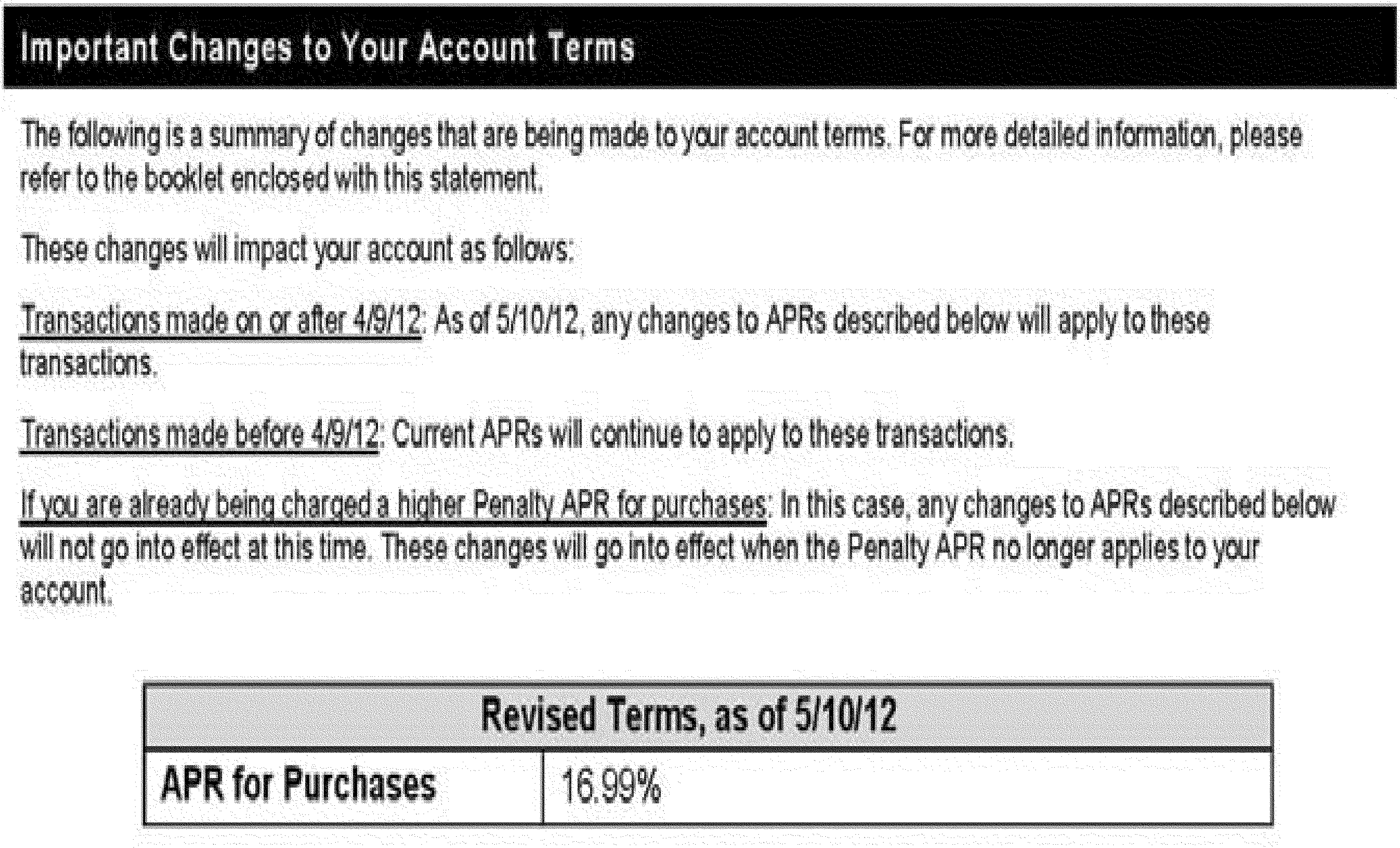
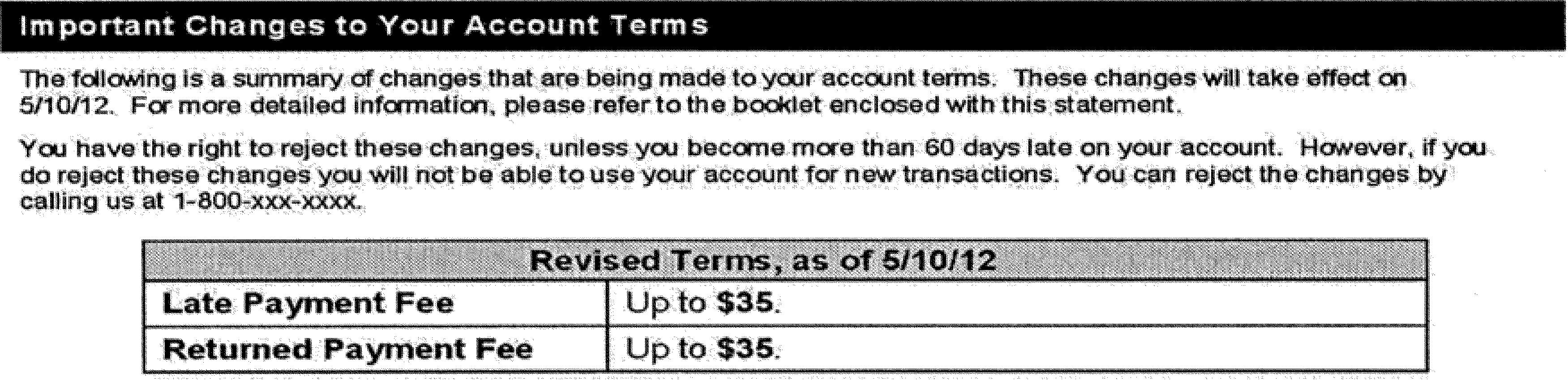
| R005-P1-C040 — Advance-notice balance cohorts | Under § 55(b)(3), an increased term disclosed under § 9(b) cannot reach earlier transactions; a § 9(c)/(g) increase cannot reach transactions before or within 14 days after provision. | Compliance with applicable notice is necessary. Protection is against that increase under that exception, not every separately authorized future movement. | S007, § 55(b)(3)(i)–(ii).
ecfr.gov | L; no actual transaction classification. |
| R005-P1-C041 — First year, closure, unavailable credit | The advance-notice exception cannot be used during the first year, while the account is closed, or while new transactions are not permitted. | Notice may precede the permissible application date. OI permits a limited delay to the next cycle if unavailable on the original effective date; continued unavailability then requires a new notice. Other independently satisfied exceptions remain distinct. | S007, § 55(b)(3)(iii), OI -6, -7.
Consumer Financial Protection Bureau | L/OI; closure is not universal immunity from all previously applicable charges. |
| R005-P1-C042 — Transaction-date qualifications | Transaction date generally controls, but posting and estimated-hold rules can change the § 55 classification. | A within-14-day transaction not charged before the effective date may be treated as later. For an estimated merchant hold, the relevant date is when the issuer receives the actual transaction amount. | S007, OI 55(b)-4; 55(b)(3)-4.iii.
Consumer Financial Protection Bureau
+1 | OI; authorization date alone is insufficient. |
| R005-P1-C043 — Effective date and interest | Eligibility of a later transaction for an increase does not permit charging the increased rate before the required notice effective date. | This concerns increases requiring the § 9(c)/(g) notice. It must not be generalized into a prohibition on every billing-cycle application of a genuine variable-index formula. | S007, OI 55(b)-2; S016, pp. 9–10.
Consumer Financial Protection Bureau
+1 | OI/J; formula and exception matter. |
| R005-P1-C044 — Temporary exception: duration/disclosure | § 55(b)(1) permits expiration increases only after a specified period of at least six months, with required prior written disclosure. | The period ordinarily runs no earlier than disclosure or later usability. For a single transaction it runs at least six months from that transaction; a qualifying transaction-window promotion does not necessarily give each transaction its own six months. | S007, § 55(b)(1)(i), OI -1, -2.
Consumer Financial Protection Bureau | L/OI; notice exception C017 is not a substitute for this substantive test. |
| R005-P1-C045 — Temporary exception: cohort ceilings | Expiration does not permit one indiscriminate post-promotion rate on all balances. | Pre-period transactions cannot exceed their pre-period term under this branch; if disclosures were under § 9(c), within-14-day transactions have the specified prior-category ceiling; during-period transactions cannot exceed the disclosed subsequent term. | S007, § 55(b)(1)(ii)(A)–(C).
Consumer Financial Protection Bureau
+1 | L; other independent exceptions may affect the applicable rate. |
| R005-P1-C046 — Contingencies and deferred interest | A discretionary or event-contingent revocation is not merely expiration of a specified period. | A minor late payment or missed spending condition does not itself authorize old-balance repricing under (b)(1). Deferred-interest programs have specific disclosed-duration/rate conditions; a qualifying (b)(4) increase and later restoration have distinct treatment, including no automatic refund of previously imposed deferred interest. | S007, OI 55(b)(1)-3, -4.
Consumer Financial Protection Bureau | OI; no broader accrual or deferred-interest accounting study. |
| R005-P1-C047 — Genuine variable-index exception | § 55(b)(2) requires a public index outside the issuer’s control and an APR increase actually caused by its increase. | Own prime/cost-of-funds indices, a floor preventing corresponding decreases, or discretionary index-value selection can fail the test. A maximum cap is distinguished from a minimum floor. | S007, § 55(b)(2), OI -1, -2.
Consumer Financial Protection Bureau
+1 | L/OI; no actual index series or agreement examined. |
| R005-P1-C048 — Formula changes are different | Increasing a margin or changing the rate-determination method is not authorized merely by the variable-rate exception. | This remains true even without an immediate numerical increase. OI allows some changes in measurement day; that is not blanket discretion to choose an advantageous index value. Fixed-to-variable conversion cannot evade protection of the existing fixed-rate balance. | S007, OI 55(b)(2)-1 through -4.
Consumer Financial Protection Bureau
+1 | OI; index replacement has its own C057–C060 branch. |
| R005-P1-C049 — Material published opinion | In Milliken, the Ninth Circuit held that the stipulated public-prime-plus-constant-margin, fixed month-end observation formula could qualify without daily matching of index changes. | The majority distinguished discretionary manipulation and the notice-based no-pre-effective-interest commentary; it affirmed dismissal. | S016, majority pp. 7–12, disposition p. 13.
cdn.ca9.uscourts.gov | J; Ninth Circuit, as issued. Later history held; not a universal validation of all variable-rate methods. |
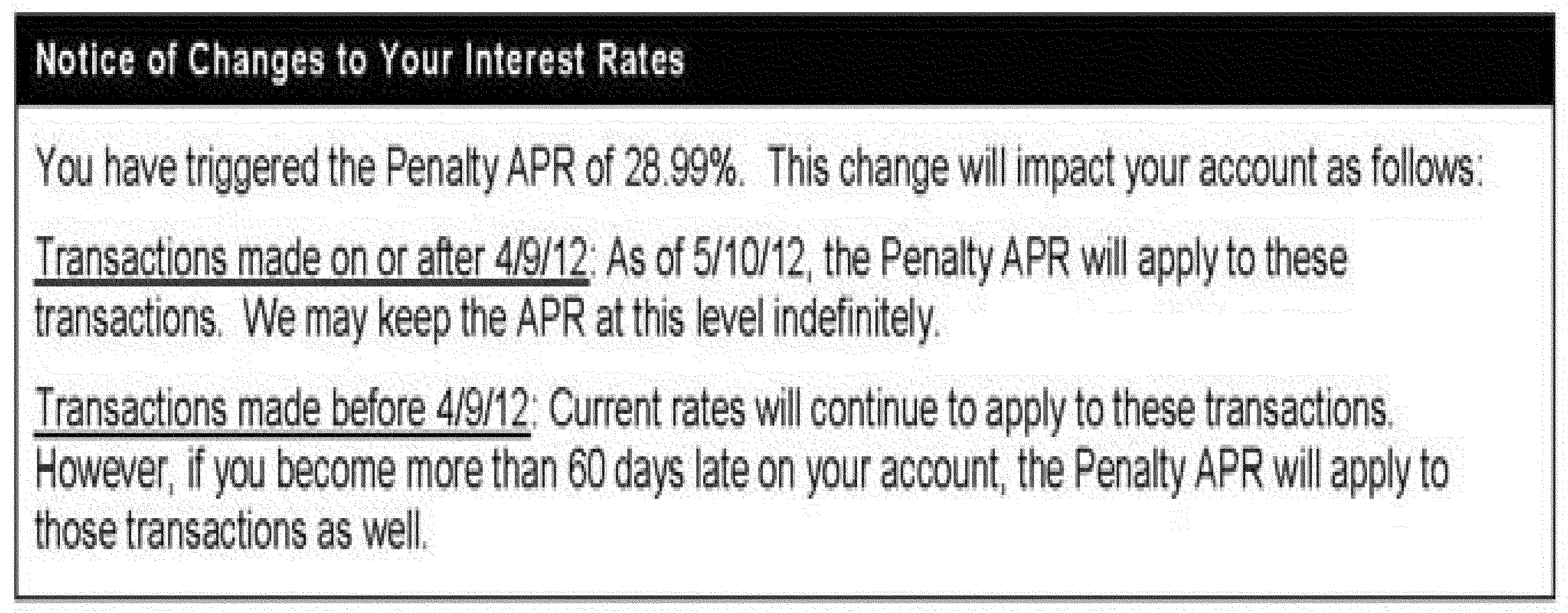
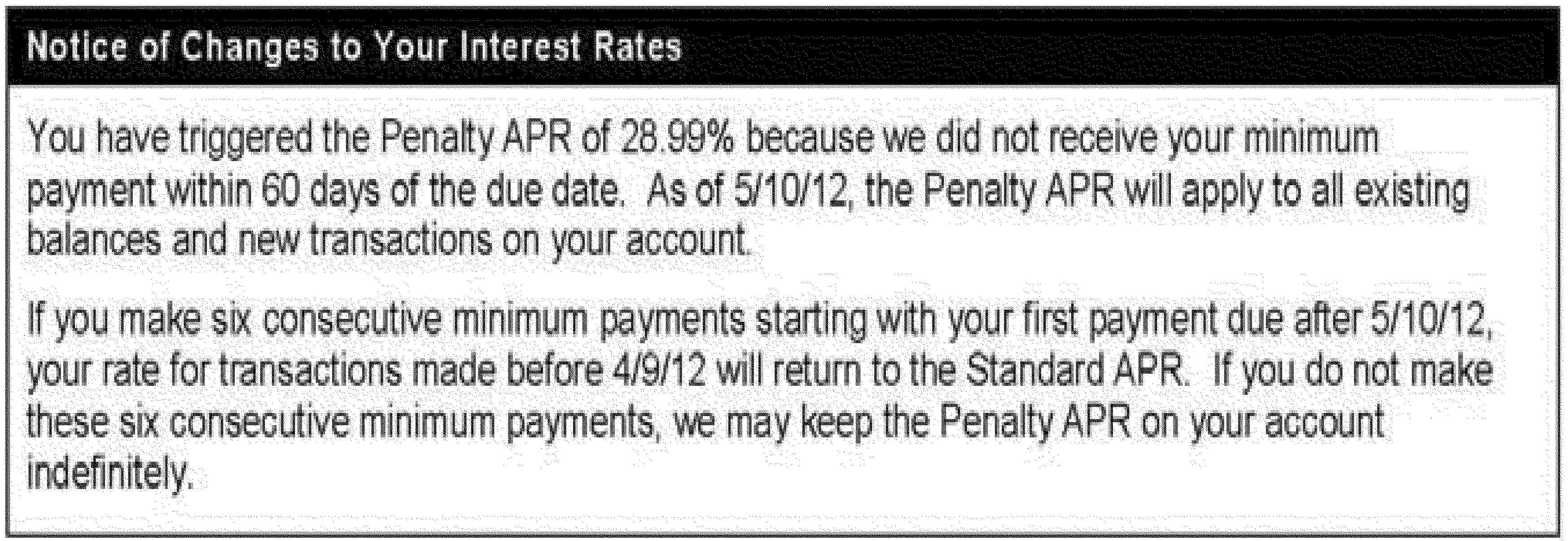
| R005-P1-C050 — Actual delinquency predicate | § 55(b)(4) requires nonreceipt of the required minimum periodic payment within 60 days after its due date. | “Late,” “default,” a missed payment elsewhere, or a notice’s assertion is insufficient by itself. OI compares amounts received with the first outstanding required minimum; generic “two missed statements” language is not the legal test. | S007, § 55(b)(4), OI -1; S002, § 1666i-1(b)(4).
Consumer Financial Protection Bureau | L/OI; required amount, due date, and receipt remain unproved. |
| R005-P1-C051 — Later old-balance penalty requires proper notice | An earlier notice based on a shorter delinquency does not, merely by aging, prove compliance for a later old-balance increase under (b)(4). | The qualifying event and applicable post-trigger 45-day notice must be established. A later notice may be necessary; the earlier notice cannot be assumed to satisfy a condition that had not occurred. | S006, § 9(g)(2); S007, § 55(b)(4); OI 9(g)-1.
Consumer Financial Protection Bureau
+1 | L/I; no actual sequence reconstructed. |
| R005-P1-C052 — Mandatory six-payment restoration | If the first six consecutive required minimum payments beginning with the first due after effectiveness are received on/before their due dates, § 55(b)(4)(ii) requires restoration for the specified older cohort. | The cohort is transactions before or within 14 days after the notice. This is not a promise that any later six timely payments automatically restore every transaction’s rate. | S007, § 55(b)(4)(ii), OI -3; S006 restoration disclosures.
Consumer Financial Protection Bureau
+1 | L/OI; first due date, six receipts, and cohort unknown. |
| R005-P1-C053 — Restoration qualifications | Restoration can reflect another independently valid exception and has a stated implementation accommodation. | An expired qualifying temporary rate or genuine variable movement can affect the restored rate. OI permits implementation on the next cycle’s first day when the restoration date falls mid-cycle. Separate § 59 review may remain relevant. | S007, OI 55(b)(4)-3.ii–iii; S011.
Consumer Financial Protection Bureau | OI; no universal return to the original opening APR. |
| R005-P1-C054 — Workout substantive authority | § 55(b)(5) permits specified increases on completion or failure of a workout only with required prior disclosure and a ceiling for pre-arrangement transactions. | The restored term for those transactions cannot exceed the pre-arrangement term under this exception. Other valid exceptions can separately affect that ceiling; oral-telephone disclosure has the prescribed prompt-writing route. | S007, § 55(b)(5)(i)–(ii), OI -2, -3; S006, § 9(c)(2)(v)(D).
Consumer Financial Protection Bureau | L/OI; completion/failure and earlier terms must be proved. |
| R005-P1-C055 — Workout is not a waiver of § 55 | A workout does not permit the issuer to contract around § 55’s substantive or protected-balance repayment requirements. | Any increase still needs an exception; a protected balance cannot be required to repay on terms exceeding § 55(c)’s limits merely because a workout is involved. | S007, OI 55(b)(5)-1.
Consumer Financial Protection Bureau | OI; no settlement, waiver, or actual workout validity determination. |
| R005-P1-C056 — SCRA-related restoration | § 55(b)(6) permits specified restoration when the legal protection causing the reduction no longer applies. | For transactions predating the reduction, this branch cannot exceed the pre-reduction term; other exceptions remain separate. Applicable change notice is still required. The fee-rejection exclusion has its own pre-reduction ceiling. | S007, § 55(b)(6), OI -1, -2; S006, § 9(c)(2)(iv)(B); S024 codification note.
Consumer Financial Protection Bureau
+2 | L/OI; old app. § 527 reference identified as current § 3937 in the 2024 Code. Actual eligibility/end date and 2026 SCRA audit held. |
| R005-P1-C057 — Unavailable-index replacement | § 55(b)(7)(i) permits a replacement index and margin after the original index becomes unavailable, subject to substantial-similarity conditions. | Historical fluctuations must be substantially similar; the resulting rate must be substantially similar to the rate at unavailability. A new index without history has the specified rate test. Updated LIBOR OI ordinarily uses the unavailability-day values, or the previous calendar day both were published, subject to the Board-selected exception. | S007, § 55(b)(7)(i); S014, OI 55(b)(7)(i)-1, -2.
ecfr.gov
+1 | L/OI; actual unavailability and comparison not established. |
| R005-P1-C058 — Separate LIBOR transition route | § 55(b)(7)(ii) permits a qualifying LIBOR replacement on or after April 1, 2022, without making unavailability the same prerequisite as (i). | It uses specified October 18, 2021 index comparisons and the relevant margin. OI defines the prior margin by reference to immediately before provision of the replacement notice. If the replacement was unpublished on the reference date, the general fallback is the next calendar day both were published. | S007, § 55(b)(7)(ii); S014, OI 55(b)(7)(ii)-1 to -3.
ecfr.gov
+1 | L/OI; not a license for an arbitrary replacement margin. |
| R005-P1-C059 — Updated benchmark conditions | The 2023 amendment covers Board-selected consumer-loan replacements for 1-, 3-, 6-, and 12-month U.S. dollar LIBOR. | The specified comparison uses LIBOR’s June 30, 2023 value and the replacement’s first published value. Updated OI supplies historical-similarity and same-margin deemed-compliance treatment. Its prime-index determination is narrower—1- and 3-month LIBOR—and does not dispense with the rate/margin test. | S014, § 2(a)(28), § 55(b)(7)(ii), OI 55(b)(7)(i)/(ii).
federalregister.gov
+1 | L/OI; broader LIBOR Act contract effects are held. |
| R005-P1-C060 — Replacement notice and contract limits | Index replacement is a change requiring the applicable notice, not ordinary movement of an unchanged index. | From October 1, 2022, the specified LIBOR margin-reduction change also must be disclosed. A narrow estimate accommodation applies to an unpublished Board-selected replacement, unchanged margin, publication by effectiveness, and best available information clearly labelled an estimate. Neither § 55(b)(7) route excuses contract noncompliance. | S006, § 9(c)(2)(v)(A); S013; S014, OI 9(c)(2)(iv)-2.ii and 55(b)(7)-1.
federalregister.gov
+2 | L/OI; contract interpretation and actual replacement calculation held. |